Nobody wants to spend their July weekend locked in the bathroom because of a bad batch of strawberries. Right now, a microscopic hitchhiker is making its way across North American grocery aisles, turning backyard barbecues into absolute digestive nightmares. We are talking about the dreaded cyclospora parasite, and it is silently ruining summer plans.
The good news? You do not have to swear off fresh salads for the rest of 2026. By making a few ruthless adjustments to how you shop and prep your greens, you can bulletproof your stomach. I am going to show you exactly how to completely avoid cyclospora before it ever reaches your plate.
Avoid Cyclospora: Identifying The Invisible Threat
If you have never heard of this bug, consider yourself lucky. Cyclospora cayetanensis is a single-celled parasite that is typically transmitted through food or water contaminated with feces. Yes, it is as gross as it sounds.
Here is the hard, surprising fact that most people miss: standard chemical washes and chlorine treatments do not effectively kill cyclospora. While public health officials often rely on chlorine to treat water systems, this specific parasite has a tough outer shell that scoffs at standard municipal water treatments.
Because you cannot simply rely on the chemical rinse at the packaging plant, the responsibility falls squarely on your shoulders in the kitchen. If you want to keep your family safe, you need to rely on friction, high-quality sourcing, and smart preparation.
The Ultimate Summer Defense Guide
Summer is peak season for this specific pathogen. Historically, outbreaks in Canada and the US spike dramatically between May and August. This is precisely when we import massive amounts of fresh fruits and vegetables from warmer, tropical climates where the parasite thrives.
“You can’t just run a head of lettuce under a polite trickle of water and call it a day. You need mechanical friction to physically dislodge the cyclospora oocysts from the ridges of the produce,” says Dr. Aris Thomas, a leading North American food safety epidemiologist.
This means your casual vegetable rinse is no longer cutting it. We need to upgrade your kitchen sink protocol immediately.
Defeating Gut Parasites Step-By-Step
When this gut parasite takes hold, it causes explosive diarrhea, severe stomach cramps, bloating, and fatigue that can last for over a month if left untreated. To stop these gut parasites from hijacking your digestive system, follow my foolproof prep routine.
- Wash Your Hands First: Scrub your hands with warm water and soap for 20 seconds before you even touch the produce. Cross-contamination is your biggest enemy.
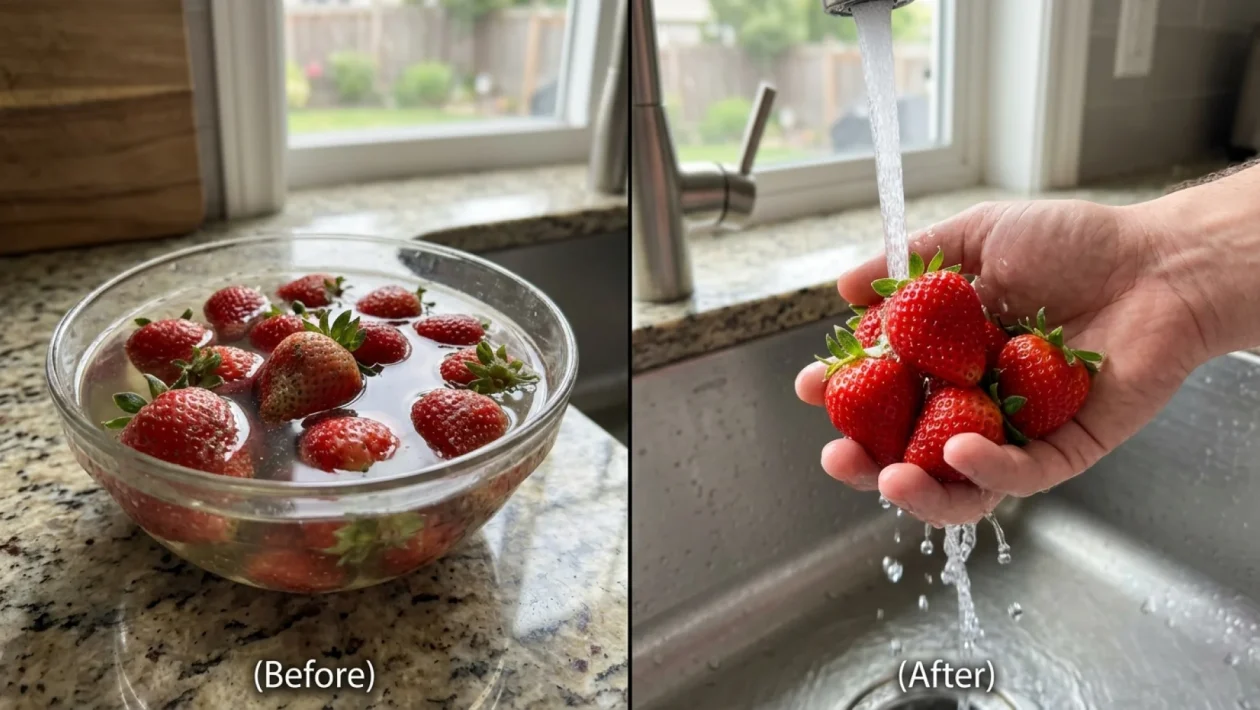
- Rinse Under High Pressure: Hold your berries, greens, or herbs under a strong, steady stream of cold running water. Do not soak them in a stagnant bowl—that just creates a parasite bath.
- Apply Mechanical Friction: Use a dedicated vegetable brush on hard items like cucumbers or aggressively rub leafy greens and berries with your fingers under the water.
- Dry Thoroughly: Use a clean paper towel to pat the produce dry. This physical wiping action acts as a final sweep to remove any clinging microscopic bugs.
Securing Your Fresh Produce
Not all produce carries the same level of risk. The parasite is highly specific to certain types of fresh, imported crops that are difficult to clean thoroughly.
When I am pushing my cart through Costco or scanning the President’s Choice organics aisle, I am highly selective about where my summer produce originates. Buying local, Canadian-grown greenhouse produce during the summer months drastically reduces your risk profile.
| High-Risk Produce (Requires Aggressive Washing) | Low-Risk Produce (Safer Alternatives) |
|---|---|
| Imported Raspberries & Blackberries | Locally Grown Greenhouse Berries |
| Pre-Packaged Basil & Cilantro | Homegrown or Local Potted Herbs |
| Imported Bagged Spring Mixes | Whole Heads of Locally Grown Lettuce |
| Snow Peas from Tropical Regions | Cooked Vegetables (Heat kills the parasite) |
Frequently Asked Questions
Can cooking my vegetables kill cyclospora?
Yes, absolutely. Heat is highly effective at destroying the parasite. If there is an active outbreak advisory in your area for a specific vegetable, boiling, roasting, or thoroughly cooking the produce will render it completely safe to eat.
Can I catch this parasite directly from another person?
No. Unlike a stomach flu, cyclospora is not transmitted directly from person to person. The parasite actually needs days to weeks outside of a host (usually in soil or water) to mature and become infectious. You only get it by consuming contaminated food or water.
Do vegetable washes or vinegar soaks work better than water?
Public health agencies state that commercial vegetable washes and vinegar solutions are no more effective at removing cyclospora than vigorous rubbing under plain, running tap water. Save your money and rely on good old-fashioned friction.
🤝 Keep your guard up and do not let a microscopic bug ruin your summer barbecue plans. Taking those extra two minutes at the kitchen sink is the ultimate insurance policy for your digestive health.
💡 Remember the golden rule: if you cannot peel it or cook it, you must scrub it aggressively under running water. Your stomach will thank you when you are enjoying the patio instead of the porcelain throne.
📱 Share your thoughts or your own food prep routines with your friends and family this season. Awareness is the fastest way to stop an outbreak in its tracks.
👇 Good luck out there, stay vigilant in the produce aisle, and have an incredibly healthy, parasite-free summer!