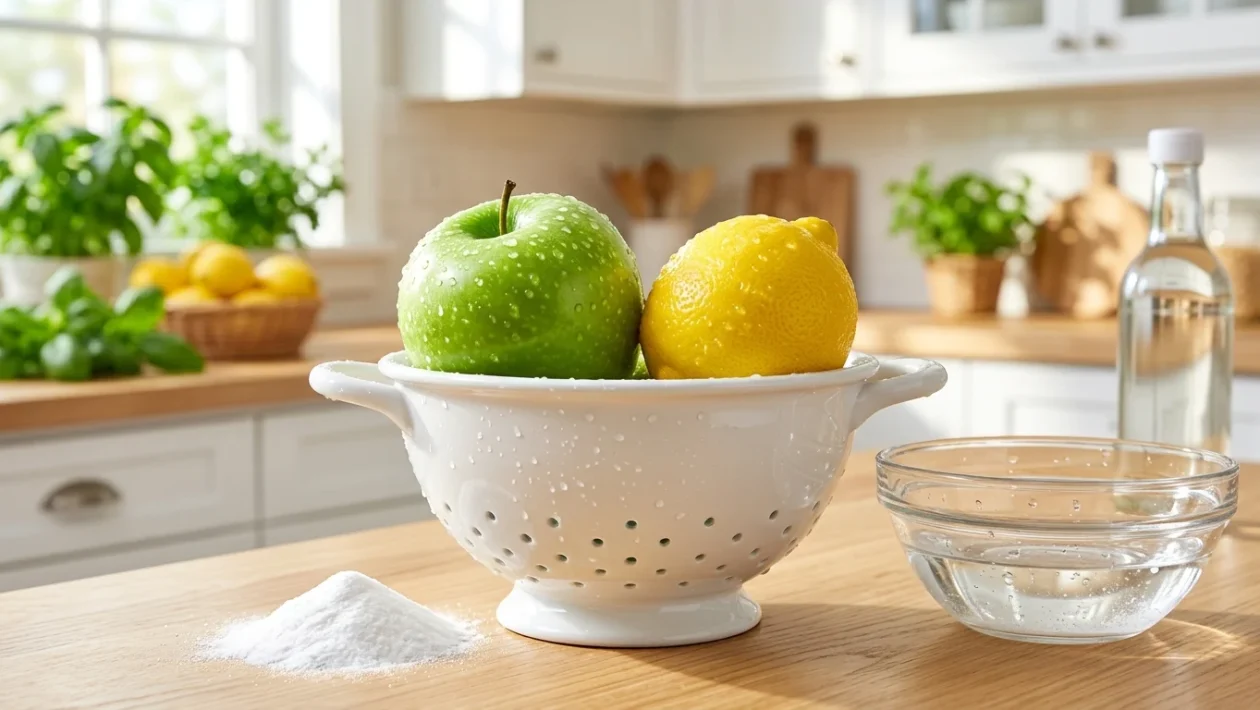
Social media is flooded with elaborate routines for cleaning fruits and vegetables using baking soda, vinegar, or commercial washes. For decades, a simple rinse under the tap was the gold standard.
To determine if these upgraded cleaning methods are actually necessary, two prominent food safety experts weighed in on the science behind washing produce.
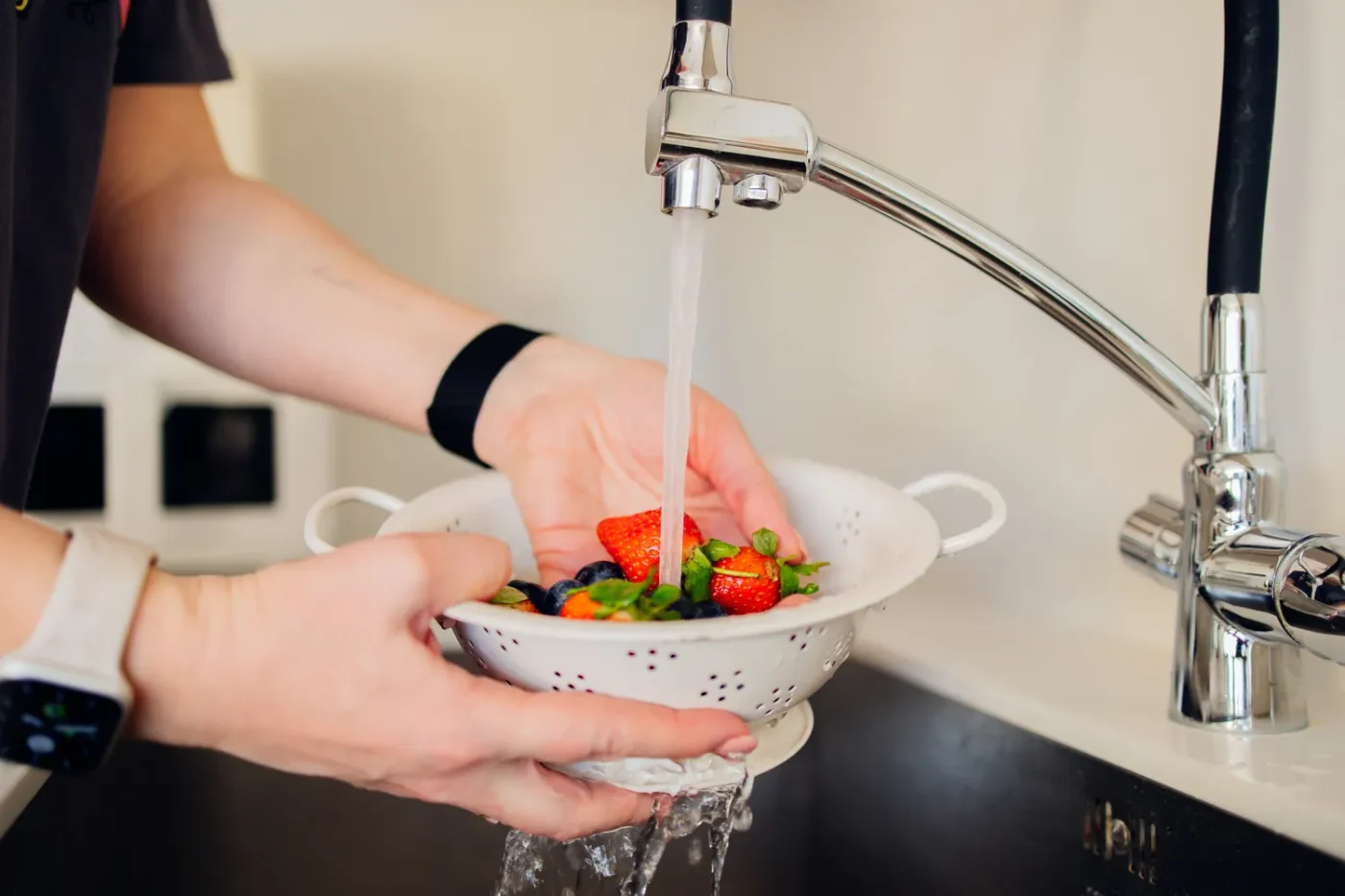
Hands washing fresh produce in a colander under a running faucet.
The Pesticide Debate: Water vs. Pantry Staples
Running water easily washes away surface-level dirt. However, stubborn bacteria and pesticide residues present a more complex challenge for home cooks.
Recent research indicates that common pantry staples hold a slight edge over water alone when targeting chemical residue. “Studies have shown that both baking soda and vinegar can help to increase the washing power of water when removing some pesticides,” explains Bryan Quoc Le, Ph.D., a food scientist and CEO of Mendocino Food Consulting.
According to research, soaking produce in baking soda yields an average 50 percent reduction in pesticide residues. A vinegar soak performs slightly better, resulting in roughly a 54 percent reduction.
The Bacteria Reality Check
Despite their success against pesticides, baking soda and vinegar fall drastically short against harmful microorganisms. Lowering the surface count of bacteria is not enough to prevent widespread foodborne illnesses.
“For most pathogens, very few cells are needed to cause sickness, and baking soda and vinegar require significant soak times on the surface of the skin to meaningfully reduce their numbers,” Quoc Le notes.
True pathogen elimination requires commercial-grade sanitizers like ozone or peroxyacetic acid, which are completely unsafe for residential kitchens.
Dr. Vanessa Coffman, alliance director for Stop Foodborne Illness, backs this up. She stresses that home remedies “cannot guarantee the elimination of harmful bacteria such as Salmonella, E. coli, or the Cyclospora parasite.”
The Flavor Trade-Off and False Security
Meaningfully reducing bacteria with baking soda requires soaking produce for 10 to 15 minutes. This creates a separate issue for porous fruits and vegetables, which readily absorb their surroundings.
Quoc Le points out that long baking soda soaks can easily leave behind a bitter or metallic aftertaste on your food.
More importantly, these DIY washes often create a dangerous illusion of safety. Because they cannot reliably disinfect produce, the FDA strictly advises against using soap, bleach, or any commercial produce cleaners on food.
The Expert Consensus
Ultimately, complex soaking routines are not required for home kitchens. While baking soda and vinegar can marginally reduce pesticide exposure, Quoc Le confirms that “a cold water wash is generally sufficient.”
Coffman recommends a highly traditional, streamlined approach to food safety at home:
- Start with thoroughly clean hands.
- Rinse all produce under cool, running tap water.
- Scrub firm fruits and vegetables with a clean produce brush.
- Always wash items before peeling or cutting them to stop cross-contamination in its tracks.