The Hidden Risks of a Dirty Drain
The kitchen sink handles a daily barrage of food scraps, grease, and soap scum. Even homes equipped with dishwashers rely heavily on the sink for daily tasks, making consistent drain maintenance crucial.
Ignoring your plumbing inevitably leads to stubborn blockages, foul odors, and severe bacterial buildup. Over time, these issues pose serious hygiene risks to your household.
While many homeowners immediately reach for harsh, toxic chemical drain cleaners to dissolve clogs, natural alternatives can be just as effective without poisoning the local water supply.
The 5-Tablespoon Salt Method
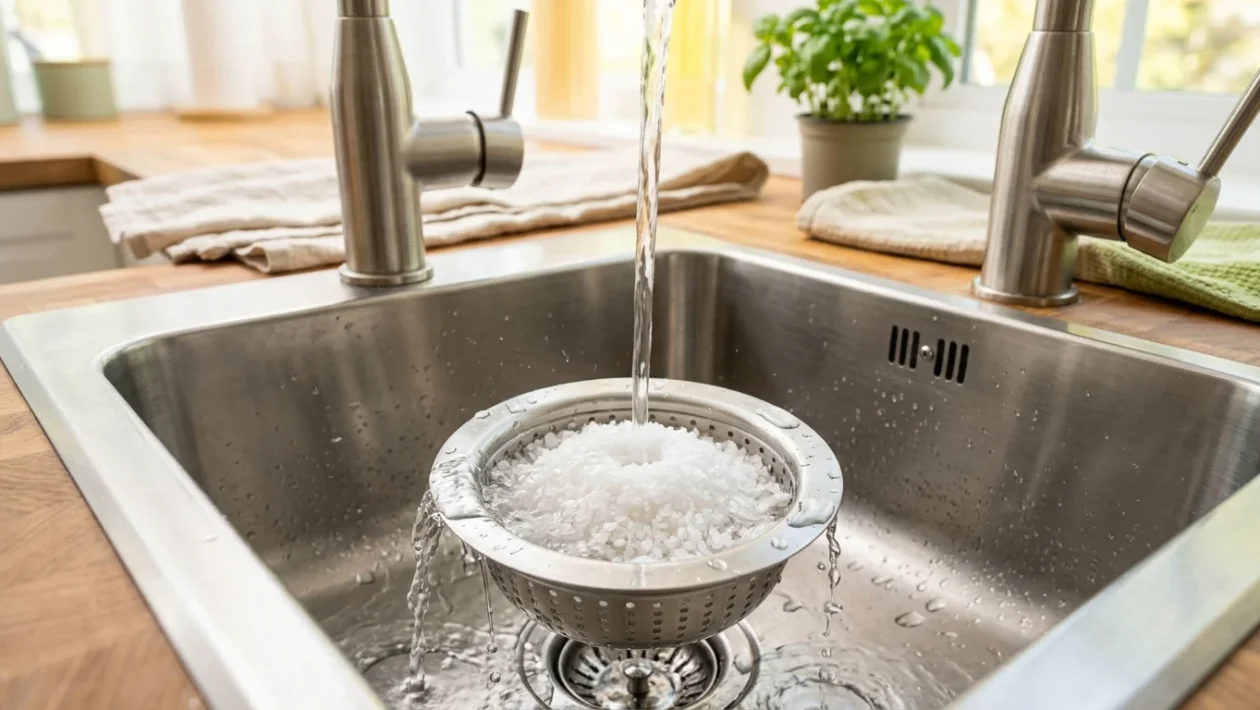
Move over baking soda. According to the French publication Linternaute, standard table salt is a highly effective secret weapon for maintaining a clean, free-flowing drain.
Salt acts as a mild, natural abrasive that safely scrubs the interior walls of your pipes. When paired with extreme heat, it creates an environmentally friendly solution that obliterates stubborn grease.
To use this method effectively without compromising your plumbing, you must follow specific measurements.
- Pour exactly five tablespoons of salt directly down the sink drain.
- Carefully pour two liters of boiling water over the salt.
- Let the mixture sit and work its way through the pipes for several minutes.
The intense heat combined with the abrasive salt weakens hardened grease and flushes away lingering debris, instantly restoring normal water flow. Plumbing experts recommend repeating this straightforward process every three to four weeks for optimal maintenance.
When to Use a Plunger vs. Cleaners
For sudden, heavy blockages where water refuses to drain entirely, a traditional sink plunger remains your best first line of defense. The plunger creates an air vacuum that forcefully pushes and dislodges large obstructions trapped in the pipe.
However, a plunger cannot clean the actual grime lining the pipe walls. It clears the immediate physical blockage but leaves behind the sticky residue that guarantees future clogs.
If the salt method isn’t enough and you need store-bought reinforcements, always check the label. Opting for eco-friendly enzymatic cleaners ensures you clear out the grime without sending highly toxic chemicals into local wastewater ecosystems.