
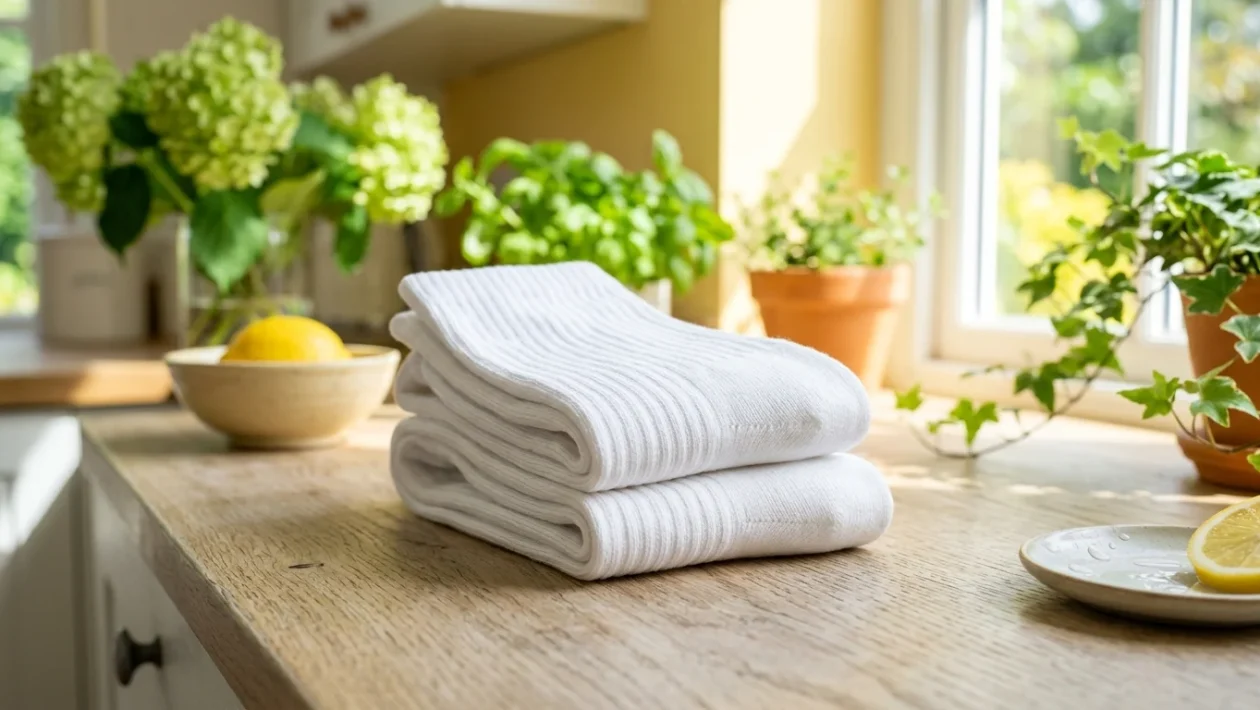
Dirty floors, grimy shoe insoles, and lazy laundry habits inevitably turn crisp white socks into a dull shade of grey. While manufacturers now sell socks with pre-greyed bottoms to mask the dirt, pure white socks can still be salvaged.
Restoring fabric depends heavily on its fiber content and the severity of the stains. Throwing them in a standard wash cycle won’t cut it. To pull out ground-in dirt, you need targeted presoaking strategies.
Why White Socks Turn Grey
Socks rarely stay pristine for long. Walking outdoors without shoes or sliding into footwear with dirty insoles instantly drives dirt into the fabric fibers.
Poor laundry habits lock those stains in place. Letting dirty socks sit too long between washes allows grime to set permanently.
Using improper water temperatures, weak detergents lacking stain-fighting enzymes, or overloading the washer also prevents soil from washing away effectively.
Read the Label Before You Soak
Before launching a whitening campaign, check the fabric makeup of your socks. Cotton handles hot water and aggressive whitening agents far better than nylon or synthetic blends.
Always separate your socks by material type. While skipping a presoak is fine for everyday maintenance, heavily soiled socks require hours of soaking to break down the grime before they ever touch the washing machine.
5 Proven Methods to Whiten Socks
Method 1: The Baking Soda Soak
Baking soda acts as a natural abrasive and deodorizer. Mixed with hot water, it breaks apart residue left by cheap detergents.
- Fill a large container with hot water.
- Dissolve 1 cup of baking soda per gallon of water.
- Submerge up to six pairs of socks per gallon to avoid overcrowding.
- Soak overnight, then wash in warm or hot water with a high-quality detergent.
Method 2: Vinegar and Detergent
Distilled white vinegar contains acetic acid. This cuts through the lingering detergent and fabric softener residue that traps dirt in the fibers.
Mix 1/2 cup of vinegar and 2 tablespoons of heavy-duty detergent into one gallon of hot water. Submerge up to six pairs of socks and soak them for at least four hours before washing.
For regular maintenance, skip the fabric softener entirely. Add 1 cup of white vinegar directly to your washer’s rinse cycle to strip away dulling residue.
Method 3: Oxygen Bleach
Powdered oxygen bleach relies on sodium percarbonate to oxidize soil and stains. It acts slower than chlorine bleach but is far gentler on fabrics.
Dissolve 1/4 cup of the powder into a gallon of warm water. Submerge six pairs of socks and let them soak for a minimum of eight hours.
This method is safe for all sock materials and colors, with the strict exception of wool.
Method 4: Lemon, Salt, and Sunlight
Citric acid breaks the bond between dirt and fabric, while salt provides mild abrasion. Combine lemon juice and salt into a paste and scrub it directly into the stains.
Leave the treated socks outside in direct sunlight. The ultraviolet rays provide a natural bleaching effect that brightens the fabric.
Method 5: Targeted Spot Treatment
If an overnight soak leaves behind stubborn grease or deep dirt, create a heavy-duty paste using baking soda and a few drops of liquid dish soap.
Use an old toothbrush to scrub the paste into the stained areas. Wait 10 minutes before tossing them in the wash. If the socks are made of delicate synthetic materials, skip the brush and rub the paste in gently with your fingers.
Why Chlorine Bleach Backfires
Chlorine bleach is highly effective at disinfecting, but terrible for longevity. Overusing it severely damages synthetic fibers like nylon and polyester.
When the fabric weakens, the synthetic polymers revert to their natural yellow state, permanently ruining the socks. If your wet laundry smells strongly of chlorine, you used too much.
If you absolutely must use chlorine bleach on 100% cotton socks, limit it to 1/4 cup per gallon of warm water. Soak them for exactly one hour, then wash immediately.
How to Prevent Dingy Socks
- Wash white socks after a single wear. Never mix them with dark or colored clothing.
- Keep heavily soiled socks out of regular laundry loads to prevent dirt transfer.
- Presoak heavily worn socks in hot water with a tablespoon of heavy-duty detergent for 30 minutes before running a cycle.
- Add a whitening booster directly to the washer drum. Use 1/4 cup of oxygen bleach, 1/2 cup of borax, or 1 cup of baking soda.
When to Give Up
Some socks cannot be saved. If they remain dull and stained after multiple aggressive overnight soaks, the fibers are permanently compromised.
Instead of throwing them away, repurpose them. Clean but stained socks work perfectly as dusting rags or slip-on covers for floor mops.
Frequently Asked Questions
Can you mix vinegar and baking soda?
Do not mix them for laundry purposes. The two ingredients neutralize each other on contact. For actual whitening power, use them in completely separate soaking routines.
Is hydrogen peroxide safe for socks?
Yes. Hydrogen peroxide is a safe, effective whitener. Add 1 cup to a gallon of hot water and soak the socks for at least eight hours.
Can you soak socks in a front-load washer?
Front-load washing machines are not designed to hold standing water for presoaking. Always use a dedicated bucket, sink, or plastic bin for your soak before moving the garments to the washer.
Do whitening detergents actually work?
Whitening detergents contain trace amounts of oxygen bleach. They act strictly as a preventative measure to keep new socks bright. To fix socks that are already dingy, you must use a concentrated presoak.




