Georgia summers can quickly turn vibrant hydrangeas into crispy, brown shadows of their former selves by July. But capturing that signature color and freezing it in time is entirely possible. The secret lies in proper drying techniques.
Florist Joanne Effinger, Garden Director at Bluepoint Hospitality in Easton, Maryland, has perfected this process. She skips the hairspray and relies on a few calculated steps to preserve blooms all winter long.
The Waiting Game
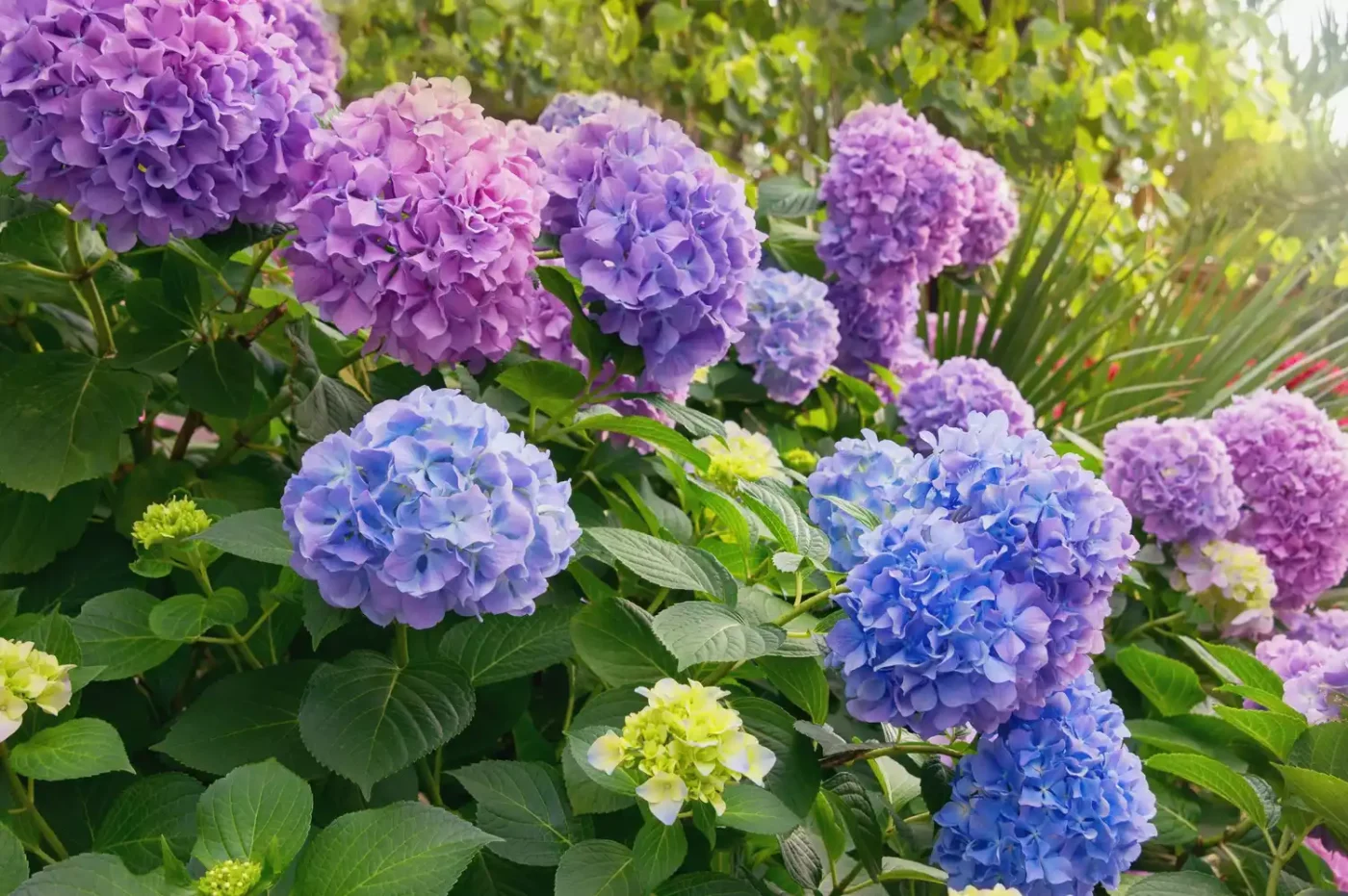
Pink and blue Hydrangea macrophylla flowers growing in a garden.
Many gardeners reach for their shears the moment a hydrangea looks full and vibrant. Effinger takes the opposite approach. She leaves the bloom on the shrub well past its peak.
Waiting allows the flower to harden and establish its shape naturally. A bloom cut too early will inevitably go floppy in a vase, regardless of any post-cut interventions.
“Nature teaches us one of the greatest gifts,” Effinger says. “If you want something really good, you have to wait.” By letting the bloom mature on the plant, it is already halfway through the drying process before coming indoors.
The Tap Test for Firmness
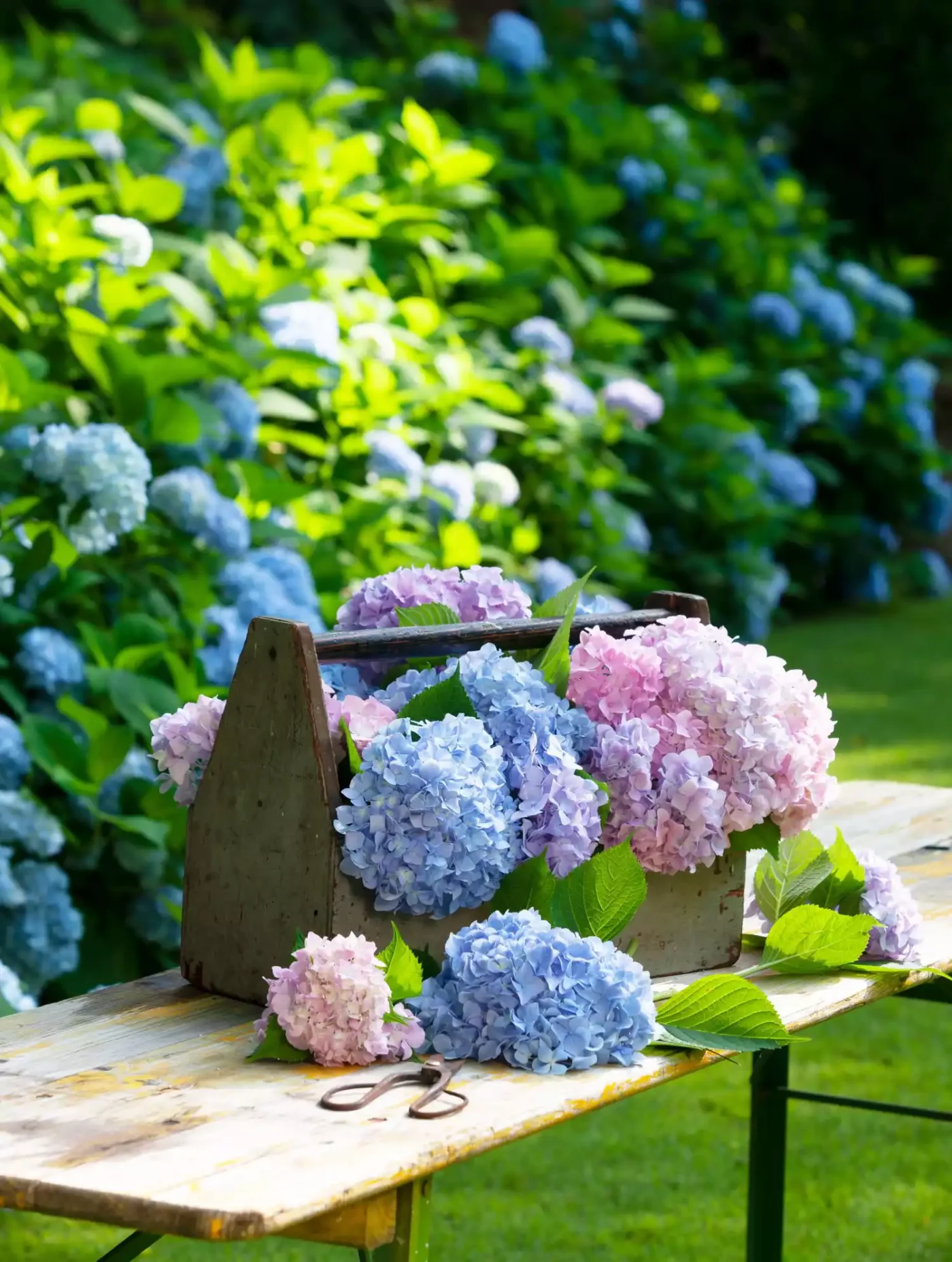
Hydrangea bloom cuttings resting on an outdoor table.
Before making a single cut, check the durability of the flower. Gently tap the bloom with your palm.
If the flower springs back, it is ready to harvest. If it yields or collapses under a light touch, leave it on the bush.
No parlor trick will save an immature bloom once severed from the plant. “There’s a firmness to something that’s mature,” Effinger says. “It’s not so floppy.”
Strategic Harvesting and Conditioning
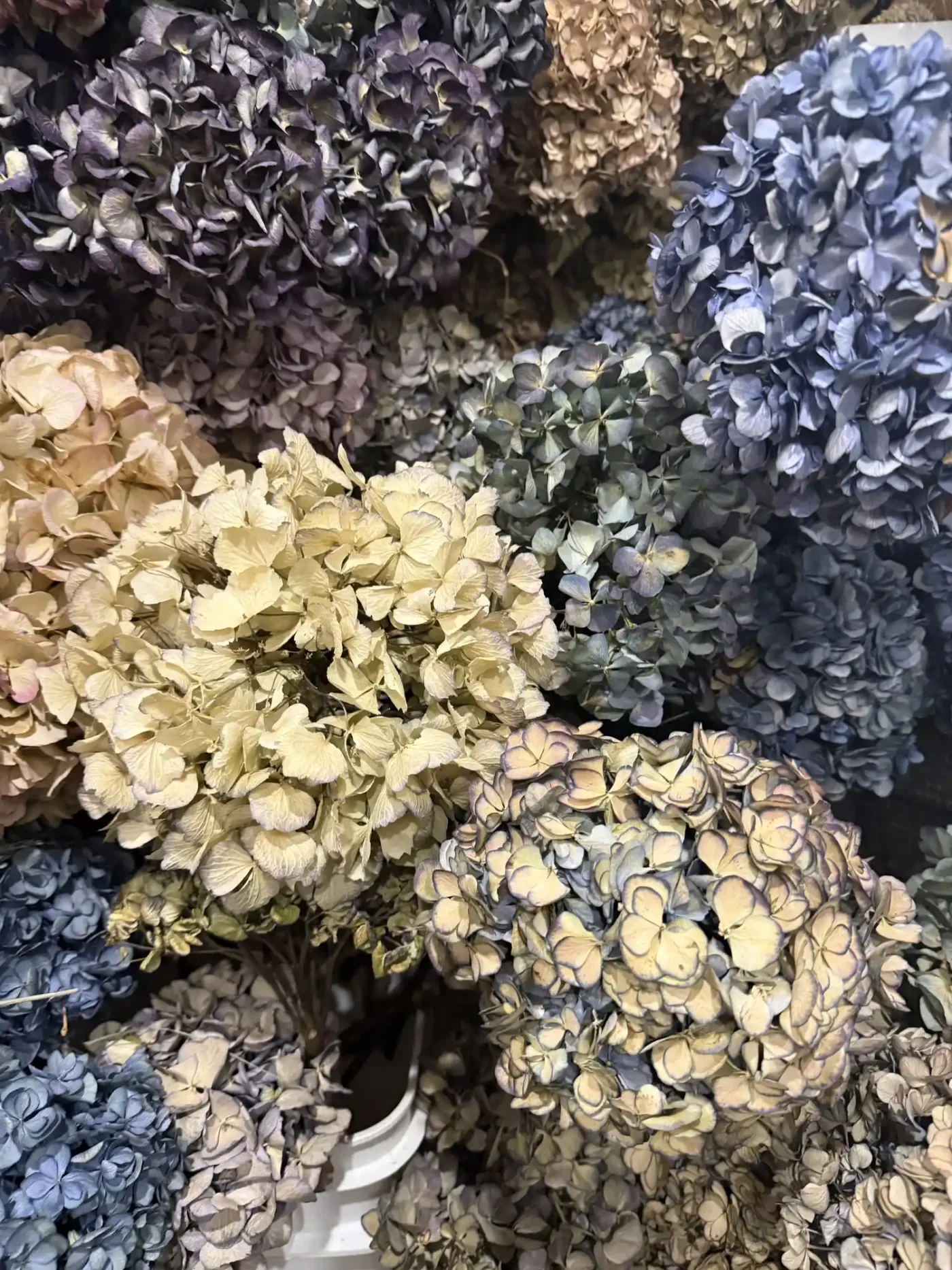
Dried hydrangeas on display in Easton, Maryland.
Timing the harvest is critical. Cut your hydrangeas in the early morning before the summer heat sets in. By late afternoon, flowers have exhausted their daily energy reserves.
Take the stems to the sink and cut them on an angle underwater. This angled cut maximizes the surface area for water absorption.
Next, place the stems in a container with a shallow amount of water and store them in a cool spot. Effinger uses this conditioning phase before arranging them as a living bouquet.
“I don’t just harden them off for drying,” she says. “I use them, and then they harden off naturally.”
The Final Drying Phase
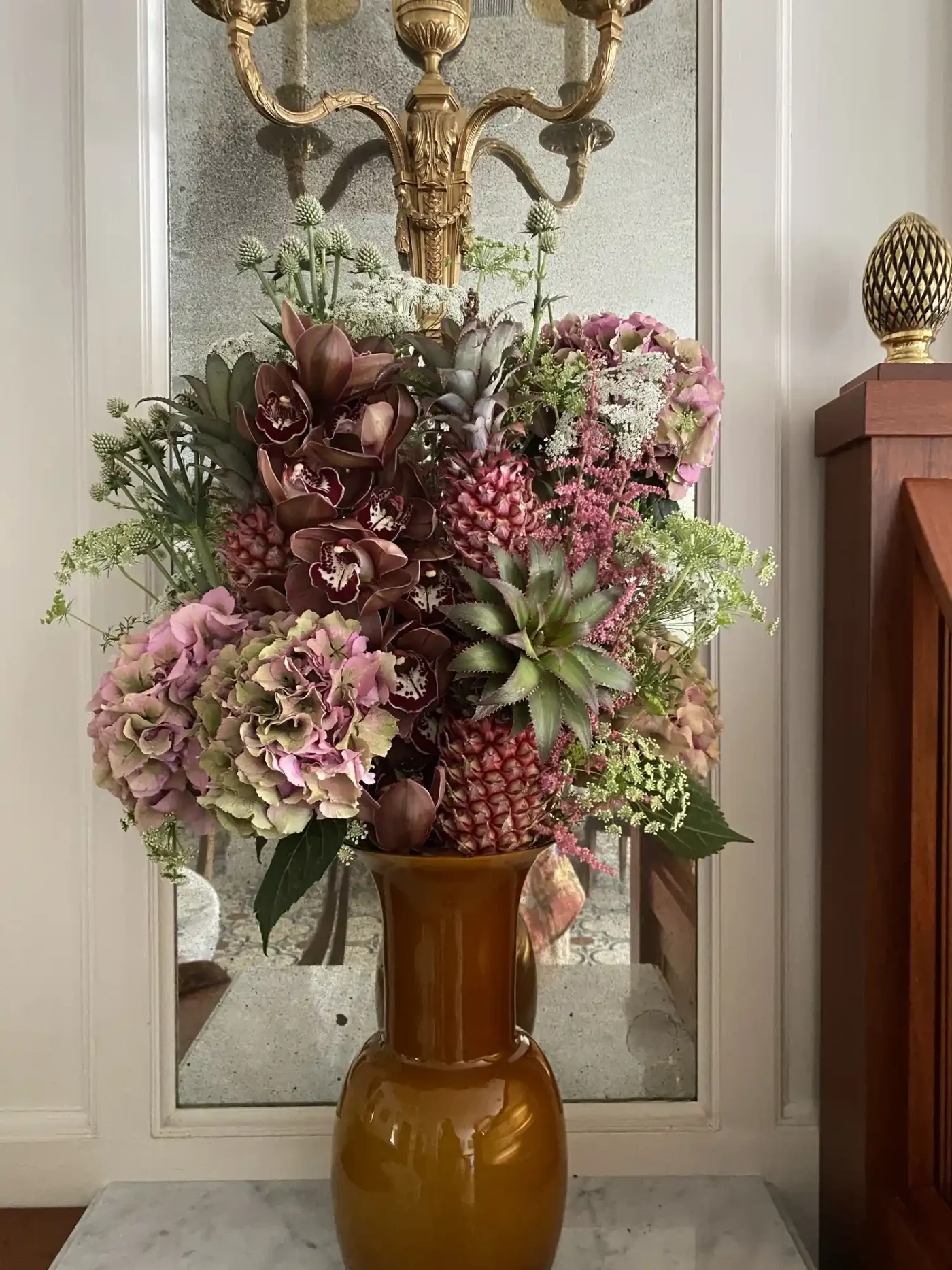
A floral arrangement in a vase set against an ornate background mirror.
Once the fresh arrangement has run its course, the actual drying begins. Relocate the blooms to a cool, dark environment like a closet or a basement.
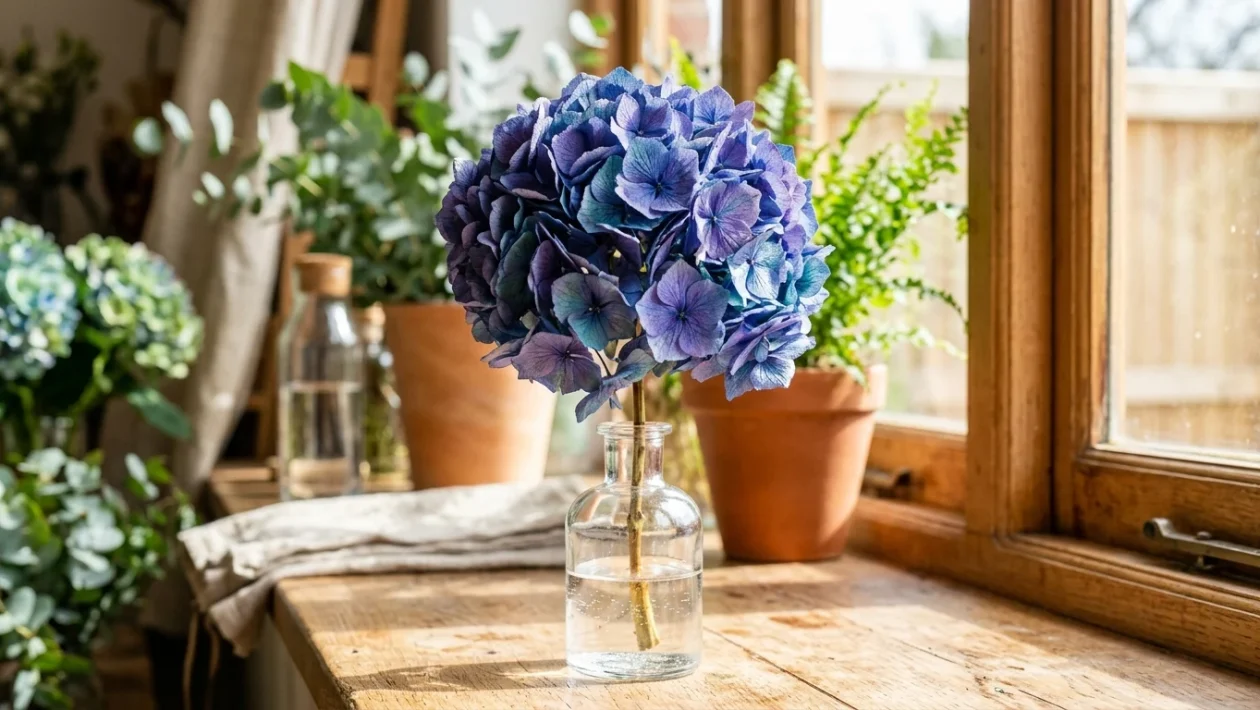
Keep just a small amount of water in the vase. Unlike roses or herbs, hydrangeas do not require upside-down hanging.
“They just stand because they’re firm,” Effinger explains. As the weeks pass and moisture evaporates, the hardened petals will retain their vivid color and structural integrity instead of wilting.
Choosing the Right Varieties
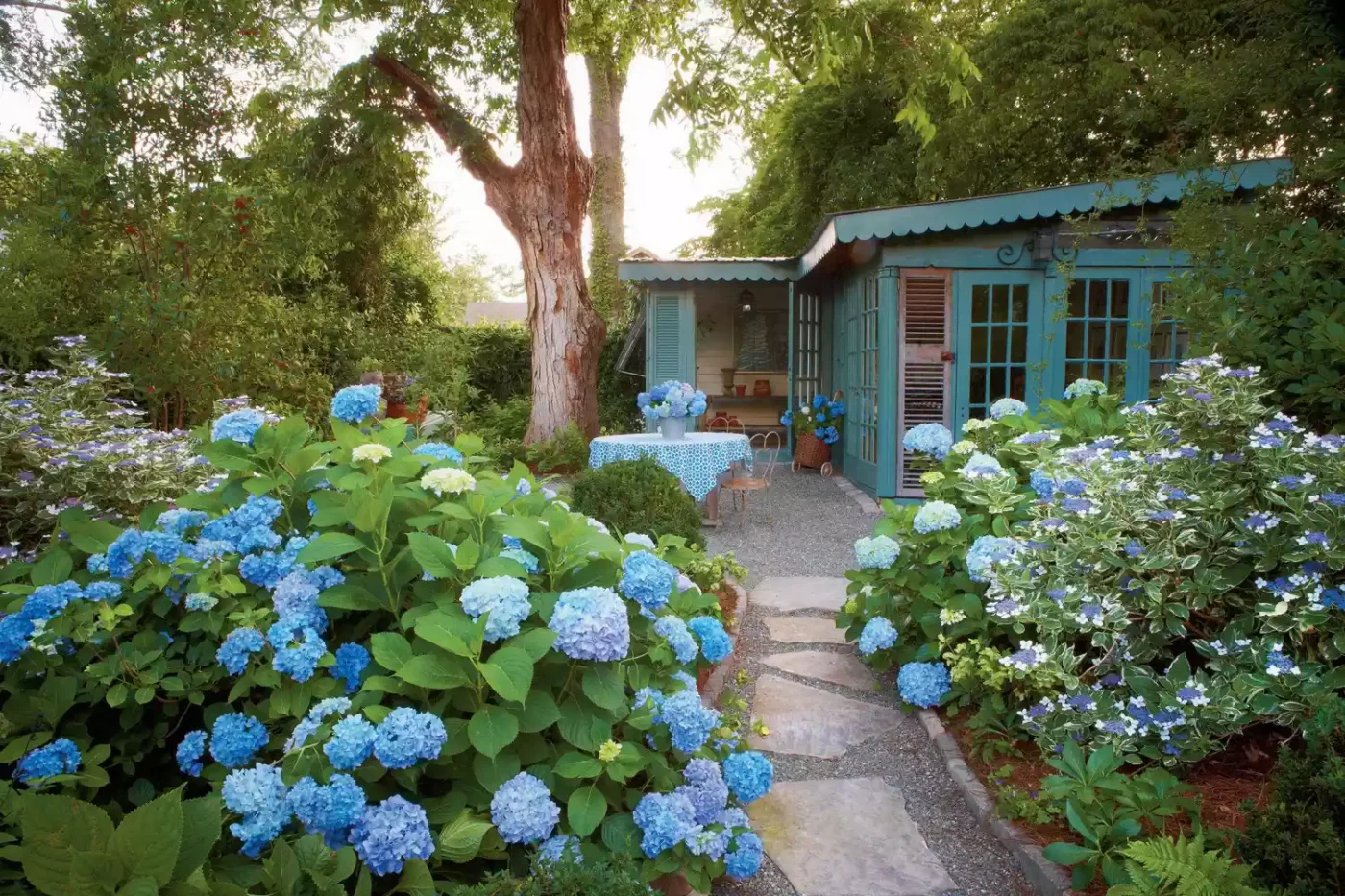
Classic French hydrangeas in full bloom.
For guaranteed success when drying hydrangeas, the variety of the flower matters. The massive, long-lasting displays Effinger builds for the Waterfowl Festival in Easton rely on hydrangeas imported from Holland.
These Dutch varieties act as an investment. Even at $14 or $15 a stem, they perform exceptionally well. Effinger notes that one dining room arrangement made with these imported stems held its shape and color for three years.
If importing Dutch flowers isn’t feasible, local alternatives work too. Oakleaf hydrangeas dry beautifully because they have fewer petals than dense mophead varieties, and the preservation process remains exactly the same.