Bathrooms are prime real estate for harmful bacteria. Humid conditions turn showers and bathtubs into rapid breeding grounds for dangerous pathogens.
According to the Journal of Applied Microbiology, Salmonella colonies can survive on toilet rims for up to 50 days. Every flush acts as a launchpad, ejecting microscopic pathogens into the air and contaminating nearby surfaces.
To combat this biological fallout, consistent disinfection of your entire bathroom is an absolute necessity.

Don’t forget to clean the walls of your shower or bathtub.
Eradicating Grime from Showers and Tubs
Cleaning the bathroom requires strategic technique. You can skip harsh commercial chemicals and opt for a potent, active mix of cleaning vinegar, baking soda, and liquid soap.
Apply your chosen cleaning solution generously across all surfaces. Ensure full coverage on the shower base, the walls, and the glass partitions.
Scrub vigorously in tight, circular motions. If you are tackling a bathtub, step carefully to avoid slipping on the curved floor.
Do not rinse right away. Cleaning products require time to chemically break down stubborn buildup.
Let the solution sit for about 20 minutes unless the manufacturer instructions dictate otherwise. After the wait, rinse everything thoroughly with lukewarm water.
Avoid using excessively hot water during the rinsing process. High temperatures can cause chemical cleaning products to release toxic fumes into the air.
Always keep the bathroom well-ventilated during this process to minimize your exposure to vapors.
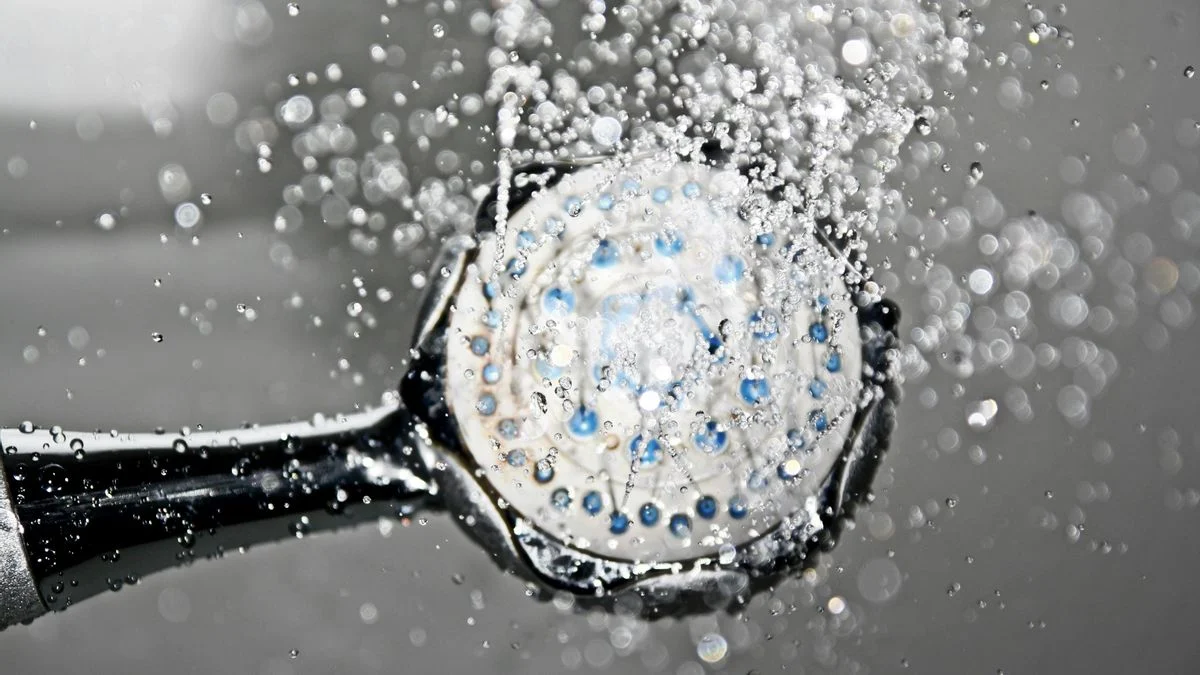
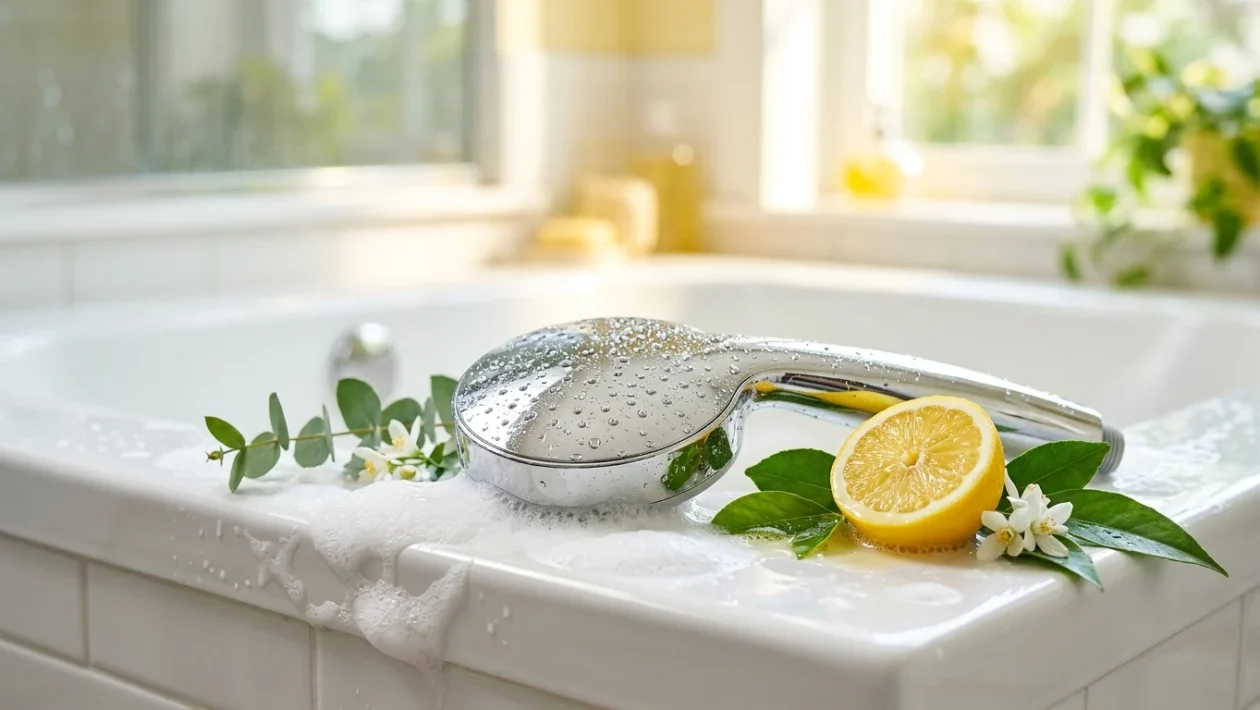
Remember to disassemble the showerhead before cleaning it.
Deep Cleaning the Showerhead
Showerheads are consistently overlooked during regular bathroom maintenance. Yet, they are one of the most critical components to keep completely sanitized.
Begin by unscrewing the showerhead from its hose or wall pipe. Dismantle the fixture as much as the manufacturer’s guidelines allow.
Cleaning vinegar is the ultimate weapon against hard water and stubborn limescale. Place the disassembled showerhead into a waterproof plastic bag.
Pour enough vinegar into the bag to fully submerge the components. Let it soak overnight, or for a minimum of two hours if you are short on time.
Finish the job with a clean toothbrush. Scrub away the loosened limescale and debris from the water nozzles and crevices.
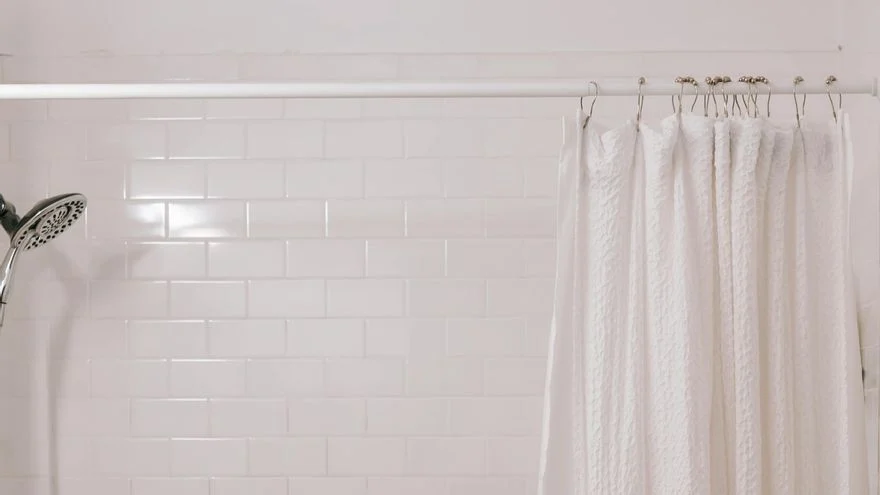
It is possible that your shower curtain can be washed in the washing machine.
Reviving the Shower Curtain
Shower curtains naturally accumulate dark or yellowish mildew stains along the bottom edge from daily water exposure.
Check the care label first. Many fabric shower curtains can go straight into the washing machine.
If yours requires hand washing, you do not necessarily need to take it down. Create a cleaning paste in a small basin using one tablespoon of baking soda, the juice of half a lemon, a squirt of liquid detergent, and water.
Submerge the dirty bottom edge of the hanging curtain directly into the basin. Let the fabric soak in the mixture for a full hour.
Use a soft-bristled brush to scrub the stains away. The discoloration will lift straight out of the material.
The Maintenance Schedule
Consistency prevents germ colonies from taking hold. Follow a strict timeline to maintain a sanitized bathing environment.
- Weekly: Scrub the shower floor and walls, and apply a surface disinfectant to the showerheads.
- Monthly: Wash the shower curtains, launder the bath mats, and thoroughly wipe down glass partitions.
- Annually: Perform a complete disassembly and deep soak of the showerhead.