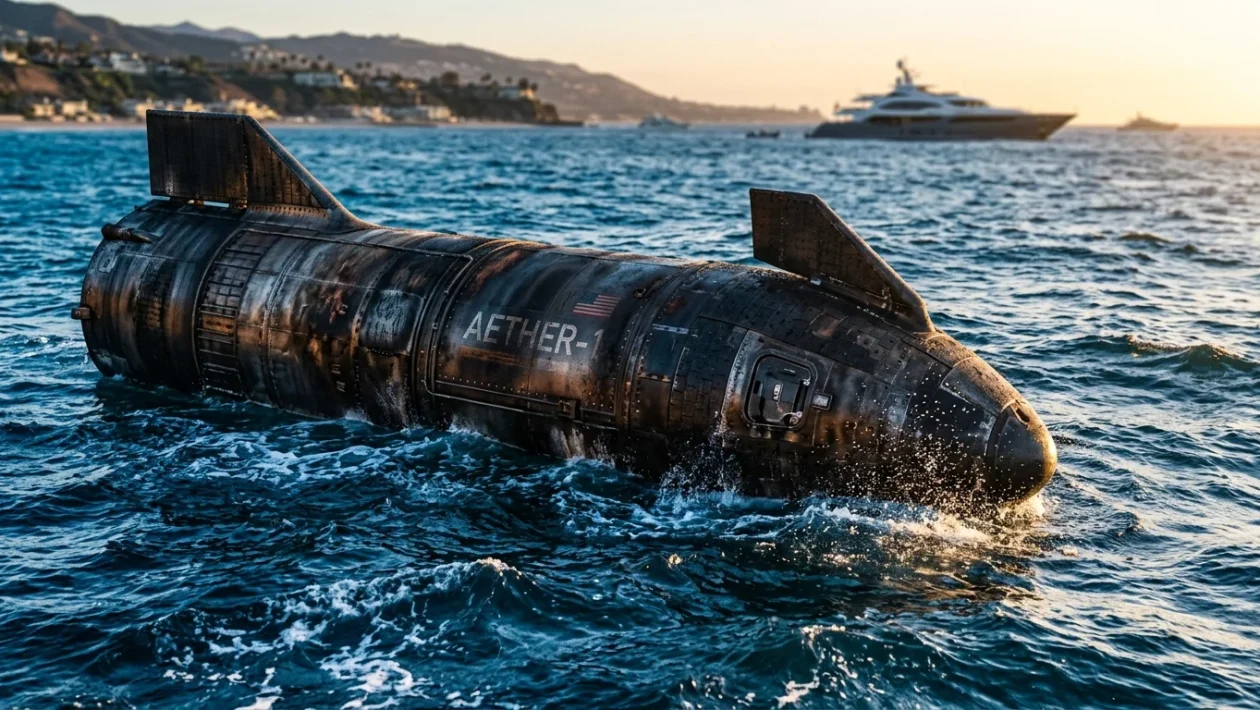
SpaceX’s colossal Starship V3 rocket survived its latest ocean landing so perfectly that it simply refused to sink.
Following a suborbital launch on July 24, the rocket’s 171-foot upper stage executed its softest splashdown on record.
Five days later, the massive spacecraft was still bobbing in the Indian Ocean off the coast of Western Australia.
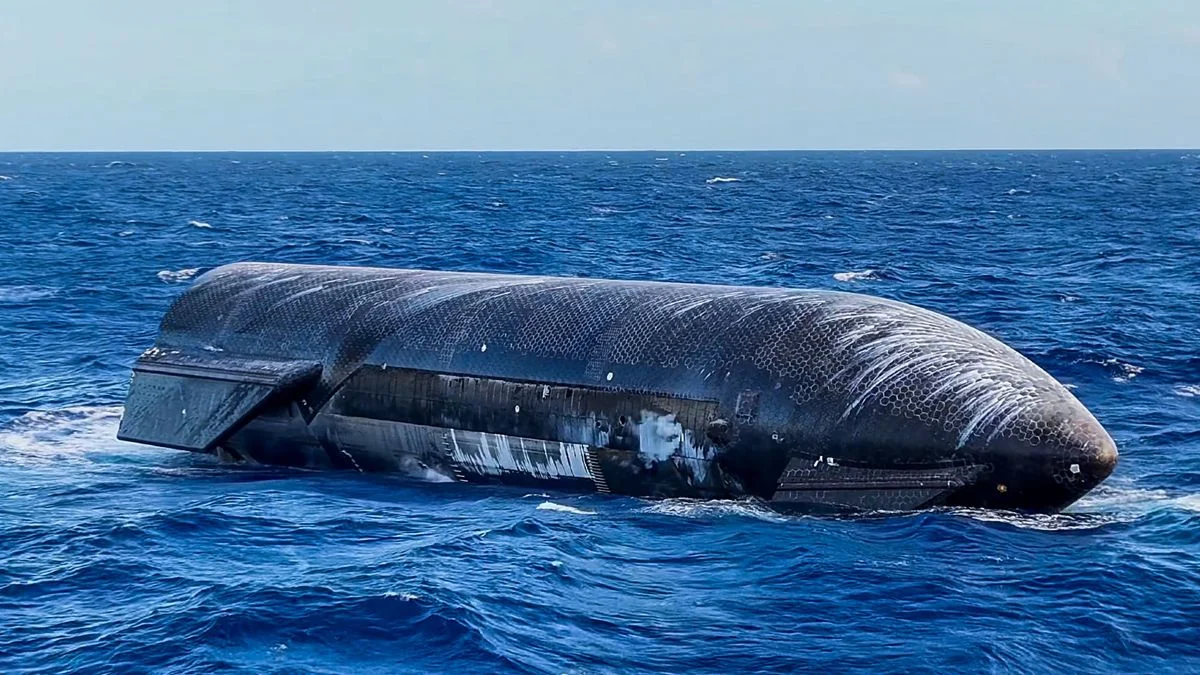
A large black cylinder with wing-like canards floats on top of a choppy blue sea.
A Seaworthy Spaceship
SpaceX officially confirmed the spacecraft’s status on July 28. The company posted an image to X, noting that the vehicle was “still afloat in the Indian Ocean.”
Covered in scorch marks from atmospheric reentry, the upper stage looks more like an abandoned submarine or a stranded orca than a piece of advanced aerospace hardware.
The 408-foot-tall Starship system, which includes the Super Heavy booster and the upper stage, launched on its Flight 13 test to successfully deploy next-generation Starlink satellites.
The Challenge of Rapid Reuse
SpaceX designed Starship with one primary objective: rapid, complete reusability.
Engineers want both stages to land back on Earth, undergo immediate inspection, refuel, and fly again within a matter of days.
While the intact ocean splashdown is a massive engineering triumph, significant technical barriers remain before that turnaround time becomes reality.
Heatshield Vulnerabilities
The spacecraft’s heatshield currently poses the biggest threat to SpaceX’s timeline.
Engineers must figure out how to make the thermal protection system far more durable. Some aerospace experts have pointed to current heatshield degradation as a “dead-end for all missions that require full and rapid reusability,” according to a recent report from Ars Technica.
Despite these critical hurdles, keeping a second-stage rocket structurally intact and floating like a buoy four days after leaving space proves the fundamental resilience of the hardware.