
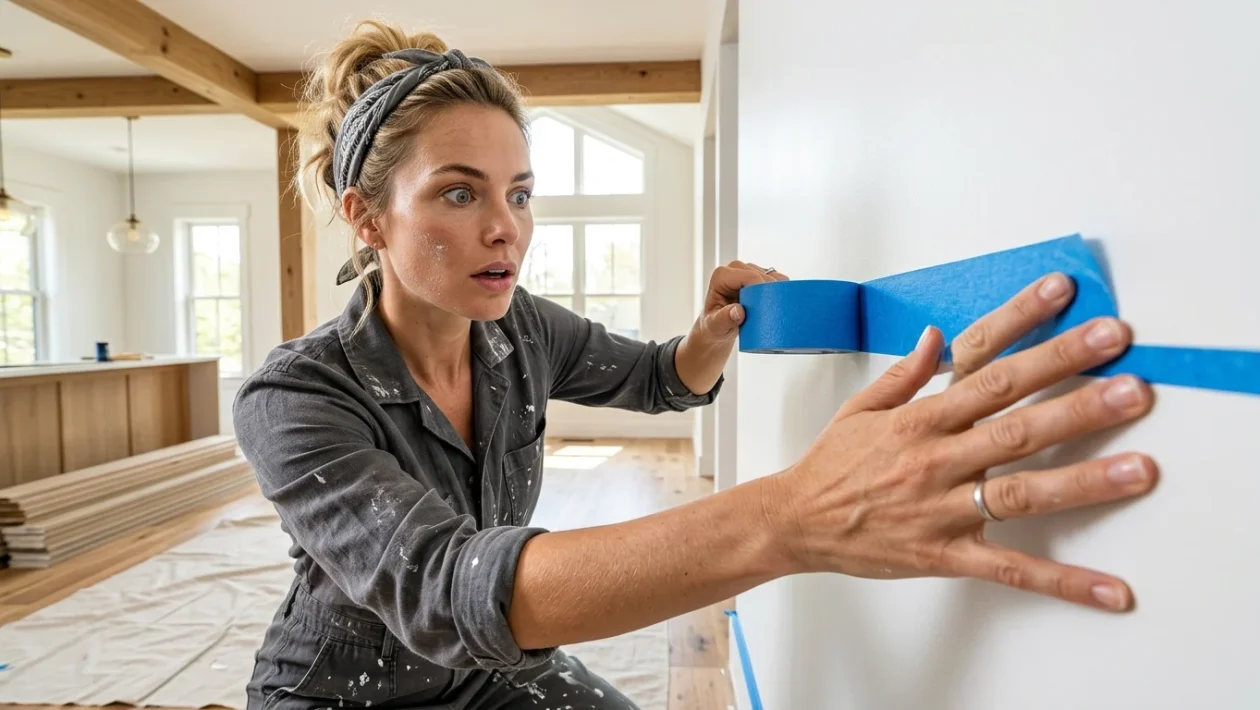
Millions of homeowners and professionals reach for blue painter’s tape without a second thought. Whether crisping up trim work or building an accent wall, that vivid blue strip stands between a flawless finish and a jagged mess.
The bright hue is not a random design choice. It stems from a mix of high-stakes branding and clever chemical engineering.
A Branding Strategy Born in the 1980s
Before painter’s tape existed, people relied on traditional off-white masking tape. Standard masking tape featured an aggressive adhesive that caused major headaches for DIYers.
It baked onto walls, shredded into tiny pieces during removal, and frequently pulled off drywall or fresh paint.
In the late 1980s, 3M invented a low-tack, easy-release alternative. The company needed a visual way to distinguish its new product from cheap, sticky masking tape so consumers wouldn’t mix them up.
3M selected a distinctive royal blue color and trademarked it as ScotchBlue. Once the product dominated the market, blue became synonymous with painter’s tape, prompting competitors to follow suit.
Engineered for Visibility and Sunlight
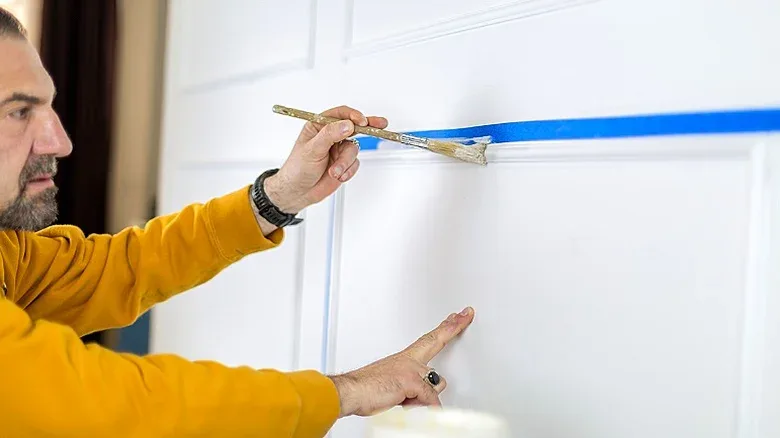
Blue painter’s tape applied to a wall.
Beyond branding, the blue color serves a highly practical purpose: visibility. Blue contrasts sharply against almost every common paint color, including white trim, beige, gray, and dark drywall.
This high visibility helps painters see exact mask lines. It also highlights tiny gaps where paint might bleed through and ensures no stray pieces are left behind during cleanup.
The color also plays a role in durability. Regular beige masking tape degrades quickly under the ultraviolet rays of sunlight.
The combination of the blue dye and the underlying paper formulation is engineered to absorb and resist UV light. This allows the tape to remain stuck—and still peel away cleanly—for up to 14 days, even on sunny windows or outdoor trim.
When to Ignore the Blue Tape
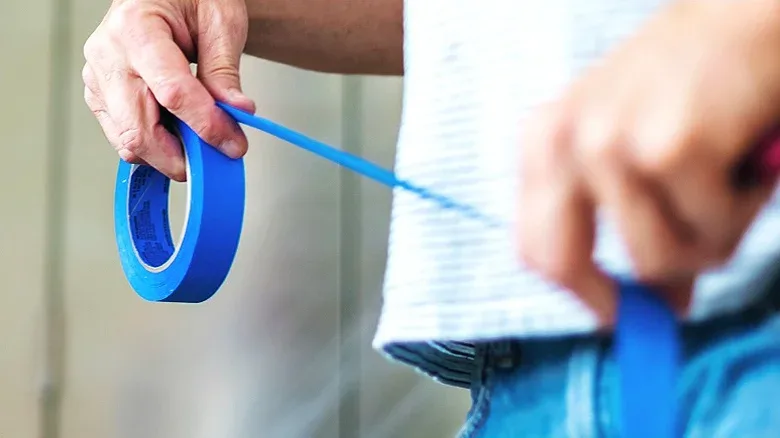
Different colored rolls of painter’s tape.
While blue dominates the home improvement aisles, it isn’t the only option. Green, yellow, and purple tapes are formulated for specific environments.
Blue remains the standard for medium stickiness. However, green tape offers stronger adhesion, making it ideal for rough surfaces like brick.
For projects requiring an ultra-gentle touch, purple or yellow tapes are the best bet. Standard blue tape might still pull up fresh paint on highly delicate finishes.




