
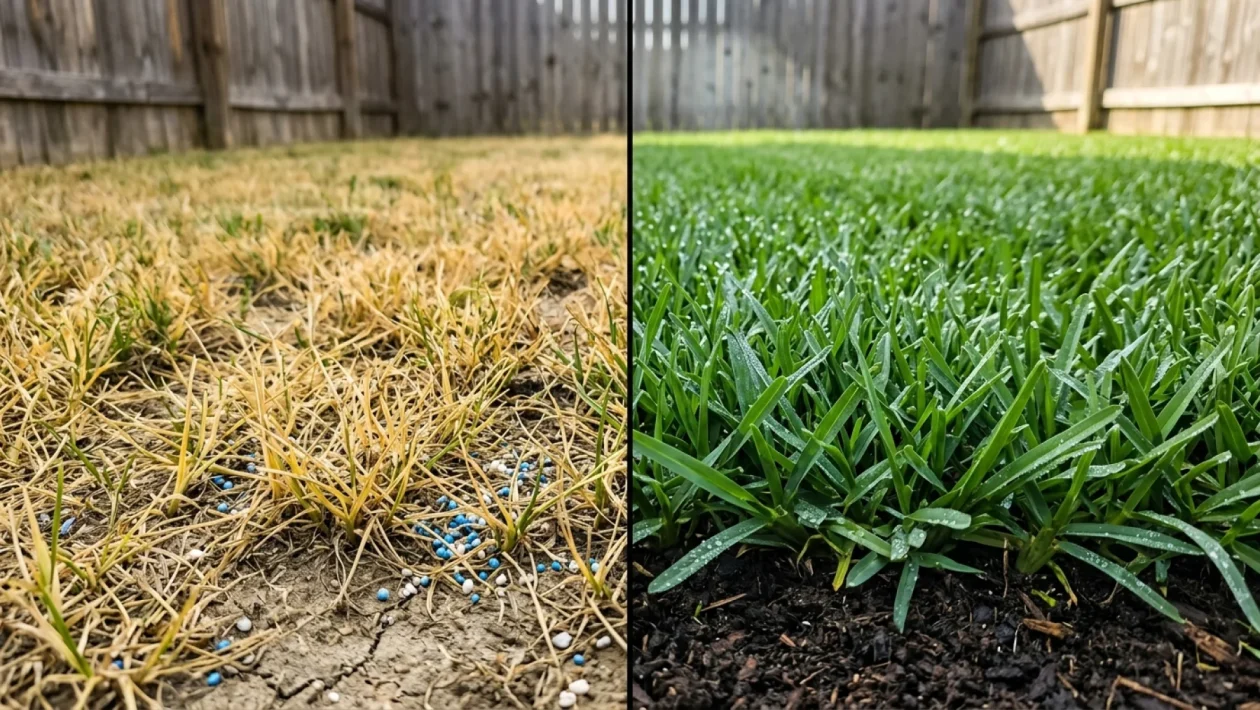
You are actively poisoning your property and burning cash while doing it. Most homeowners hit the panic button right about now, dumping harsh chemicals on their grass to force it into submission. But those outdated, heavy-handed tactics are exactly what is killing your soil and causing long-term damage. Let’s ditch the poison and look at the smart, safe fixes to build a bulletproof yard this May 2026.
Lawn Care Mistakes: Why Your Routine Is Failing
People treat their turf like a concrete floor that just needs a fresh coat of green paint. The reality is that your soil is a living, breathing ecosystem.
When you reach for the heavy synthetics the second you see a dandelion, you wipe out the beneficial microbes. Lawn care mistakes like these create a vicious cycle of chemical dependency.
According to recent environmental data, over 60% of North American households overuse synthetic fertilizers, leading to severe chemical runoff in our local waterways. It is time to stop playing mad scientist in the garage and start working with nature.
Destroying Your May Yard: The Chemical Overload
We have all been there, wandering the garden aisles of Canadian Tire or Home Depot, overwhelmed by the neon bags of weed-and-feed. The promise of a pristine lawn in 24 hours is incredibly tempting, but it is a massive lie.
Dumping high-nitrogen synthetic fertilizer right now forces rapid top growth while completely starving the root system. You end up with grass that looks great for two weeks, then completely collapses the second the harsh summer heat arrives.
“The biggest error homeowners make in May is suffocating their soil with chemicals rather than feeding the microbiome. A healthy lawn defends itself,” says Dr. Robert Jenkins, a leading North American turf agronomist.
5 Toxic Blunders You Need to Drop Today
Here is the breakdown of the exact toxic habits you need to eliminate from your weekend routine immediately.
Mistake 1: Scalping the grass. Cutting your lawn shorter than three inches invites weeds and bakes the soil. Raise your mower deck right now.
Mistake 2: Blind chemical dumping. Throwing down weed killer without testing your soil pH is exactly like taking prescription meds without seeing a doctor.
Mistake 3: Drowning the turf. Overwatering washes away vital nutrients and encourages shallow, weak roots. Deep, infrequent watering is the ultimate secret.
Mistake 4: Nuking the pollinators. Broad-spectrum pesticides kill the bees and earthworms your lawn desperately needs to aerate the dirt naturally.
Mistake 5: Bagging your clippings. You are literally throwing away free, nitrogen-rich organic fertilizer. Mulch those clippings back into the turf!
| Toxic Habit | Safe Alternative |
|---|---|
| Synthetic Weed-and-Feed | Organic Compost Topdressing |
| Daily Shallow Sprinkling | Weekly Deep Soaking |
| Broad-spectrum Pesticides | Spot-treating with Iron HEDTA |
| Mowing at 1.5 inches | Mowing at 3 to 3.5 inches |
How to Rehab a Chemically Burned Patch
If you have already made some of these lawn care mistakes, do not panic. You can still rescue your turf before the serious heat hits.
Here is your foolproof recovery plan to bring that dead, crispy dirt back to life.
- Rake out the dead material: Aggressively clear the burnt grass using a stiff bow rake to expose the bare soil beneath.
- Flush the soil: Soak the affected area heavily with water for three consecutive days to dilute residual salts and chemicals.
- Apply organic matter: Spread a half-inch layer of high-quality compost or earthworm castings over the bare spot to restore nutrients.
- Reseed and protect: Throw down a premium grass seed blend suited for your climate and cover it lightly with peat moss to lock in the moisture.
Frequently Asked Questions
Can I skip fertilizing entirely in May?
You can absolutely skip the heavy synthetic stuff. However, applying a slow-release organic fertilizer or topdressing with compost right now gives your grass a safe, steady diet without the risk of burning.
Is it too late to aerate my lawn this spring?
Not at all. If the ground isn’t a muddy swamp and your grass is actively growing, grabbing a manual core aerator from a place like Lee Valley Tools is a brilliant weekend project to relieve soil compaction.
Why is my grass turning yellow despite watering?
Yellowing is often a massive red flag for nutrient lock-up caused by poor soil pH, or worse, a sign of lawn disease from overwatering. Back off the sprinkler schedule immediately and invest in a basic soil test kit.
🤝 Good luck getting your property back on track this season. By simply backing away from the harsh chemicals, you are already miles ahead of the neighbors.
💡 Remember, a truly resilient yard is built on patience and good soil biology, not neon bags of synthetic shortcuts.
📱 If this guide saved you from making a massive mess of your yard, share your thoughts with us or send this to a buddy who is about to ruin his grass.
👇 Drop the toxic habits, respect your soil, and get out there and enjoy your May weekend!




