Conventional air conditioners rely on chemical refrigerants that cycle between liquid and gas states. While effective at cooling homes, these fluorinated gases act as highly potent greenhouse emissions that can trap thousands of times more heat than carbon dioxide.
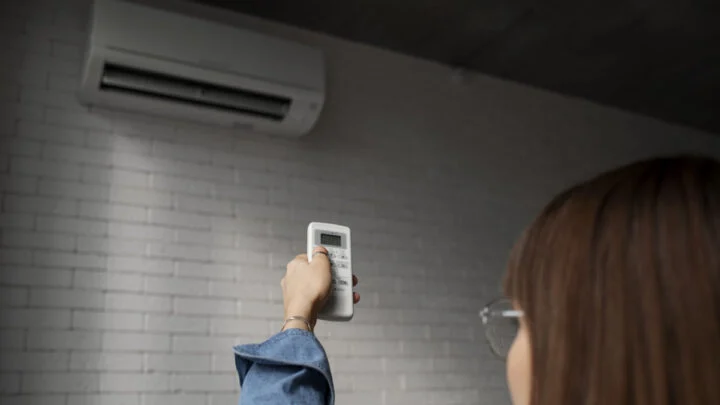
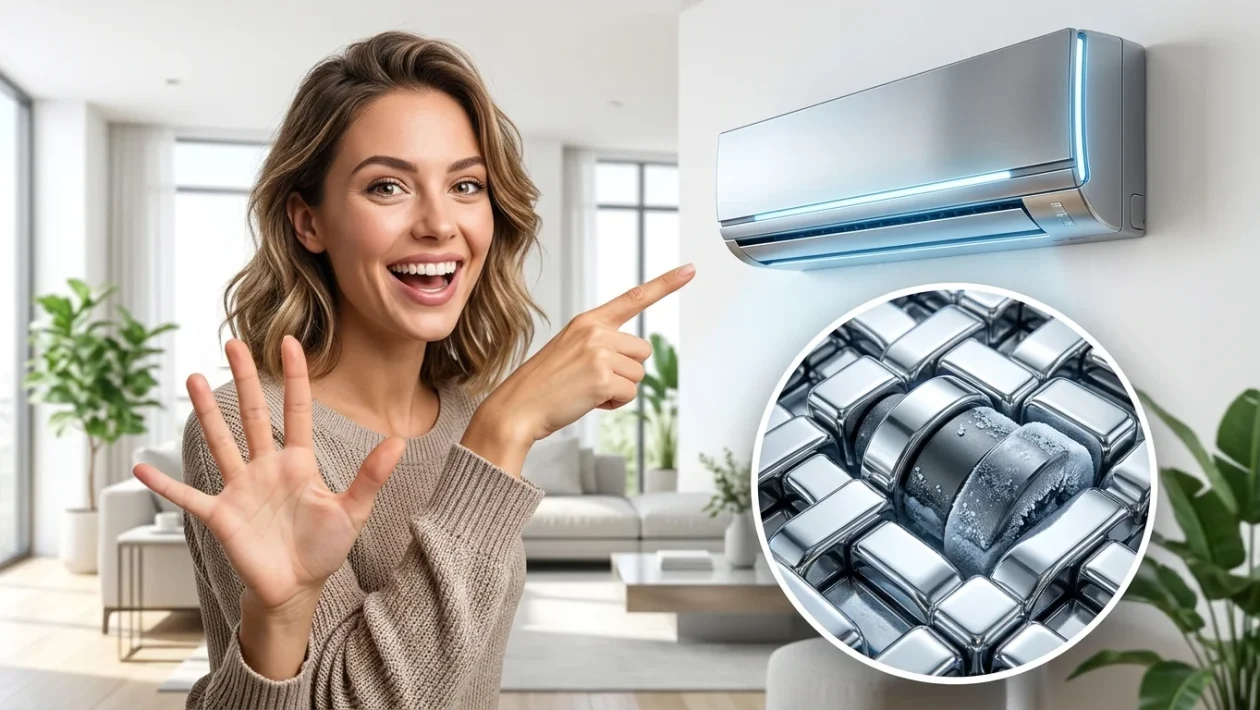
A woman controlling an air conditioner with a remote.
The European Union has already moved to restrict their use, but chemical alternatives like propane and ammonia introduce secondary hazards, including flammability and toxicity. Currently, cooling accounts for roughly 3% of global greenhouse gas emissions.
With global electricity demand for air conditioning expected to more than triple by 2050, the industry is searching for radical hardware alternatives to meet the climate crisis.
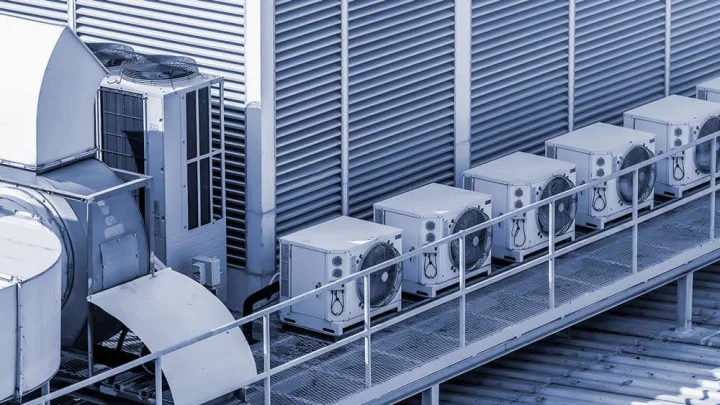
A standard wall-mounted air conditioning unit.
The Shift to Solid-State Cooling
A new category of “solid-state cooling” technology is actively moving from university laboratories into real-world trials. These systems eliminate liquid and chemical refrigerants entirely.
Instead, they utilize specific materials that absorb or release heat when subjected to external forces like mechanical pressure, electricity, or magnetic fields.
At Germany’s Saarland University, a research team led by Paul Motzki is testing elastocaloric cooling. They utilize nickel-titanium alloys that naturally cool down when stretched and subsequently released.

Professor Paul Motzki developing new elastocaloric climate refrigerants alongside Professor Dirk Bähre’s research group.
Early laboratory results indicate this method can reduce indoor temperatures by 5 to 10 ºC while operating with higher energy efficiency than traditional AC systems.
Backed by a €4 million grant from the European Innovation Council (EIC Pathfinder) and working alongside researchers in Italy and Slovenia, the Saarland team partnered with Irish firm Exergyn. The joint venture aims to install the solid-state technology in new buildings within the next few years.
Magnets, Crystals, and Semiconductors
Multiple startups across Europe and North America are racing to commercialize similar gas-free cooling hardware.
- Canada’s Mimic Systems developed a semiconductor-based heat pump and has already deployed a functional prototype in a Vancouver apartment.
- German startup Magnotherm is manipulating magnetic fields to generate cooling, with plans to run trials in a supermarket chain before entering the residential market.
- UK-based Barocal, a Cambridge University spin-off, secured $10 million in initial funding to develop plastic crystals that release heat when heavily compressed.
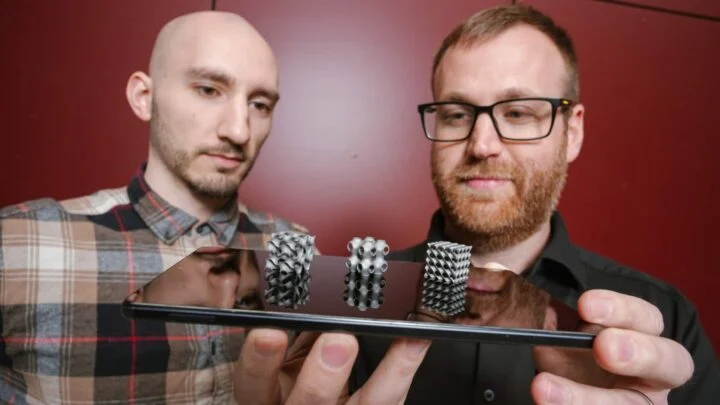
Doctoral students Thorben Trodler and Michael Fries optimizing 3D-printed nickel-titanium alloy heat exchange structures.
Durability Hurdles and Urban Planning
Despite heavy venture capital interest and direct investments from major appliance manufacturers, solid-state cooling faces massive durability challenges. Systems that rely on repeatedly stretching or compressing physical metals must endure millions of physical cycles over a decade to meet basic consumer lifespan expectations.
Urban planners and climate experts emphasize that no single appliance will solve Europe’s heat crisis. Because many European buildings were historically designed to retain heat, dense urban areas actively trap rising temperatures.
Experts advocate for a strict “cooling hierarchy.” This strategy requires cities and builders to prioritize passive heat reduction through external shade, cross-ventilation, and reflective materials before implementing mechanical cooling systems.
Some municipalities are already building community-scale infrastructure. Paris operates a vast underground urban cooling network that circulates cold water directly from the Seine River to chill public buildings.