The Return of Breathable Backyards
Solidly paved backyards are rapidly losing ground to a landscaping solution straight out of the 1970s. Homeowners are increasingly ripping up concrete in favor of stone paths, gravel, and open-joint paving.
This design shift creates a highly natural aesthetic while solving major environmental issues. The permeable layout allows rainwater to filter directly into the soil.
It also drastically reduces heat accumulation and naturally defines outdoor lounging areas without building solid barriers.
Beating the Concrete Heat Trap
Traditional concrete surfaces act as massive thermal sponges. They absorb intense solar energy during the day and release that heat long after the sun goes down.
In backyards lacking trees or heavy vegetation, this trapped heat reflects directly onto nearby walls, doors, and windows. This localized greenhouse effect forces air conditioning systems to work harder, making interiors uncomfortably warm.
Furthermore, solid impermeable pavements completely block natural water absorption, increasing yard runoff and localized flooding.

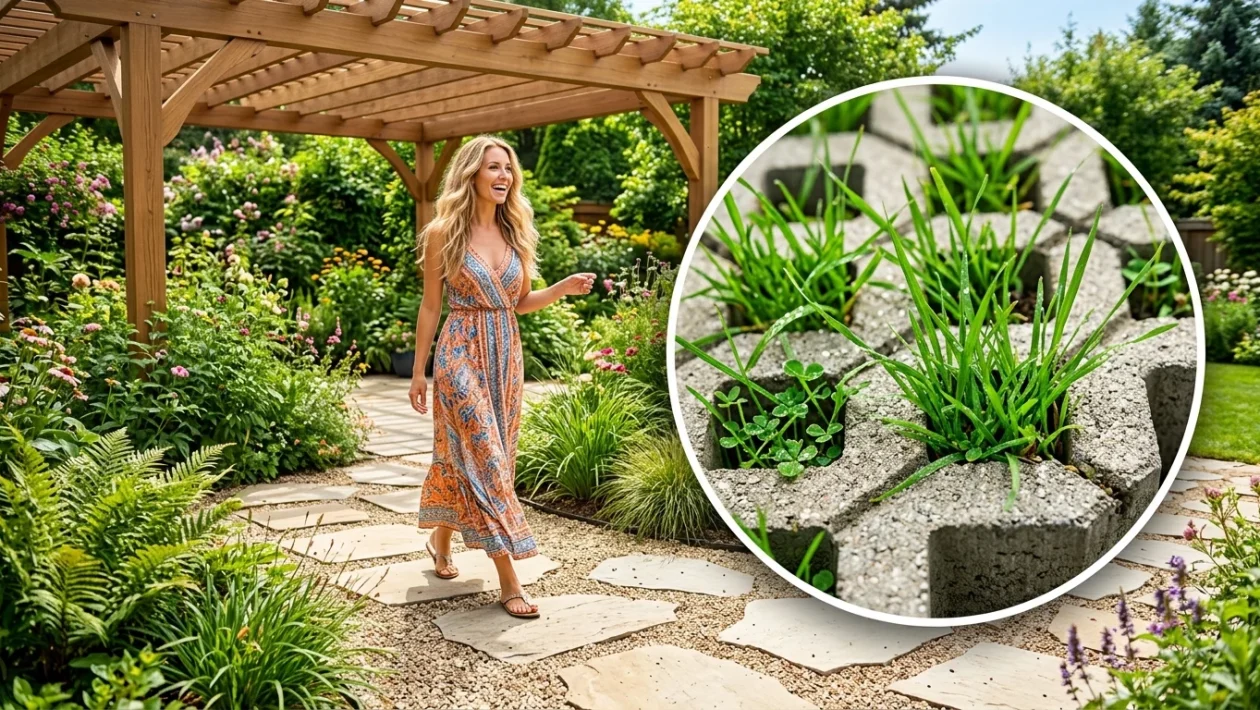
Photo of a backyard in a garden with a pergola.
Mixing Materials for Function and Flow
Modern yard designs now blend natural stones, loose gravel, hollow concrete blocks, and raw dirt or native vegetation. The strategy relies on keeping the surface solid only where heavy foot traffic demands it.
The remaining square footage is left open for materials that actively promote drainage.
Builders are installing pavers with wide open joints and stabilizing gravel in high-use walking areas. They are also utilizing hollow blocks filled with grass and placing spaced stone slabs directly over dirt or gravel bases.
Practical Material Choices for Outdoor Zones
Selecting the right material comes down to the specific function of the outdoor space. Driveways and garages still require heavy-duty foundations to support the weight of vehicles.
However, side walkways, seating zones, and garden paths can easily utilize much lighter materials. Proper ground preparation remains non-negotiable for these areas.
Placing heavy paving stones directly onto loose soil inevitably leads to sinking, uneven trip hazards, and thick mud after heavy rainfall.
Even natural, breathable surfaces require basic upkeep. Fallen leaves and compacted dirt can easily clog open joints, while loose gravel will migrate across the yard if not contained by sturdy borders. A professionally built base layer is the ultimate key to keeping these natural pathways stable and highly functional.