
When a rosemary plant begins to dry out and turn brown, most people panic and reach for the watering can. They assume the plant is simply dehydrated.
According to botanists, this knee-jerk reaction is the fastest way to kill the herb. Drowning the soil in excess moisture quickly rots the plant’s root system.
“This happens much more often than it seems, and it’s not due to a lack of care,” explains Martín, a biologist and botanist from the University of Buenos Aires. Speaking to the million subscribers on his YouTube channel MiradasBiológicas, he noted that the primary issue is treating rosemary like any standard houseplant.
The Rich Soil Trap
The most fatal mistake growers make is potting rosemary in dark, nutrient-dense soil packed with compost. This type of organic mix retains far too much water.
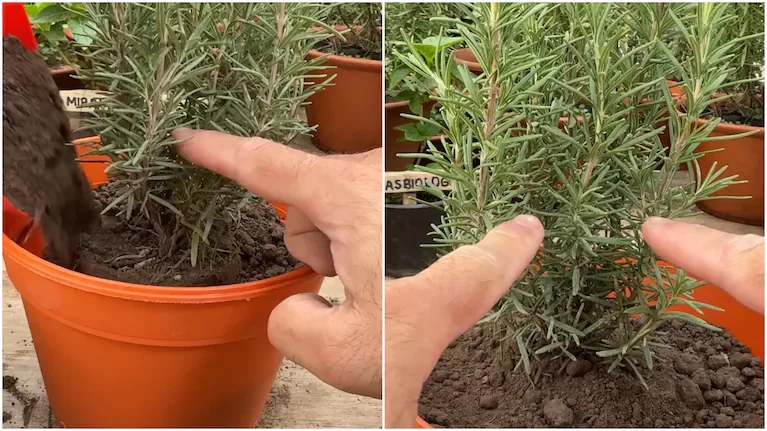
Video placeholder demonstrating rosemary plant care.
“Don’t start watering more. First, we are going to check the soil,” Martín advises.
Instead of premium compost, rosemary actually thrives in depleted, older dirt that lacks organic matter or coconut fiber. If you water the plant and the moisture pools on the surface, taking too long to drain, the substrate is dangerously dense.
To fix poor drainage, Martín recommends mixing three parts standard soil with one part sand. This creates a loose substrate that drains rapidly, forcing the plant to develop much stronger roots.
Ditching Plastic for Clay Pots
Your choice of container heavily impacts how long the soil stays wet. Clay is the ideal material for cultivating rosemary because it breathes, helping to naturally evaporate excess water from the substrate.
While plastic pots are usable, they require manual modifications. Growers must ensure the bottom has adequate drainage holes, and Martín suggests drilling small perforations directly into the sides of the plastic container to improve airflow.
Opening the Canopy
Rosemary requires structural maintenance similar to pruning fruit trees. When branches grow tightly together pointing upward, the center of the plant is starved of both sunlight and necessary air circulation.
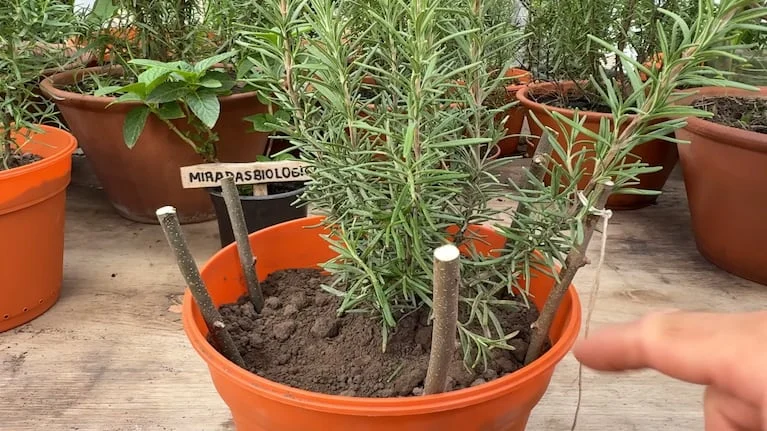
An expert gardener opening the branches to allow sunlight and air circulation.
“This can cause them to start drying out and eventually fall off,” the botanist warned.
To solve this overcrowding, push small stakes into the soil around the perimeter of the pot. Using standard cotton string, gently tie the flexible branches outward to open the center canopy without snapping the stems.
Meeting the Sunlight Quota
Because rosemary is native to the Mediterranean, it demands high sun exposure to survive. The herb is biologically adapted to harsh, direct light rather than shady indoor corners.
Experts recommend placing the plant in a location that receives at least five to six hours of direct sunlight daily, ideally during the morning. Deprived of adequate light, rosemary branches will stretch aggressively, weaken, and lose their dense foliage.