Household hacks using simple kitchen ingredients have surged in popularity thanks to their practicality and low cost. One of the most common tricks involves placing whole cloves directly into a fresh lemon.
This simple combination is widely used as a natural air freshener and a makeshift repellent for keeping certain insects at bay.
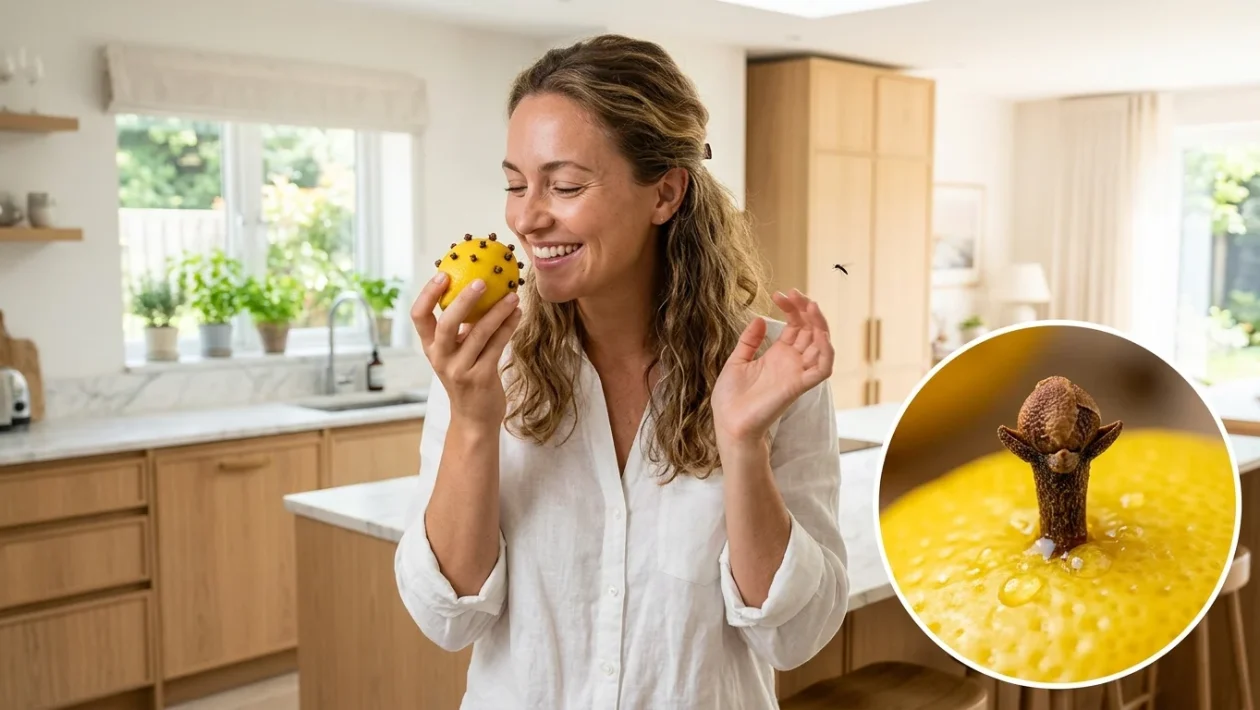
The preparation requires zero special tools. You simply take a whole lemon and push between 15 and 30 cloves directly into its rind.
Once assembled, the studded lemon is placed in areas prone to mosquitoes or wherever you want to neutralize stubborn odors.
The Science Behind the Scent
The effectiveness of this DIY trick comes down to the aromatic properties of both ingredients. The lemon constantly releases citrus-based essential oils, while the cloves contain eugenol.
Eugenol is the chemical compound responsible for the strong, distinct aroma of cloves.
When combined, they create a scent that humans find highly pleasant, but mosquitoes and other insects actively avoid.
A Natural Odor Eliminator
Beyond acting as a potential insect repellent, the lemon-clove combo is an excellent tool for aromatizing indoor spaces. Many people place them in kitchens, dining rooms, or near windows to provide a fresh, spicy scent without relying on artificial aerosol sprays.
It is particularly useful for masking lingering smells after cooking.
If you have recently cooked foods with intense aromas—like fish, onions, or deep-fried dishes—leaving one of these lemons on the counter helps neutralize the air naturally.
Lifespan and Limitations
To maintain its effectiveness, the lemon needs to be replaced once it begins to dry out or lose its fragrance. Depending on the temperature and humidity of the room, this usually takes one to two weeks.
Health experts note that while this traditional remedy can reduce the presence of bugs in small spaces, its efficacy varies wildly based on environmental conditions.
It should act only as a complement to your home routine. This method does not replace approved insect repellents or standard pest control measures when facing a large infestation or significant sanitary risks.