Landscape fabric is often sold as a permanent cure for yard maintenance. Homeowners bury it under mulch, expecting decades of weed-free garden beds and minimal weekend labor.
The reality is much different. Depending on the material and the environment, landscape fabric has a finite lifespan ranging from one to 10 years.
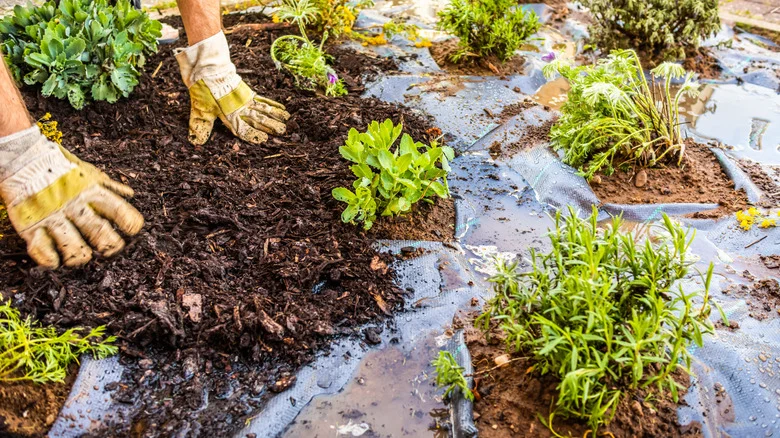
A person applying fresh mulch over a newly installed weed barrier in a garden bed.
Once a geotextile barrier degrades, it transforms into a tangled, weed-choked mess that actively harms your soil. Knowing exactly how long your specific barrier will last—and recognizing the signs of failure—will save you hours of grueling yard work.
Choosing the Right Fabric for the Timeline
The cheapest rolls at your local home improvement store are typically lightweight, non-woven polypropylene. Because this material is thin and lacks tensile strength, it rarely lasts longer than one to three years.
Direct sunlight breaks down non-woven fabric rapidly. It tears easily under foot traffic and aggressive root systems, making it strictly suited for temporary annual beds, short-term weed suppression, or lining raised planter boxes.
For residential yards, standard woven polypropylene is the most common middle-ground option. This material features a tough, crisscross grid of plastic fibers that resists punctures while letting water and nutrients seep through.
Standard woven fabric reliably lasts three to five years. It performs best under soft covers like natural wood chips or pine straw in standard flower beds and shrub borders.
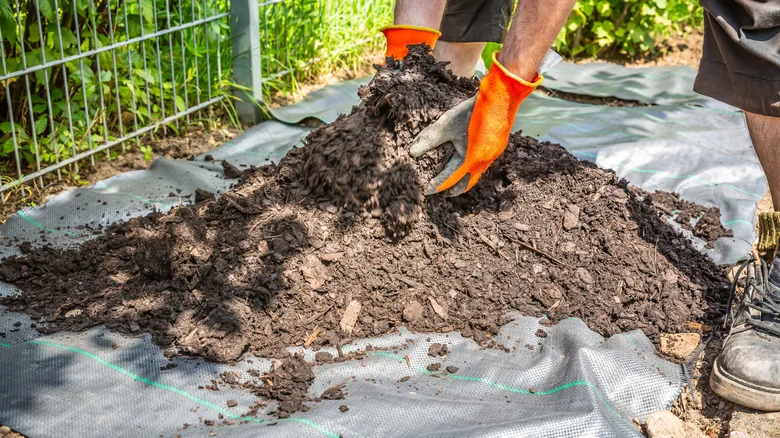
Close-up of dark mulch being spread across an overlapping sheet of landscaping fabric.
Heavy-Duty Hardscaping and Eco-Friendly Alternatives
For permanent landscape projects, heavy-duty geotextile or needle-punched woven fabrics are the industry standard. When properly shielded from UV rays by a thick layer of cover, these industrial-grade materials easily last 10 years or more.
Durability is non-negotiable under heavy gravel, stone pathways, patio pavers, or rubber mulch. Sharp stones constantly shift underfoot, requiring a fabric that can endure friction and harsh weather for a decade without tearing.
On the opposite end of the spectrum are biodegradable fabrics designed to intentionally disappear. Manufactured from natural fibers like jute, coir (coconut husk), or cornstarch-based polylactic acid (PLA), these temporary barriers serve a highly specific purpose.
Biodegradable fabrics break down over 12 to 24 months as soil microbes, moisture, and earthworms digest the organic matter into the soil. They provide excellent temporary weed control and erosion stabilization while native perennials and eco-friendly vegetable gardens establish their roots.
Red Flags: When to Tear It Out
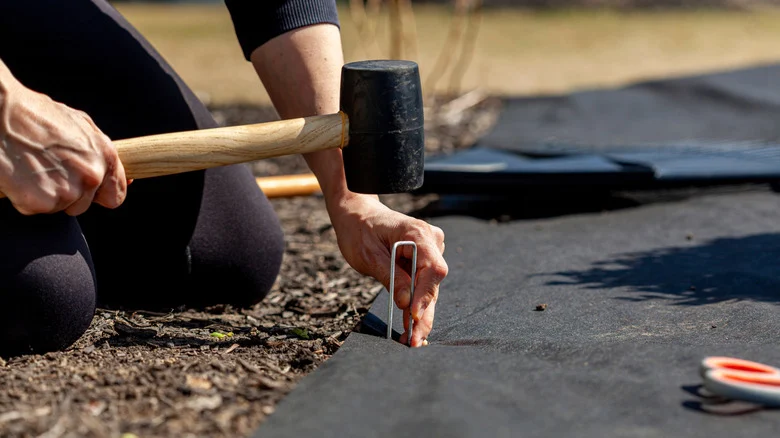
A gardener securing black landscape fabric into the soil using metal landscape staples.
Even commercial-grade geotextiles eventually fail. Because the material is hidden beneath soil or stone, the earliest warning signs often masquerade as standard yard issues.
A few rogue weeds sprouting in the top layer of your mulch is completely normal, as seeds blow in on the wind. However, if you pull a weed and feel serious resistance, the barrier is compromised.
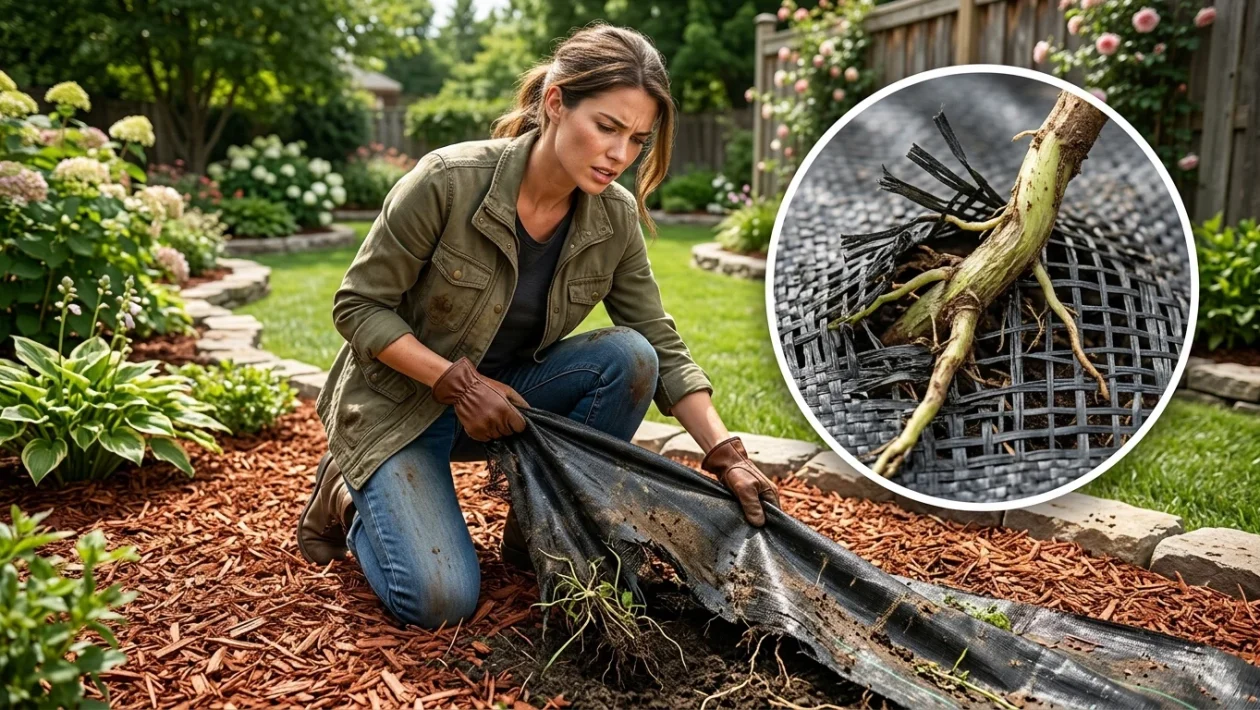
When root systems tangle tightly within the fabric weave, the barrier stops blocking weeds and starts anchoring them in place. Once this happens, the material must be completely removed.
Visible shredding is another dead giveaway. If you spot frayed, fuzzy edges peeling up around plant bases or torn patches from lawnmower snags, UV rays and physical wear have destroyed the structural integrity.
Finally, pay attention to drainage. Landscape fabric is explicitly designed to be permeable, but decomposing mulch and fine soil particles eventually clog the microscopic pores between the fibers.
If puddles remain in your garden beds long after a rainstorm, or if the soil beneath the fabric feels bone-dry despite heavy watering, the material has become impermeable and needs to be replaced.