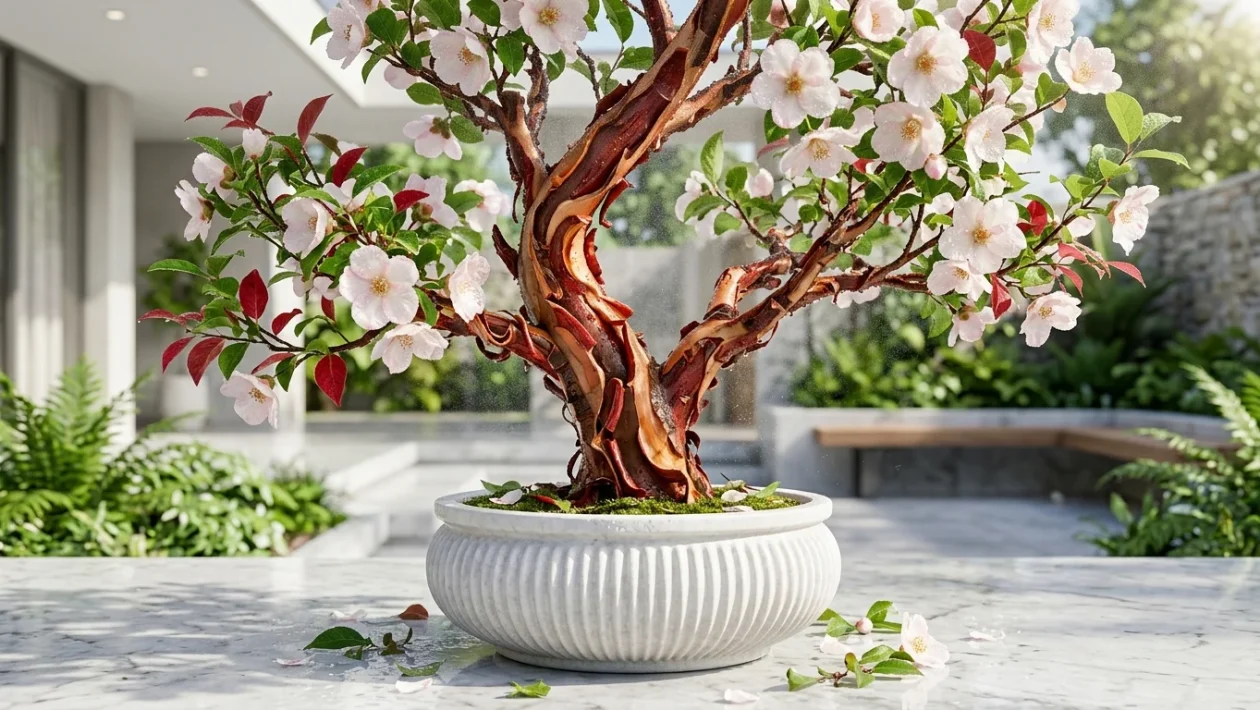
Landscaping a tight yard does not mean you have to skip planting trees. A well-chosen compact variety anchors your outdoor space, providing height and structure without devouring precious square footage.
According to landscape designers, a tree brings instant maturity and permanence to a property. Sarah Shynn of the award-winning nursery Majestic Trees breaks down seven top-tier species engineered for small footprints.
1. Amelanchier lamarckii (June Berry)
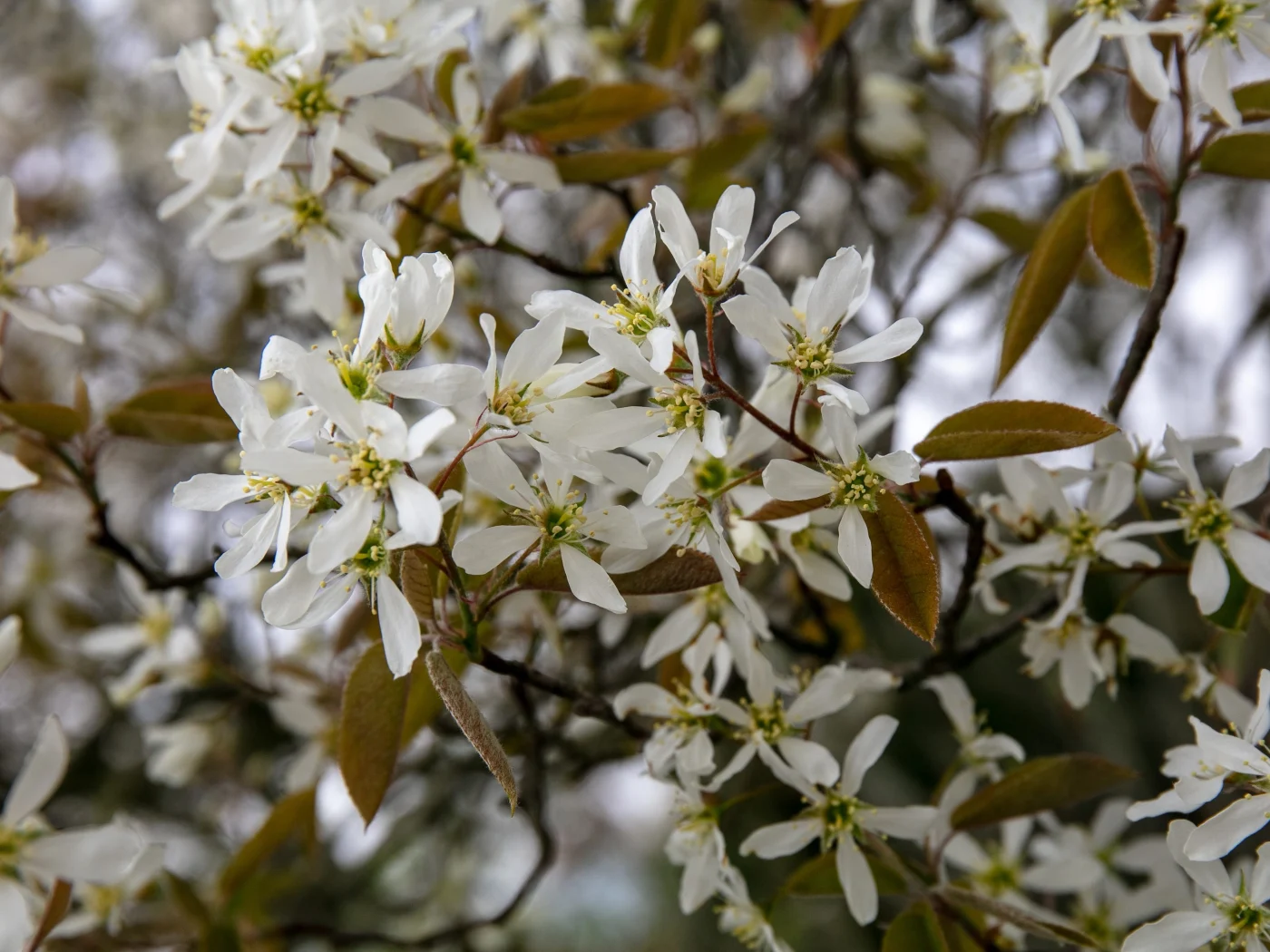
Delicate white blossoms blooming on the branches of a June Berry tree in early spring.
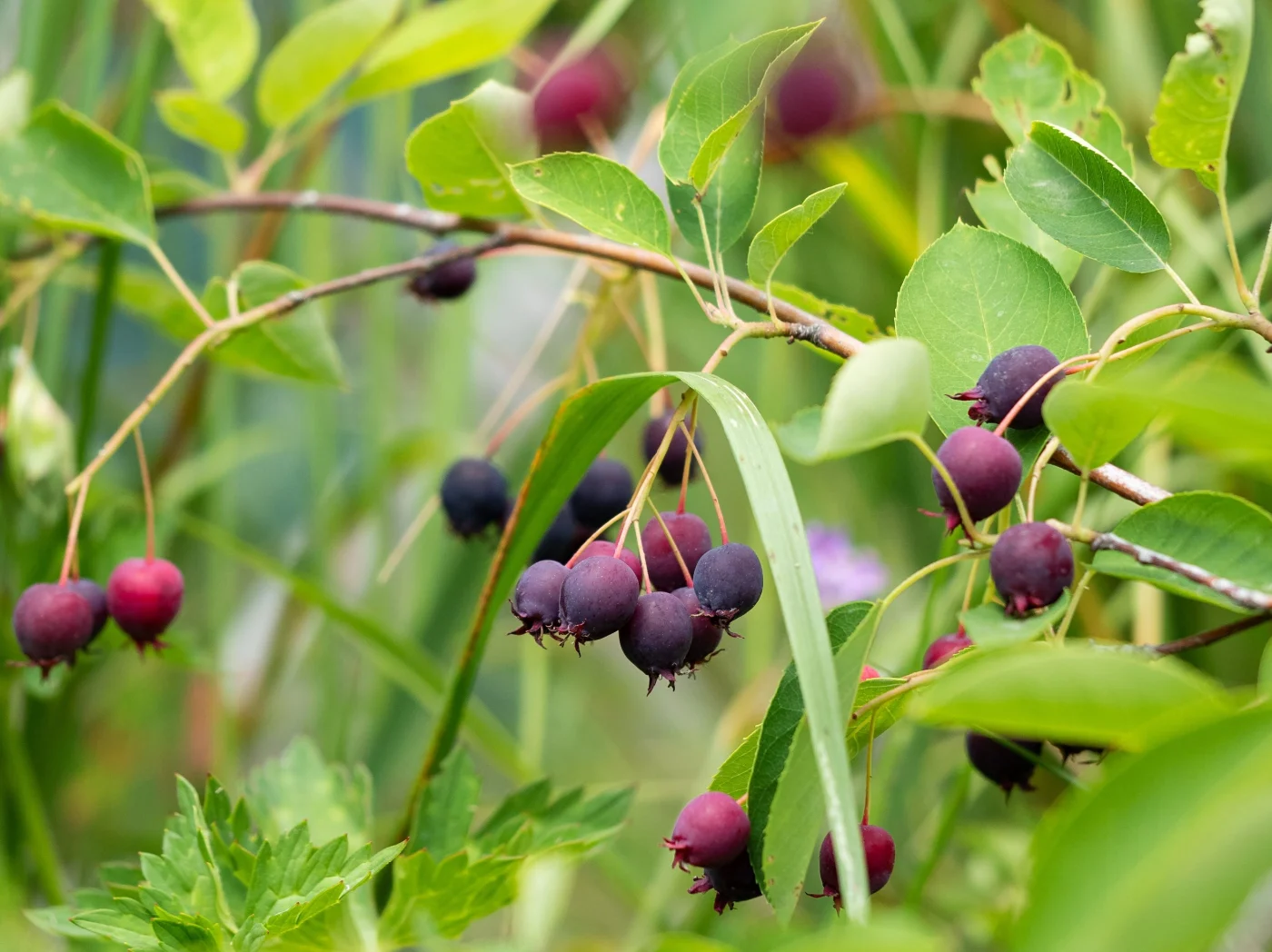
The June Berry is a graceful, arching tree that delivers visual interest in every season. Spring brings delicate white blossoms, followed by bronze-tinted leaves that mature to a fresh summer green.
Its light canopy casts a dappled shade, while the small edible berries serve as a vital food source for local birds.
Vibrant orange, scarlet, and crimson foliage on an Amelanchier lamarckii in the autumn.
By autumn, the foliage ignites into a tapestry of copper, scarlet, and crimson. This adaptable tree typically hits 13 to 16 feet (4–5 meters) after a decade.
How to grow it: Plant in moist, well-drained, neutral to acidic soil. While it tolerates partial shade, full sun guarantees the richest fall colors.
2. Prunus × yedoensis (Yoshino Cherry)
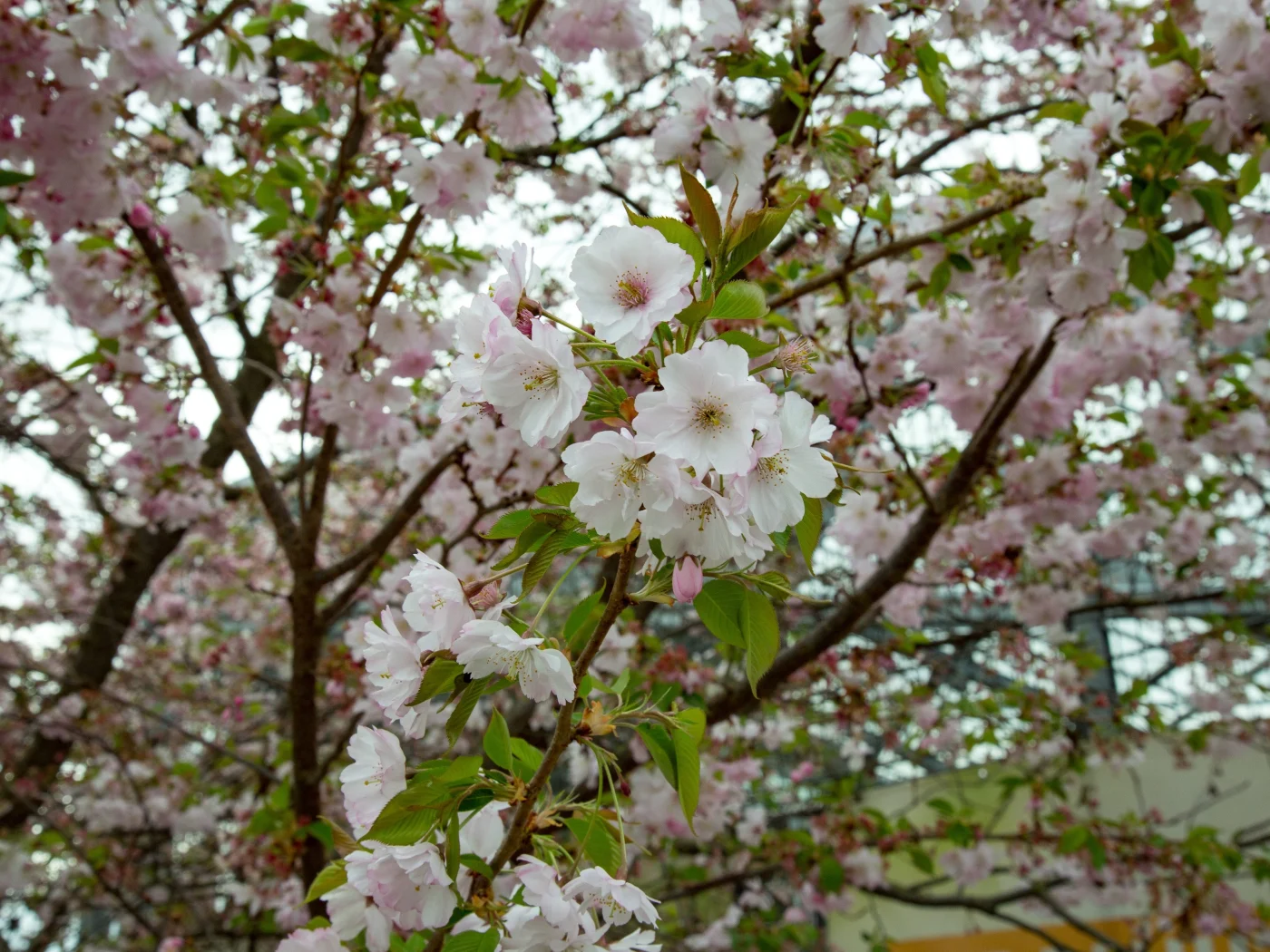
A heavy bloom of pale blush-white flowers covering a Yoshino cherry tree.
Famous for its spectacular spring display, the Yoshino cherry erupts in almond-scented, blush-white flowers in late March or early April. These dramatic blooms often appear before the leaves even unfurl.
Summer brings fresh green foliage, which eventually turns a soft yellow in the fall. Glossy black fruits follow the flowers, offering another reliable food source for birds.
How to grow it: This hardy tree thrives best in full sun and well-drained soil.
3. Prunus serrula (Ornamental Cherry)
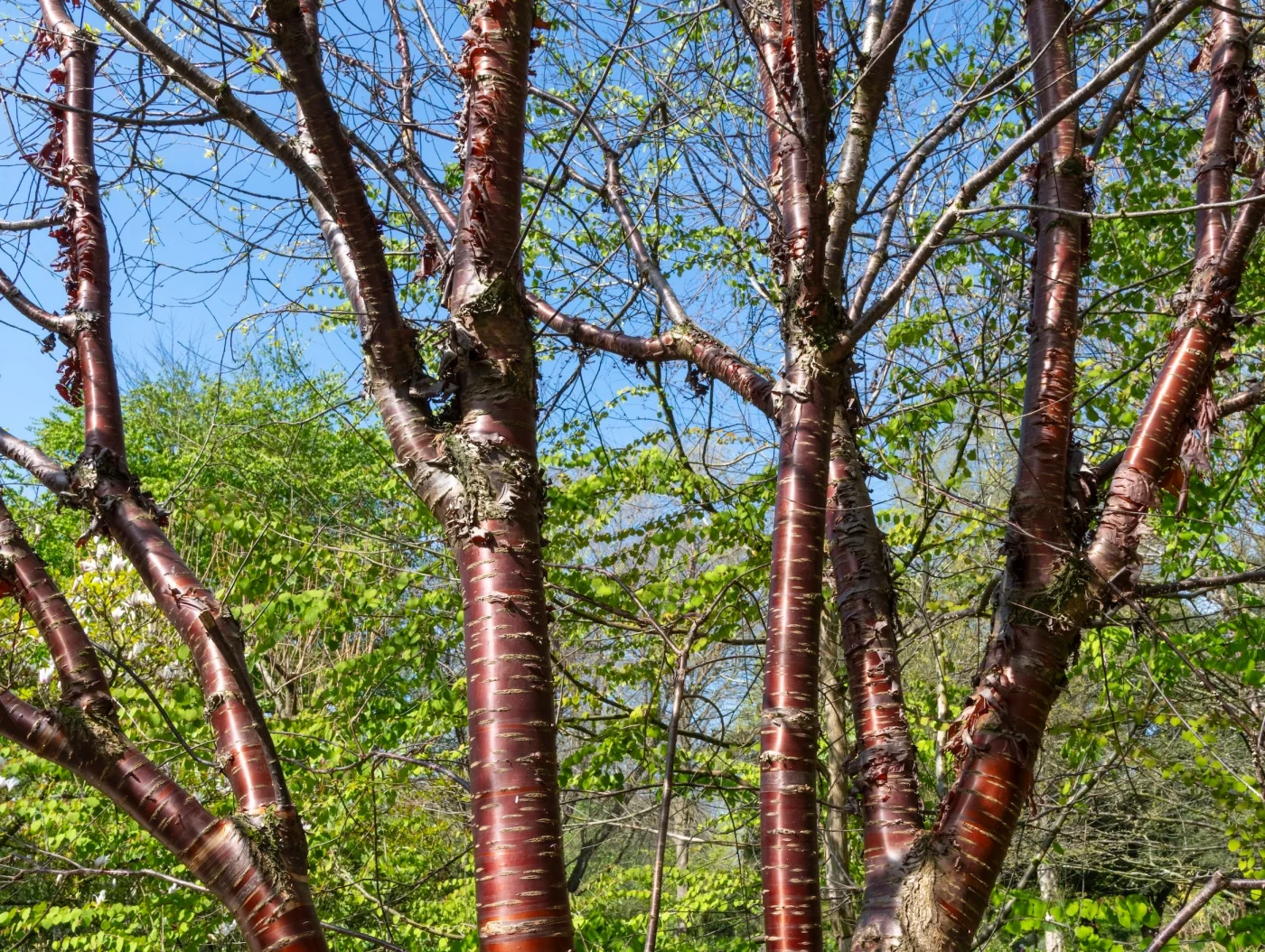
The distinctive polished, mahogany-red peeling bark of the Prunus serrula.
This ornamental cherry stands out in the dead of winter. Its polished, mahogany-red bark peels in thin layers, catching the winter sunlight and providing striking contrast against pale walls or dark evergreens.
Narrow, willow-like leaves and late-April white flowers soften its architectural look in the spring.
How to grow it: Plant in a sunny, sheltered spot with fertile, well-drained soil.
4. Betula utilis ‘Fascination’ (Chinese Red Birch)
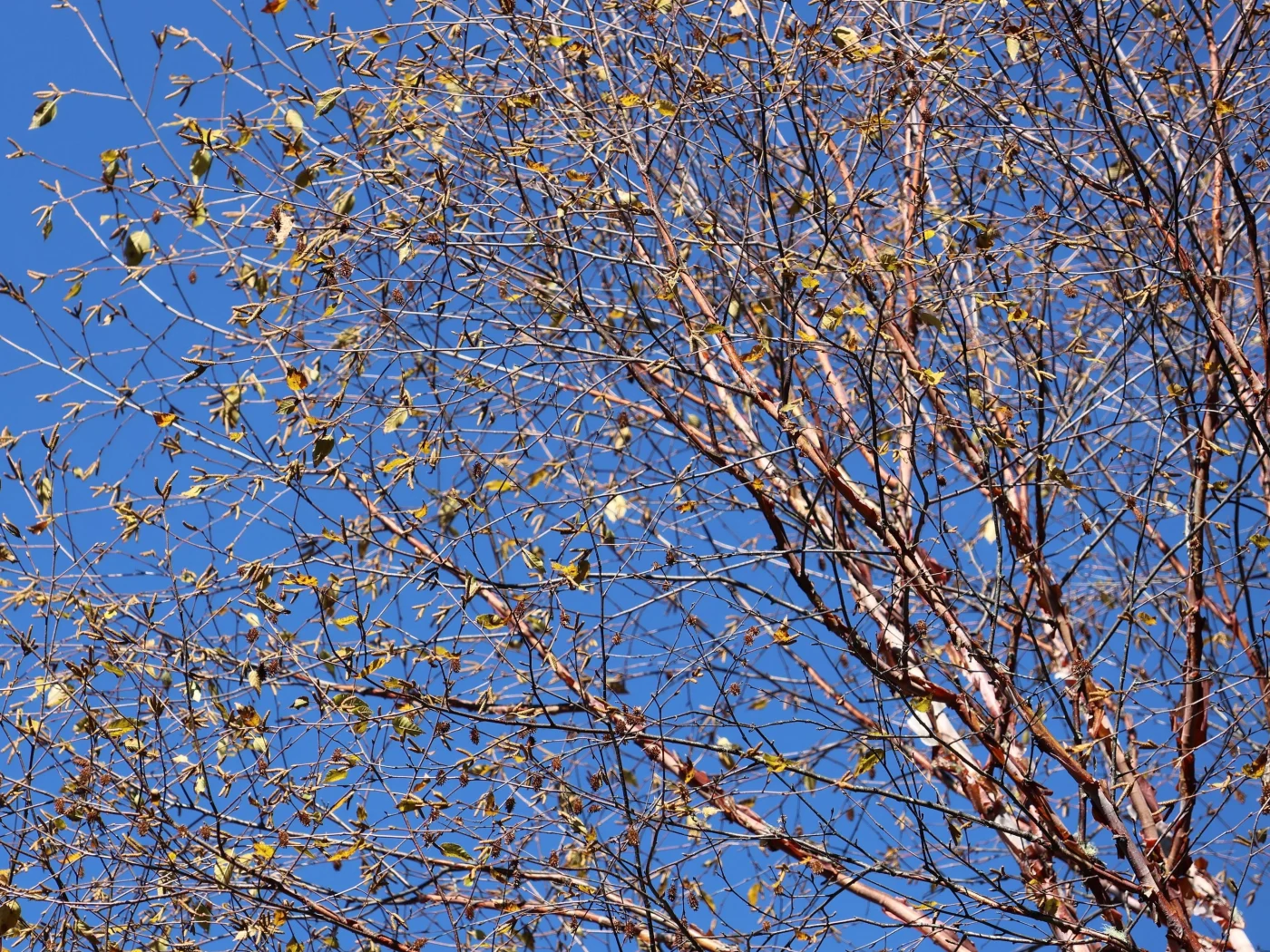
Creamy-orange peeling bark on the trunk of a Chinese red birch tree.
Moving away from the standard white birch, the ‘Fascination’ variety features a dramatic, peeling creamy-orange bark. This unique texture brings vital color to sparse winter gardens.
Its compact crown forms a light canopy of fresh leaves and delicate catkins in the spring. Sunlight filters easily through the branches before the foliage shifts to golden yellow in the fall.
How to grow it: Plant in full sun or partial shade in moisture-retentive soil. Water heavily during dry spells while the tree establishes itself.
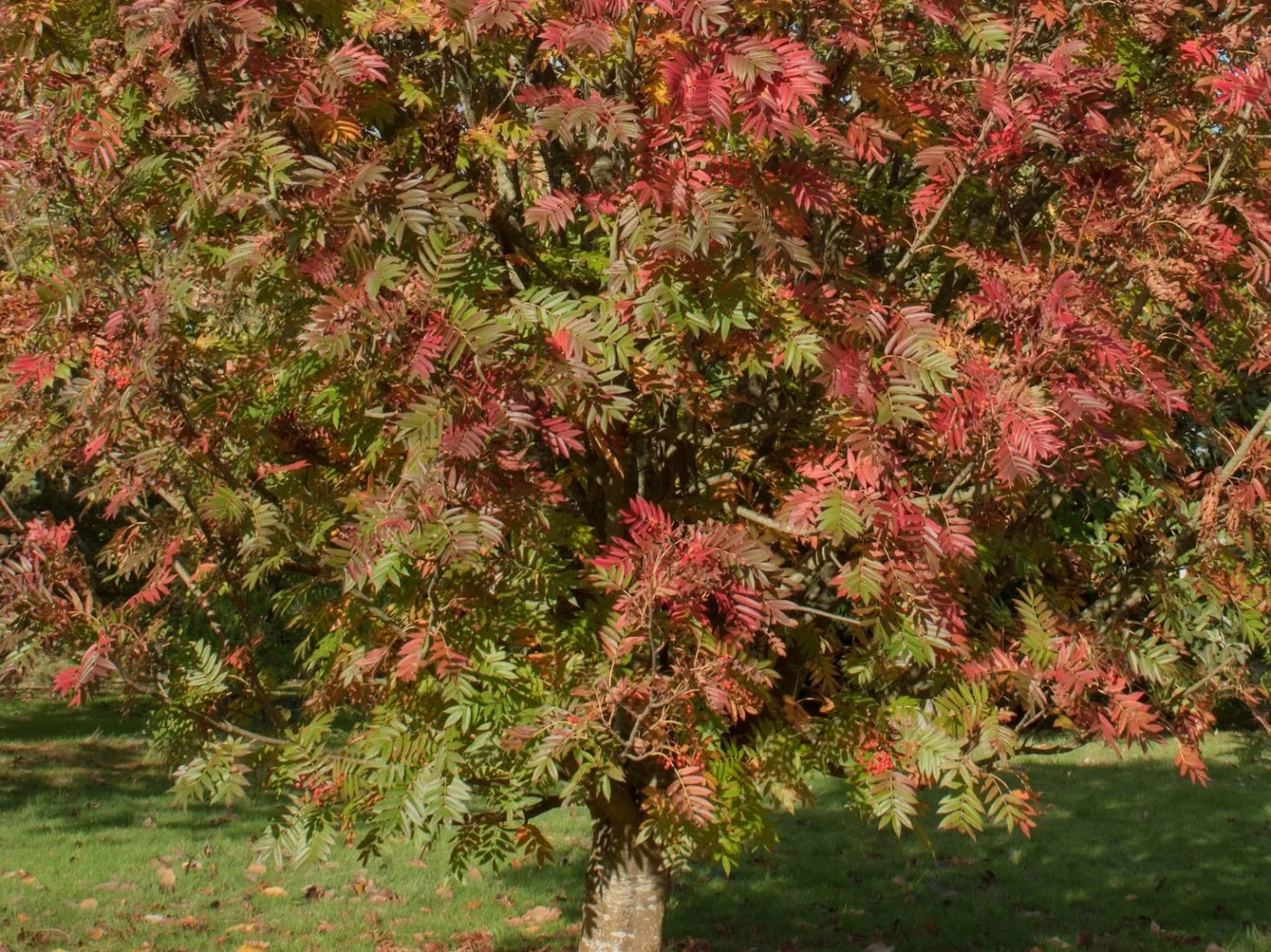
5. Sorbus ulleungensis ‘Olympic Flame’ (Rowan)
Clusters of creamy-white flowers blooming against dark green pinnate foliage.
When horizontal space is severely limited, the ‘Olympic Flame’ rowan provides a strict, upright columnar shape. Dark green pinnate leaves and clusters of creamy-white late-spring flowers create a lush seasonal backdrop.
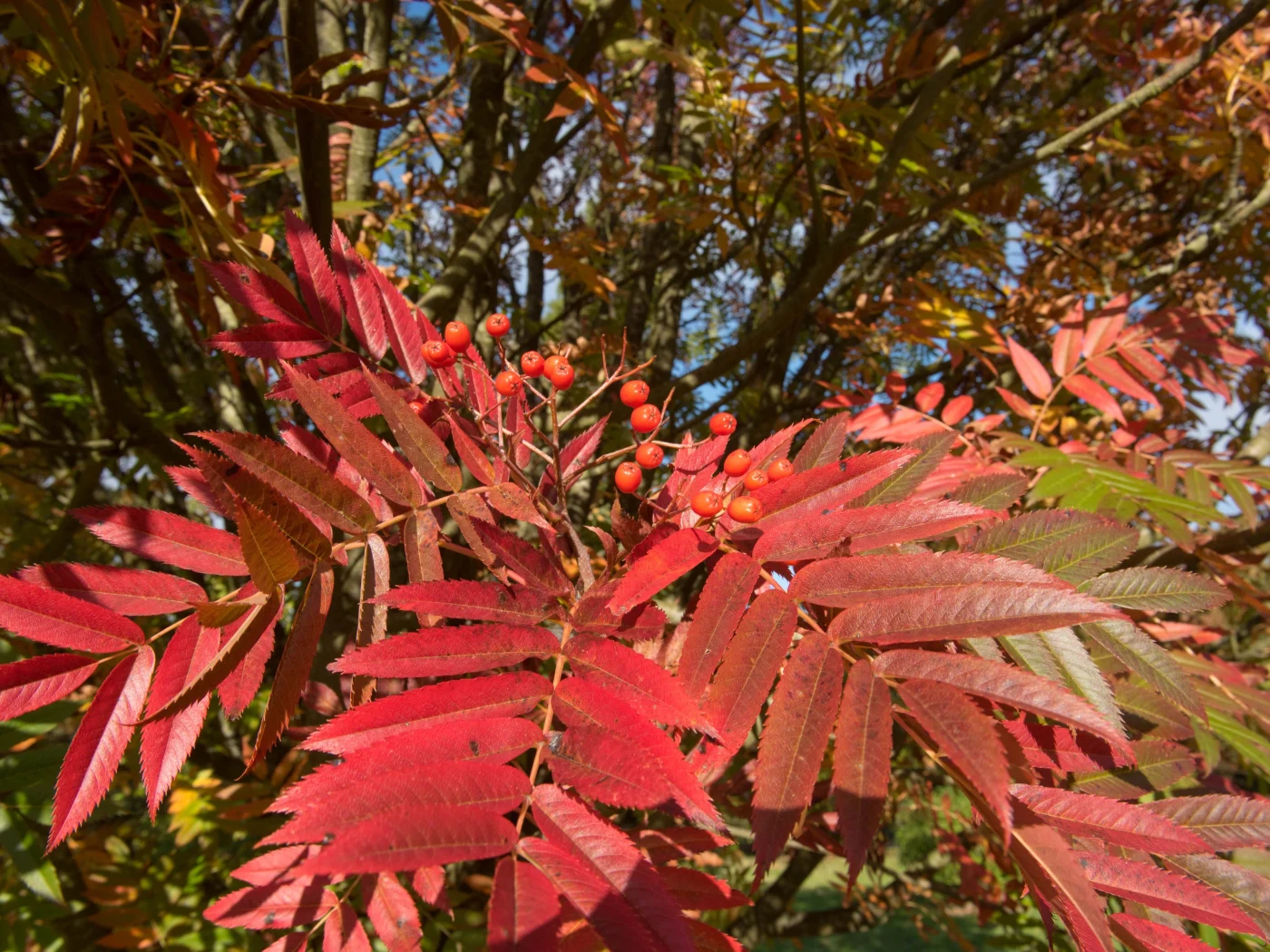
Lustrous red berries clustered among vibrant orange and red autumn leaves.
Lustrous red berries eventually replace the flowers, drawing local wildlife. As the name suggests, the autumn canopy completely transforms into blazing shades of red and orange.
How to grow it: This hardy tree tolerates exposed spots but despises chalky conditions. Grow it in full sun or partial shade.
6. Malus ‘Evereste’ (Crab Apple)
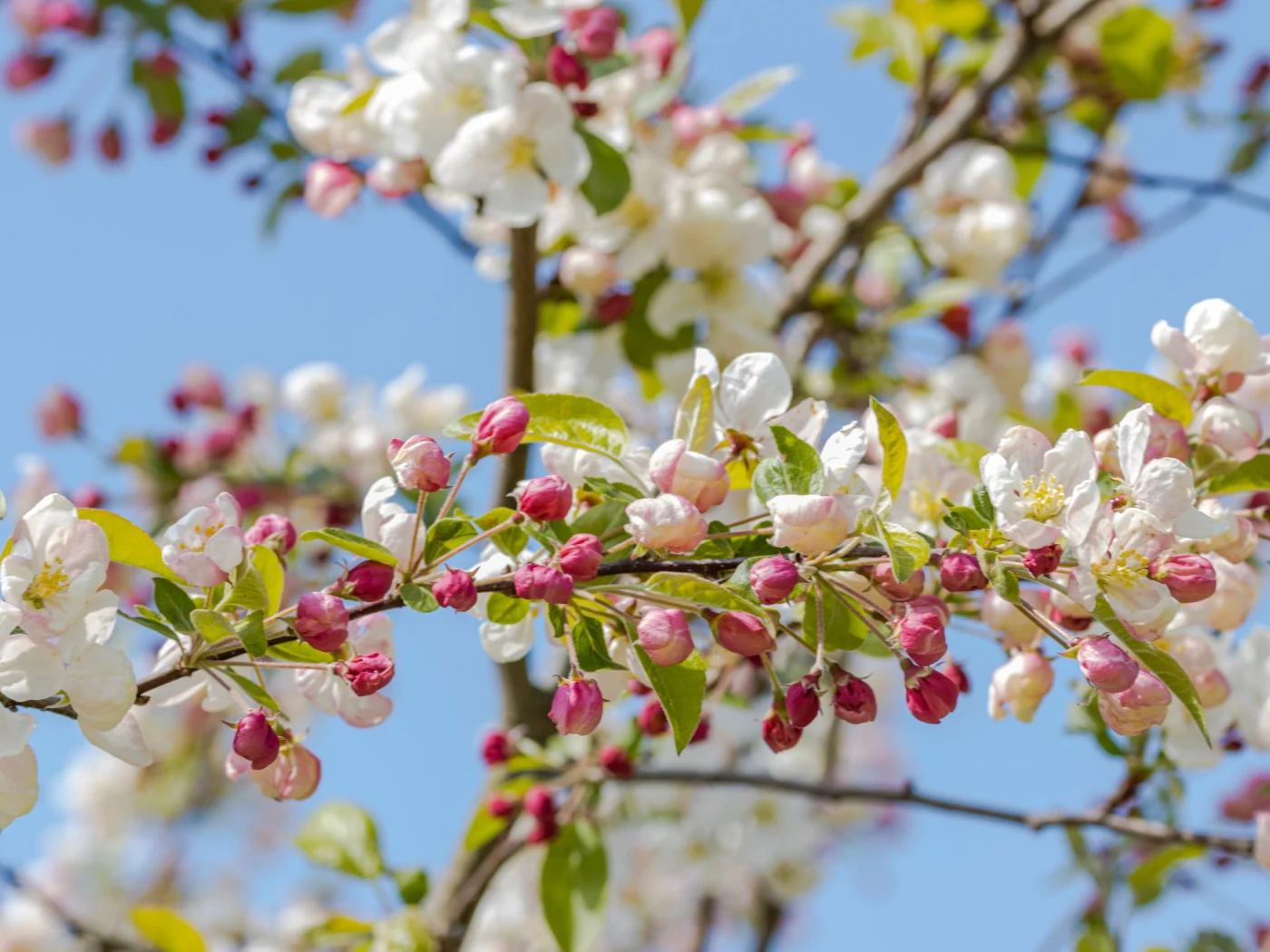
Masses of dense white blossoms opening from dark pink buds on a crab apple tree.
With its tidy, broadly rounded crown, the ‘Evereste’ crab apple is a brilliant ornamental choice for tight yards. Dark pink buds burst into dense white blossoms in the spring, drawing heavy pollinator traffic.
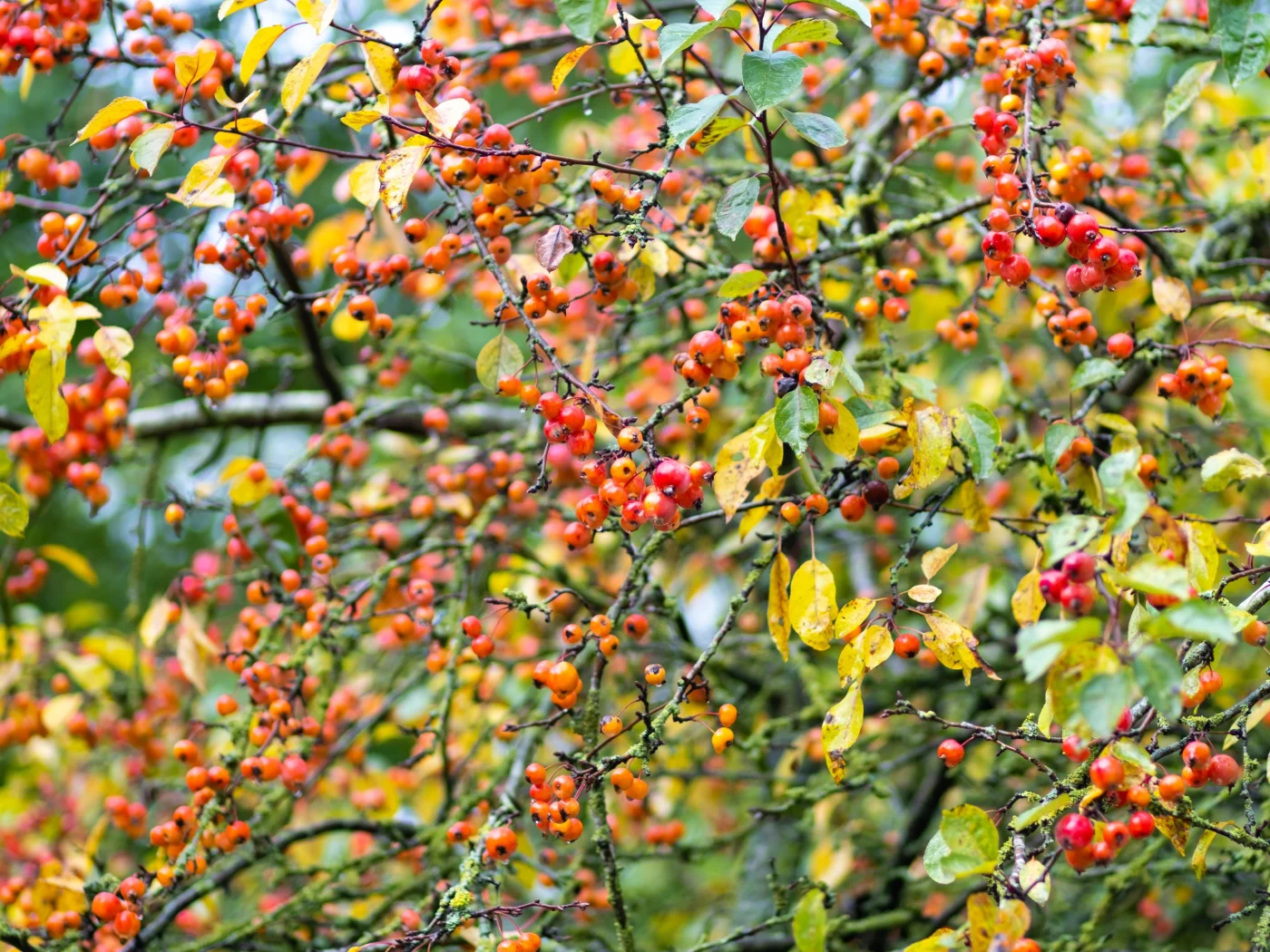
Small, vibrant orange and red-blushed crab apples hanging from branches.
By late summer, the tree develops orange and red-blushed crab apples that hang onto the branches deep into the winter. The green summer foliage later shifts to warm orange and yellow.
How to grow it: Place this tree in full sun with fertile, well-drained soil. Water regularly during its first few seasons.
7. Carpinus betulus ‘Lucas’ (Columnar Hornbeam)
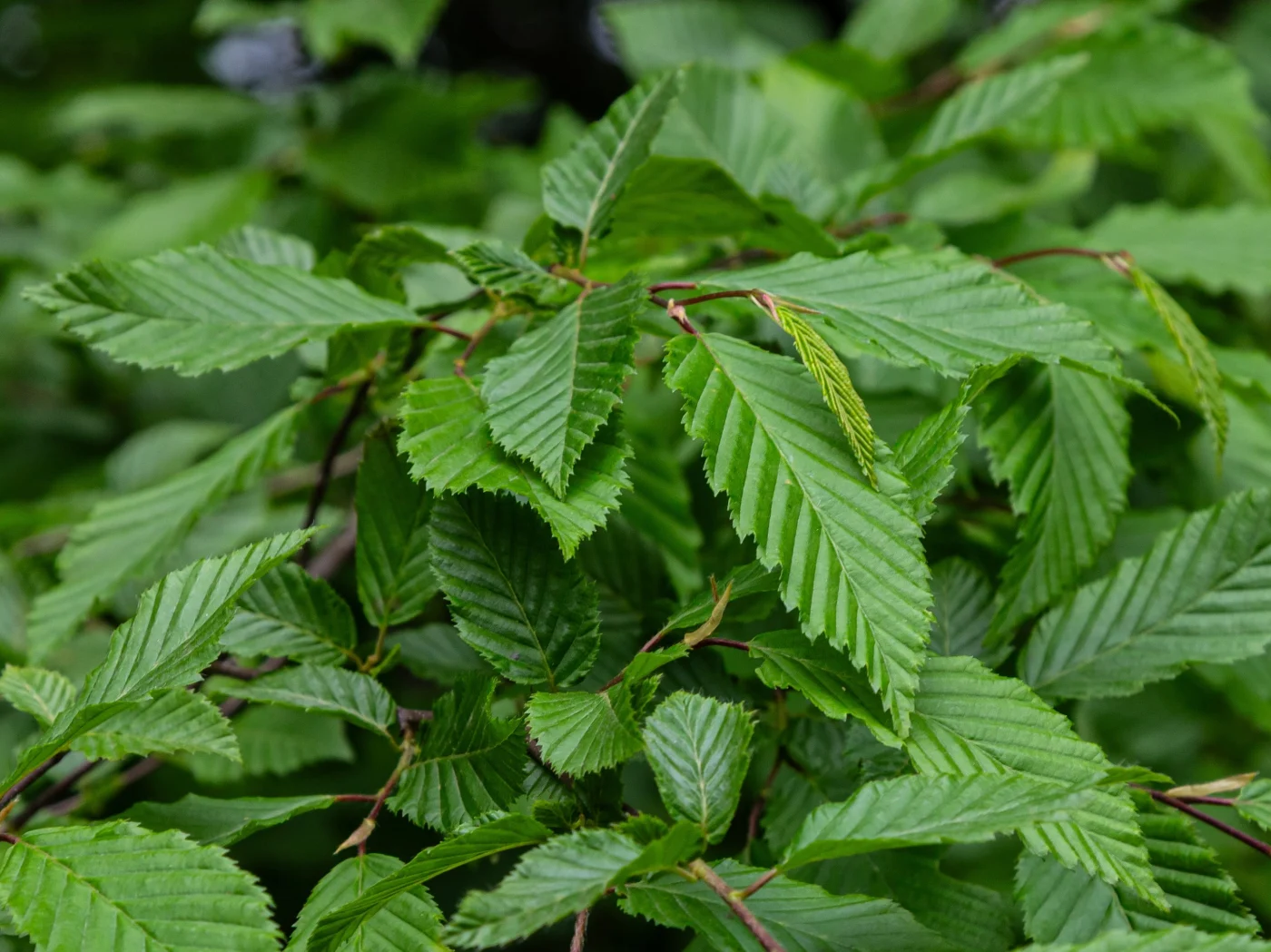
A tall, narrow columnar hornbeam tree displaying dense green foliage.
For the tightest spaces, the ‘Lucas’ hornbeam delivers strong vertical architecture without the sprawl. It starts narrow and slowly matures into a handsome oval crown.
Because its growth is naturally denser than similar varieties, it works exceptionally well as a natural privacy screen. The dense green summer leaves eventually turn a brilliant golden yellow in the fall.