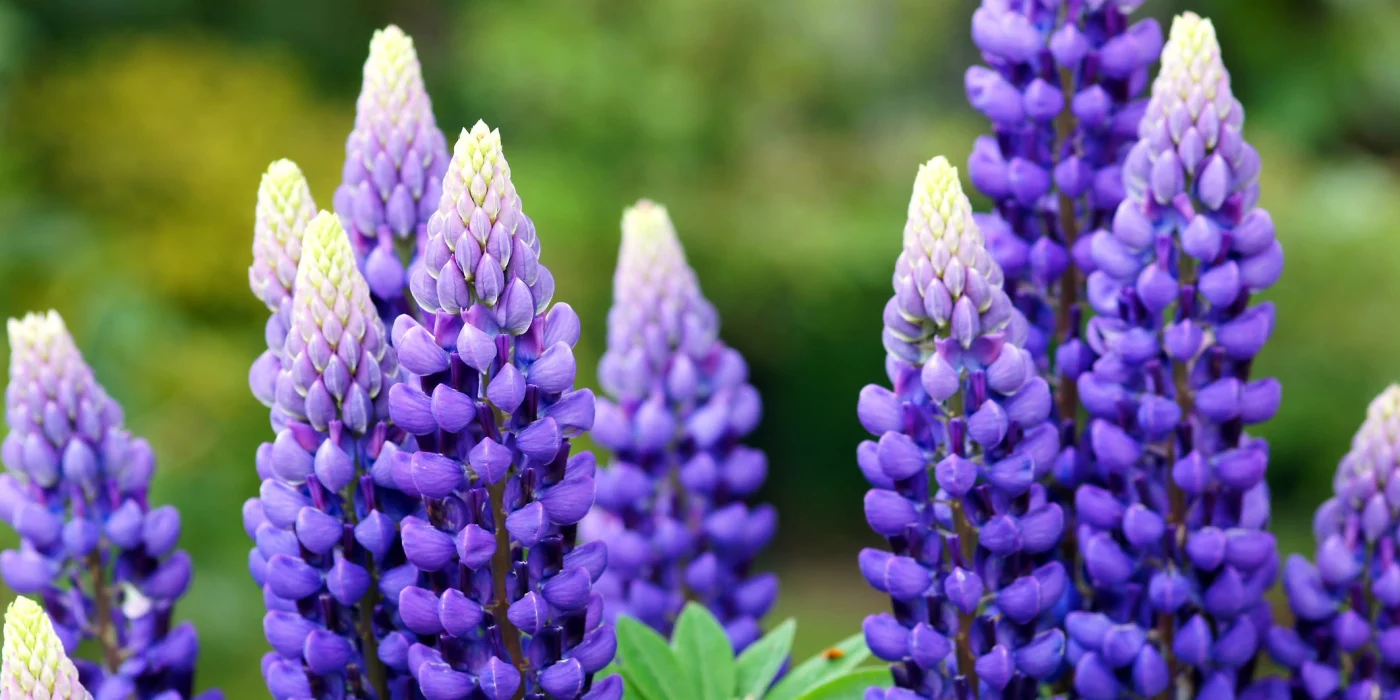
Vibrant purple and pink lupins growing tall in a summer garden border.
Lupins are the undisputed giants of the cottage garden. With towering spikes and vibrant, jewel-like colors, these hardy perennials anchor garden borders from late spring well into summer.
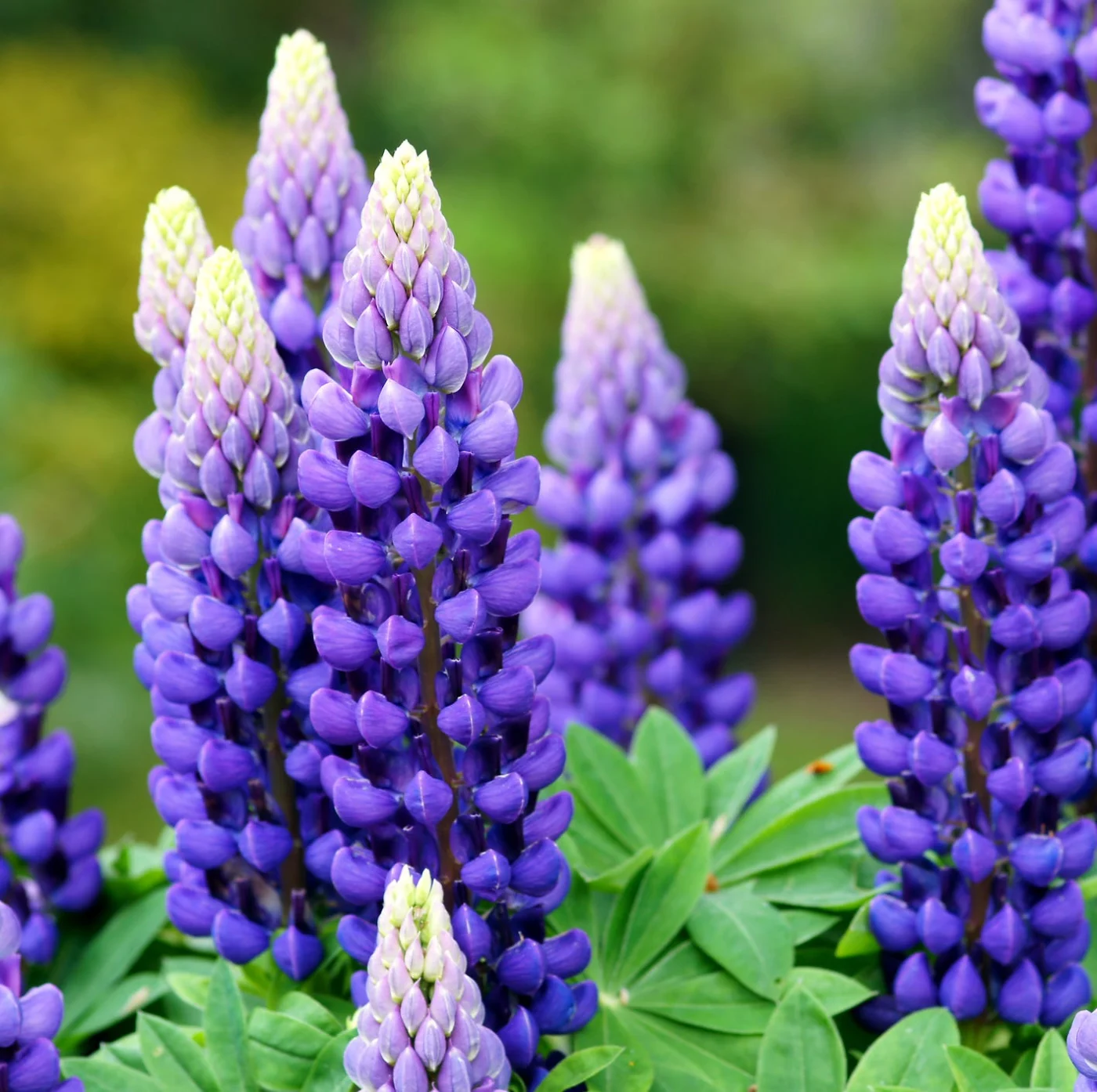
A close-up view of a dense cluster of blooming lupin flowers.
Once the final blooms drop, those spectacular spikes turn brown and dry. Many gardeners abandon the plants at this stage, but proper post-flowering care dictates whether your lupins will thrive or struggle next season.
Here are the four essential steps to manage your lupins after their flowers fade.
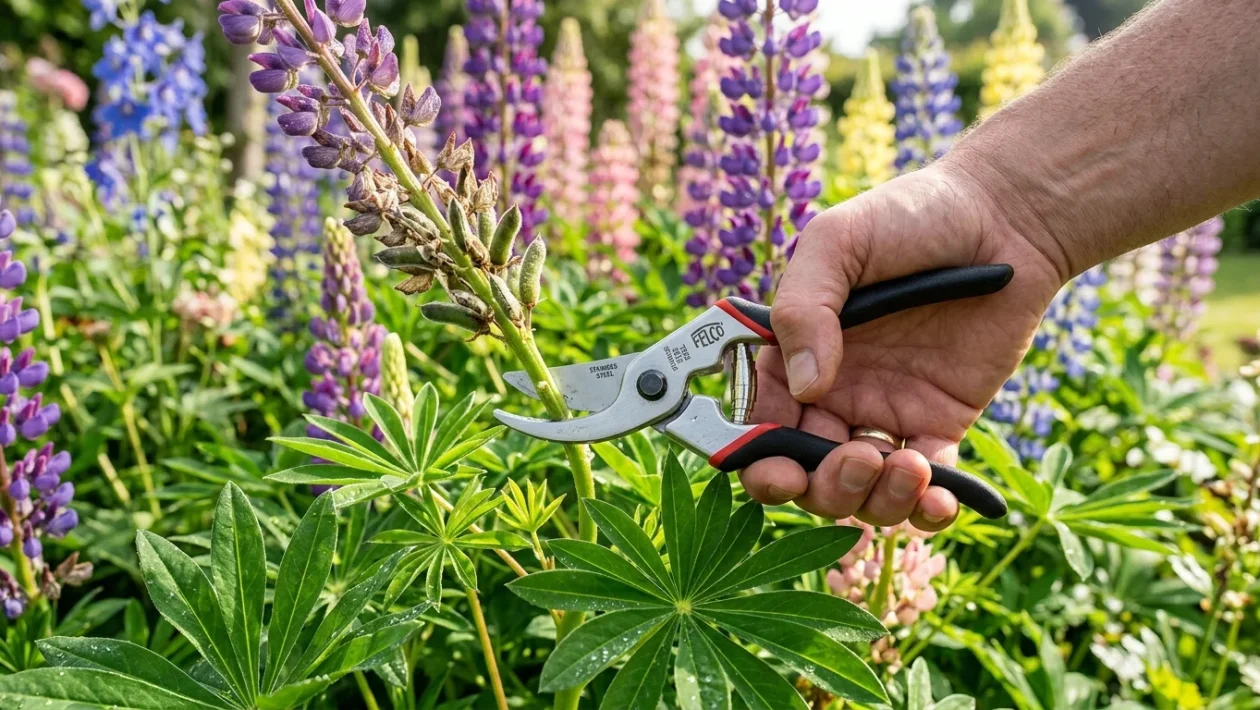
1. Remove Faded Spikes for a Second Flush

A close view of a faded lupin flower spike surrounded by healthy green foliage.
Leaving dead flowers on the plant drains its energy. The Royal Horticultural Society (RHS) recommends cutting “the spent flower spikes to the base to encourage more to be produced.”
This simple deadheading process instantly cleans up the look of your garden border. Furthermore, BBC Gardeners’ World Magazine notes that slicing away old spikes “may encourage a second flush of flowers,” offering a chance for late-summer blooms.
2. Manage the Seed Heads
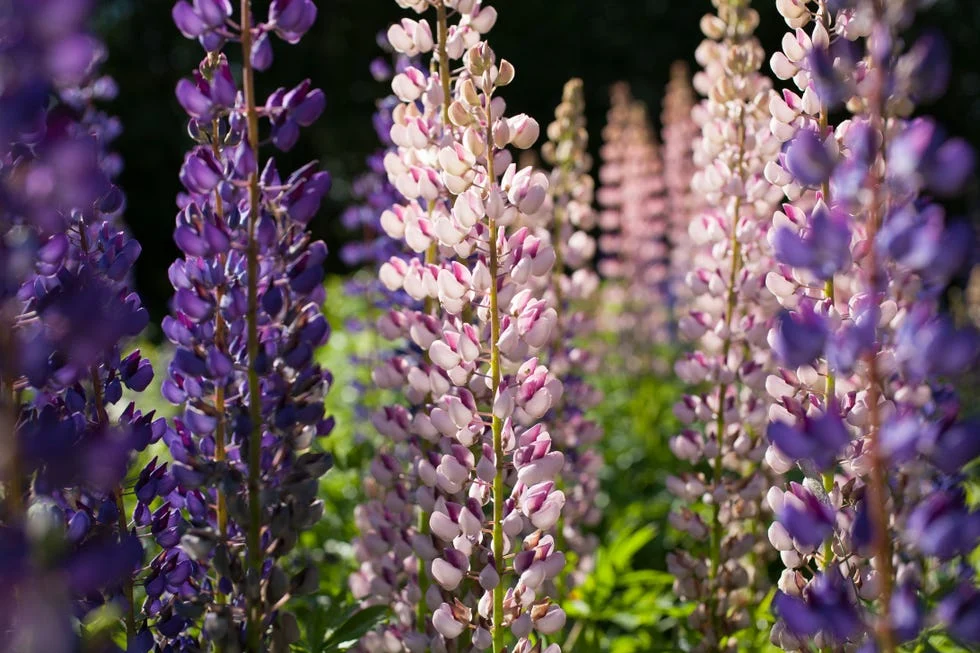
Dried lupin seed pods forming along a spent flower stem.
If you choose not to deadhead, the fading spikes will naturally develop seed pods. While the RHS confirms lupins can easily be grown from these seeds, there is a catch.
Plants propagated this way rarely inherit the exact characteristics of the parent plant. If you want to experiment with harvesting, let the pods dry completely on the stalk before collecting them, otherwise, cut them off to save the plant’s energy.
3. Strategize Your Propagation

Lupin seedlings sprouting early growth in a garden bed.
Gardeners have two choices for multiplying their lupins: cuttings or seeds. Taking basal cuttings guarantees an identical clone of the parent plant, preserving specific colors and forms.
Seeds, however, are a gamble. BBC Gardeners’ World Magazine explains, “Lupins do not come true to type from seed, so lupins grown from seed are likely to flower in a mix of colours.” Choose cuttings for precision, or seeds for unpredictable, vibrant garden surprises.
4. Prepare the Plants for Winter
When autumn temperatures drop, lupin foliage naturally dies back. Trim away the decaying old growth to maintain a tidy border and prevent rot.
The RHS states that most lupins will survive a standard British winter, provided they are planted in free-draining soil and a sunny position.
However, the organization explicitly warns that lupins cannot tolerate prolonged winter wet. Avoid waterlogged beds during the colder months to ensure these striking perennials return to anchor your garden next spring.