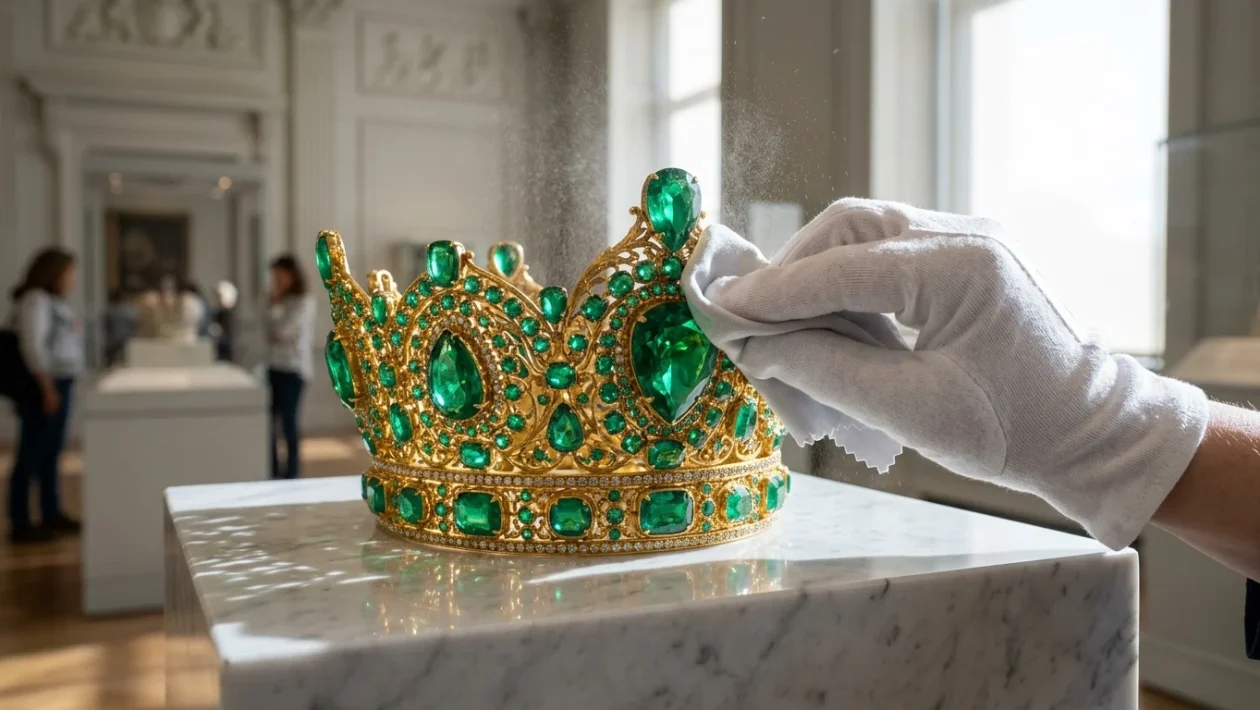
The glittering Crown of the Andes featuring massive Colombian emeralds set in solid gold.
Inside the galleries of New York’s Metropolitan Museum of Art sits one of the most valuable colonial artifacts Colombia has ever lost. The Crown of the Andes is a 16th-century masterpiece of goldsmithing.
It contains over two kilograms of pure gold and approximately 450 Colombian emeralds. Among them is the legendary “Atahualpa Emerald,” a massive stone rumored to have belonged to the last Inca emperor.
Born from a Plague
Originally known as the Crown of Our Lady of the Assumption of Popayán, the piece was forged as an act of gratitude. In the late 16th century, bubonic plague and smallpox ravaged neighboring territories like Brazil, Peru, and Ecuador, but spared the city of Popayán.
The bishop of Popayán commissioned the crown in 1592 to honor the Virgin Mary. A team of 24 artisans worked on the project for six years. Their strict instruction was to create a crown that surpassed the magnificence of any earthly monarch.
The Atahualpa Emerald and 1,500 Carats
The documented dimensions of the crown are staggering. MET records indicate it weighs roughly two kilograms and holds about 453 emeralds, totaling nearly 1,500 carats.
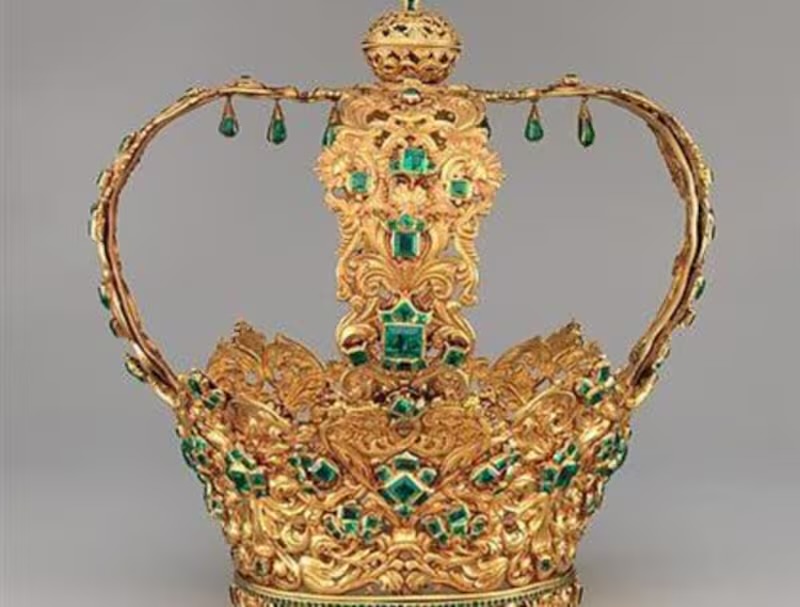
At the center sits the Atahualpa Emerald, weighing between 20 and 24 carats. Historical lore suggests Spanish conquistador Francisco Pizarro seized the stone from the Inca emperor’s treasury in 1532.
A Controversial Sale
The journey out of Colombia was driven by opportunism. In the early 20th century, the religious confraternity guarding the crown sought permission to sell it. Historical records suggest Pope Pius X authorized the sale in 1914, but it took decades to find a buyer.
In 1936, an American business syndicate led by Warren J. Piper finally purchased the crown. Piper initially planned to dismantle the masterpiece and sell the emeralds individually, though he never followed through.
From Sacred Object to Auto Show Centerpiece
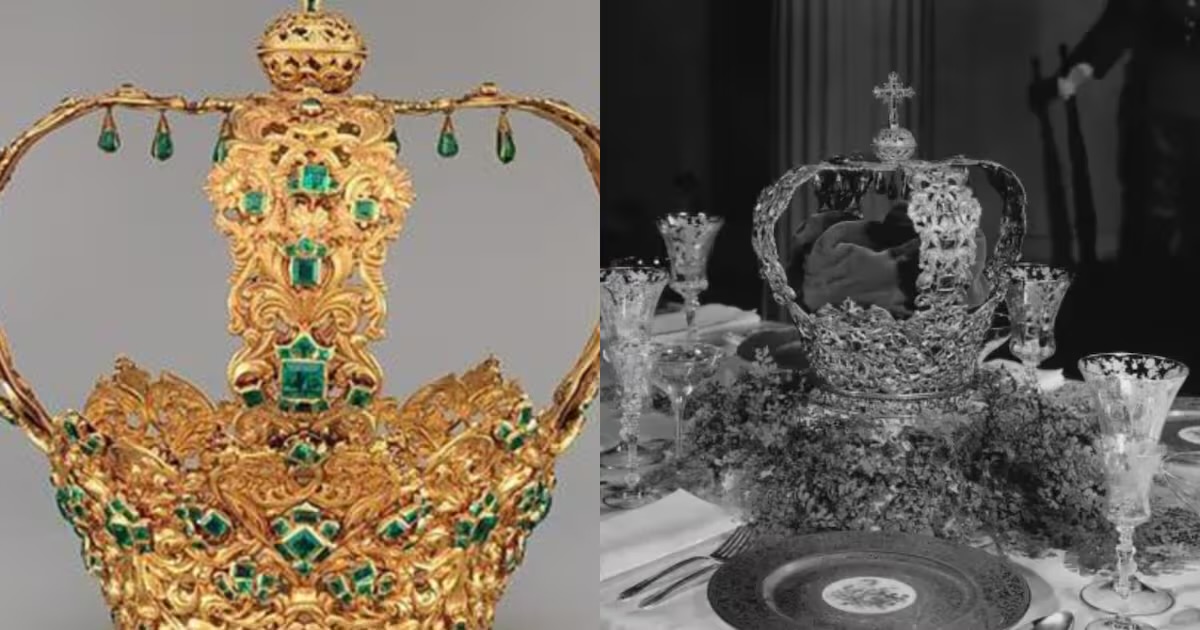
Before reaching the MET, the crown spent decades being paraded as a corporate spectacle. Colombian silversmith María Alejandra Kaled noted the sacred relic was repeatedly used as a lavish table centerpiece for high-society events.
In 1937, it was displayed at a Chevrolet fair in Detroit, drawing 225,000 spectators—roughly 15% of the city’s population at the time. It later appeared at the 1939 New York World’s Fair and the Royal Ontario Museum in 1959.
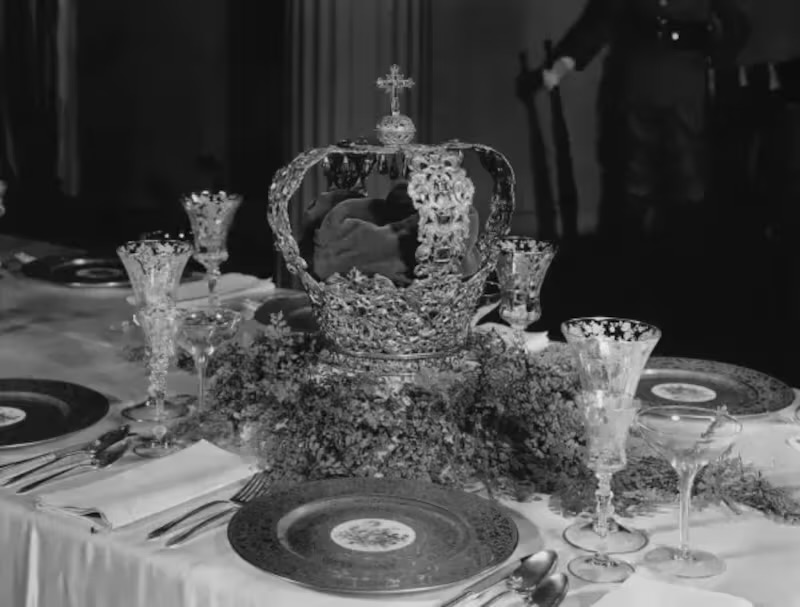
“The Crown of the Andes ended up being the most expensive centerpiece in history,” Kaled stated.
Secured in the MET
After its public tours, the crown vanished into a Citibank vault for more than 50 years. In 2013, a private collector donated the piece to the Metropolitan Museum of Art.
Museum conservators immediately began urgent restorations, as the crown’s gold arches were collapsing from age. The MET officially announced the acquisition in December 2015.
Today, the Crown of the Andes sits in Gallery 357, permanently protected behind earthquake-proof and bulletproof glass.
The Push for Repatriation
The gems studding the crown are distinctively Colombian. Geological studies confirm these emeralds formed under unique regional conditions, often displaying a distinct red fluorescence under specific testing.
In recent years, social media campaigns have sparked a movement to repatriate the crown to Popayán, citing its religious and community origins. Colombia’s District Institute of Culture and Tourism has echoed the sentiment that it belongs in its cultural homeland.
However, securing its return faces immense legal and diplomatic hurdles. Any formal request would require pristine historical documentation regarding its ownership, export records, and international institutional agreements.