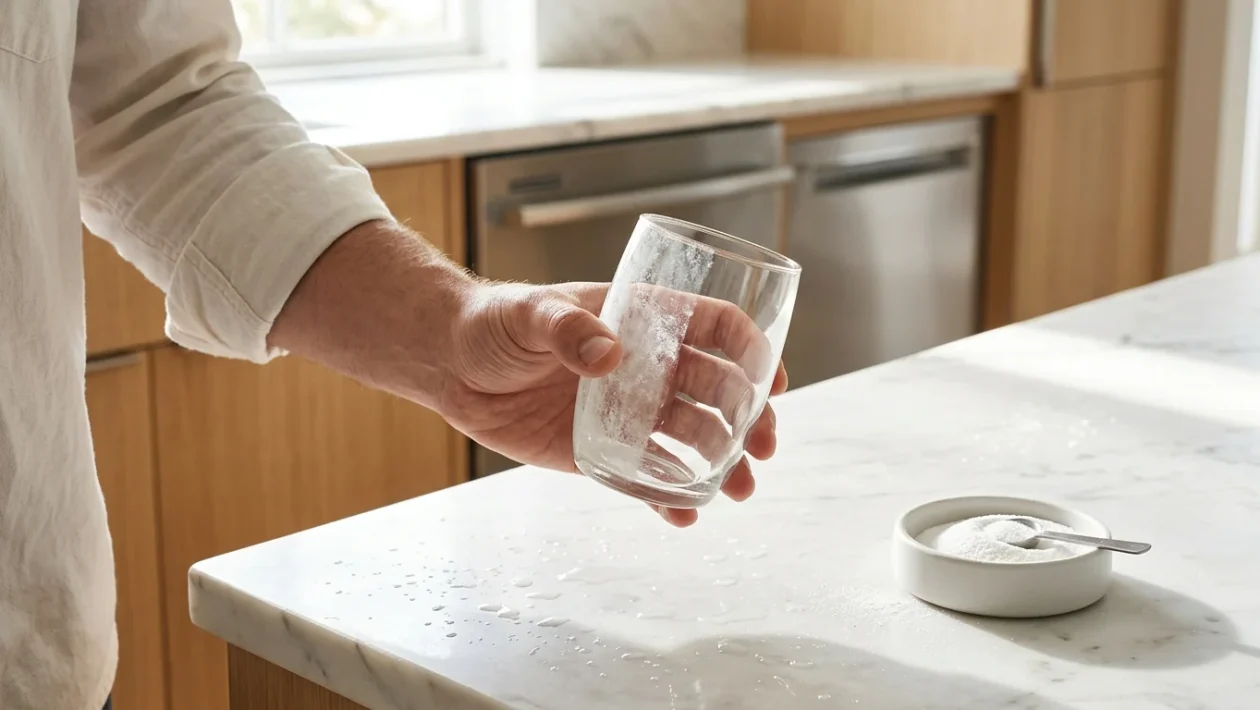
Cloudy drinking glasses covered in white residue after a dishwasher cycle.
You expect your dishwasher to deliver sparkling cups and pristine glasses. Instead, you routinely pull out glassware covered in chalky white smudges and streaks.

A foggy drinking glass showing distinct white spots and streaks from dishwasher residue.
We asked Texas-based cleaning professionals and a high-end kitchenware expert to break down exactly what causes these spots. More importantly, they outlined the specific steps to stop it from happening.
You Are Rinsing Your Dishes Too Much
It sounds counterintuitive, but rinsing your glasses spotless before loading them is a major mistake. Modern detergents are packed with enzymes designed to latch onto leftover food.
“When dishes go into the machine nearly spotless, the detergent still has to ‘work’ during the cycle,” explains Katie Welsh, founder of Glimmer Janitorial Co. in Texas. “In those cases, it can leave residue behind or contribute to [damage] over time.”
Welsh suggests a simpler approach: “Scrape your dishes, don’t shampoo them.” Without food residue to break down, the harsh chemistry just floats in the water and attacks your glasses instead.
Hard Water Leaves Limescale Behind
If pre-washing isn’t your issue, your water supply likely is. Welsh notes that a chalky haze is often caused by mineral deposits—specifically calcium and magnesium—drying onto the surface.
According to Alex Varela, general manager of Dallas Maids, you can tackle this directly. “Most modern dishwashers come with their own setting for water hardness, which automatically adapts to the amount of dishwashing detergent and how it is distributed during the different cycles,” Varela says.
If adjusting the settings fails, installing a whole-home water softener is the permanent, albeit more expensive, fix.
Heat and Harsh Detergents Cause Permanent Etching
Some white spots will never wipe off. This permanent cloudiness is called etching.
“It isn’t residue at all—it’s microscopic damage to the glass surface, usually caused by a combination of high heat, strong detergent, and water chemistry,” Welsh explains. To find out if your glass is etched, wipe it with white vinegar. If the haze disappears, it’s just mineral buildup. If it stays, the glass is permanently etched.
To prevent etching, drop the convenience of dishwasher tablets. Welsh warns that tabs are a one-size-fits-all solution that often proves too aggressive for soft water and too weak for hard water. Powder detergent allows you to properly dose the machine based on your home’s unique water profile.
For delicate items like crystal or wine glasses, Mattia Sala, product manager of SMEG US, recommends relying on a dedicated delicate cycle. He also advises using a detergent formulated specifically with glass-protecting additives.
Give Your Glassware Room to Breathe
Overcrowding the upper rack is a guaranteed way to block the machine’s spray arms.
“Glasses need space so spray can reach every surface and rinse cleanly,” Welsh says. Keep a distinct gap between each glass so water can properly circulate.
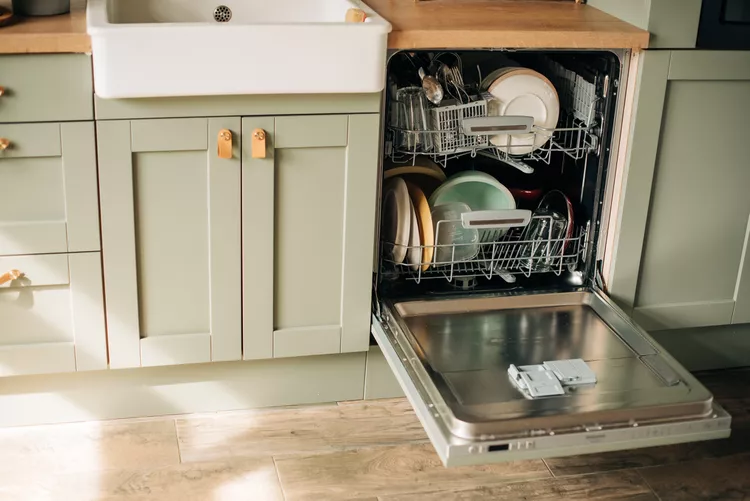
Properly spaced glasses loaded onto the upper rack of a dishwasher.
Use Rinse Aid to Stop Droplets
Skipping rinse aid directly contributes to spotting. Its primary job is to lower the surface tension of the water inside the tub.
“Rinse aid makes a noticeable difference for glassware because it helps water sheet off instead of drying in droplets that leave mineral deposits behind,” Welsh points out.
Your Machine Needs Regular Cleaning
A dishwasher pushing dirty water through a clogged filter will ruin your dishes. You must clean the filter at the bottom of the tub regularly to stop grime from recirculating onto your cups.
Varela recommends running a dishwasher cleaning tablet through an empty cycle once or twice a month. This flushes hidden limescale, clears out internal mineral deposits, and strips away lingering odors.