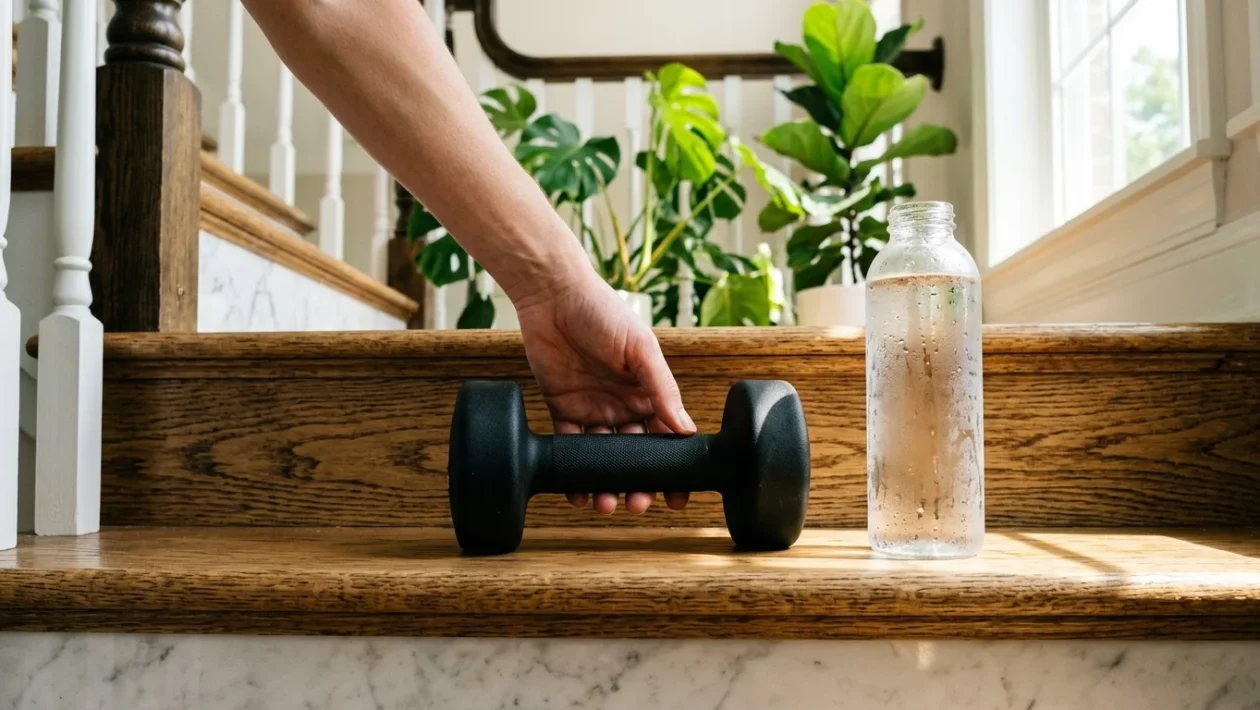
An active older adult walking up a set of outdoor stairs during a daily workout routine.
The Daily Blueprint for Aging Backwards
Reaching 60 triggers natural physical shifts, most notably a steady decline in muscle mass known as sarcopenia. However, fitness professionals agree that reversing this trend does not require grueling hours in a commercial gym.
The solution is surprisingly straightforward. Trainers recommend a dual approach: climb stairs daily and complete 30-minute strength sessions featuring foundational movements like squats and rows.
According to trainer Javier Abreu, who spoke with Clara magazine, physical training is just one piece of the puzzle. Success requires abandoning a sedentary lifestyle in favor of constant daily movement.
Abreu pairs this active lifestyle with a balanced diet free of ultra-processed foods and excess sugars. He also stresses the importance of sleeping seven to nine hours a night, maintaining consistent daily schedules, and actively managing stress to optimize muscle retention.
Why Stairs Are the Ultimate Fitness Tool
Personal trainer Juan Antonio Martín points to a simple, zero-cost habit: walking up and down stairs every day. He notes that this accessible activity directly builds strength and muscle mass in older adults while preserving long-term mobility.
Steve Chambers echoed this sentiment in an interview with Women’s Health UK, calling stair climbing essential for anyone over 60. The movement forces the body to work one leg at a time, which naturally corrects muscular imbalances.
Beyond building leg strength, climbing stairs enhances coordination and ramps up core stability. Chambers adds that it reinforces fundamental movement patterns and promotes sustainable weight loss without extreme impact on the joints.
Building a 30-Minute Home Strength Circuit
Cardio alone cannot stop sarcopenia. Specialists urge older adults to combine 20 to 30-minute daily walks and stair climbing with dedicated strength routines three times a week.
These 30 to 40-minute resistance sessions can be done entirely at home without specialized equipment. Trainers recommend structuring the workout as a circuit, aiming for two to three sets of 10 to 15 repetitions per exercise.
The key to this system is progressive overload. As movements become easier over time, individuals must slightly increase the difficulty to prevent physical plateaus.
Training for Independence, Not Just Aesthetics
At 60, the primary goal of physical training shifts away from pure aesthetics. It becomes a required investment in health, daily autonomy, and overall quality of life.
A strong body prevents chronic pain and limits daily fatigue, allowing older adults to actively enjoy their families and personal projects. Yet, the physical changes are still highly visible.
Experts guarantee that anyone who ditches a sedentary lifestyle for a mix of aerobic work, strength training, and whole foods will see noticeable improvements in muscle firmness and definition.