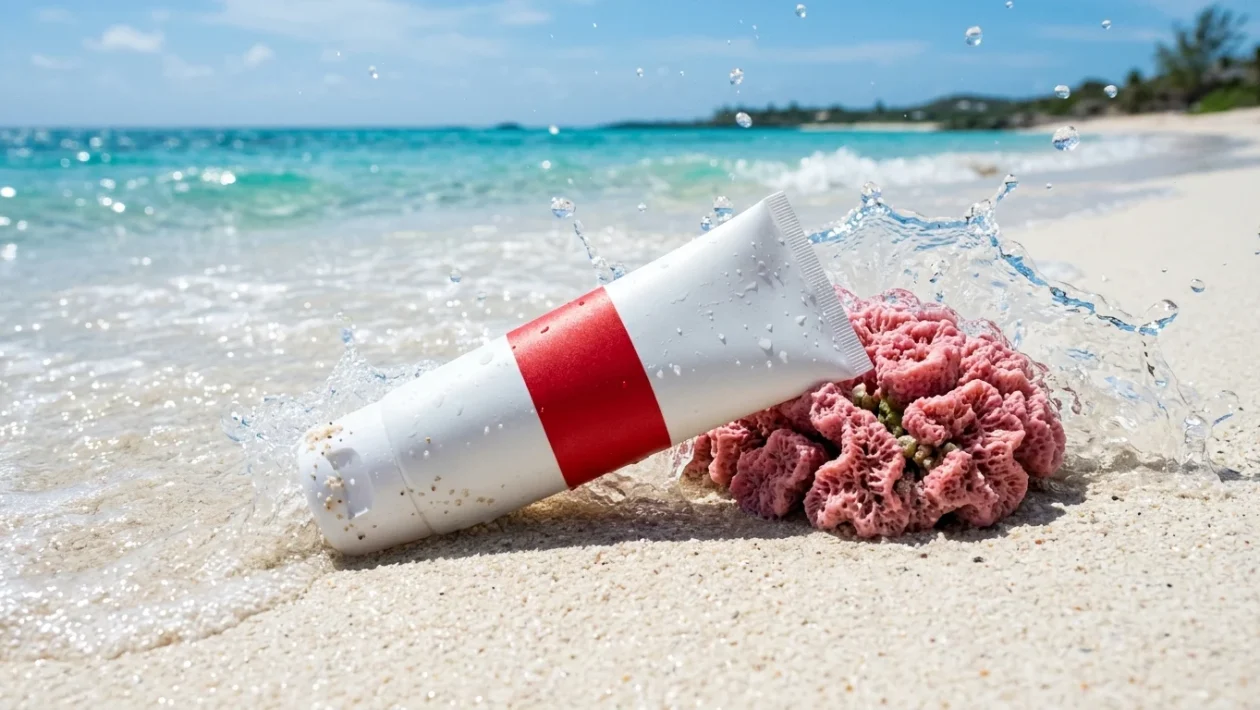
Sunscreen bottle representing the strict new chemical bans in popular tropical vacation destinations.
Protecting your skin from UV rays is a daily necessity, even when clouds cover the sun. But if you pack the wrong sunscreen for your next international getaway, you might face severe penalties. Several popular tourist destinations now strictly regulate sunblock to protect fragile marine ecosystems.
A person applying sunscreen to protect their skin during a sunny beach vacation
The Coral Killers in Your Beach Bag
These new bans target specific chemicals proven to stunt the growth and survival of coral reefs. Restrictions vary by location, but the most frequently outlawed ingredients are oxybenzone and octinoxate.
Other common offenders include 4-methylbenzylidene camphor, octocrylene, and various parabens. If your lotion contains these compounds, you will need to leave it at home to avoid trouble with local authorities.
Island Nations Cracking Down
Hawaii has outright banned the sale and purchase of sunscreens containing oxybenzone and octinoxate. Visitors are strongly urged to use only coral-safe alternatives. Similarly, the Caribbean island of Bonaire has completely blocked the sale of oxybenzone-laced sunblock.
The island nation of Palau takes enforcement a step further. According to the NOS, Palau explicitly bans the import of sunscreens containing oxybenzone, octocrylene, and parabens. Border control agents will reprimand tourists and confiscate these products upon arrival.
Thailand’s €2,600 Fine
Thailand imposes the strictest financial penalties for tourists. Using coral-damaging sunscreen in any of the country’s national parks is a direct violation of local law.
The BBC reports that tourists caught using formulas containing oxybenzone, octinoxate, 4-methylbenzylidene camphor, or butylparaben face a massive fine. The penalty reaches up to 100,000 baht, which is roughly €2,600.
How to Protect the Ocean Anywhere
Even in countries without explicit bans, altering how you apply sunscreen drastically reduces your environmental impact. The World Wildlife Fund (WWF) advises against using spray sunscreens.
Sprays are highly inefficient, sending a large portion of the chemicals directly into the surrounding nature rather than onto your skin. The WWF recommends traditional creams to minimize waste.
Finally, always wait at least 30 minutes after application before entering the water. This ensures the lotion fully absorbs into your skin and won’t immediately wash off into the ocean.