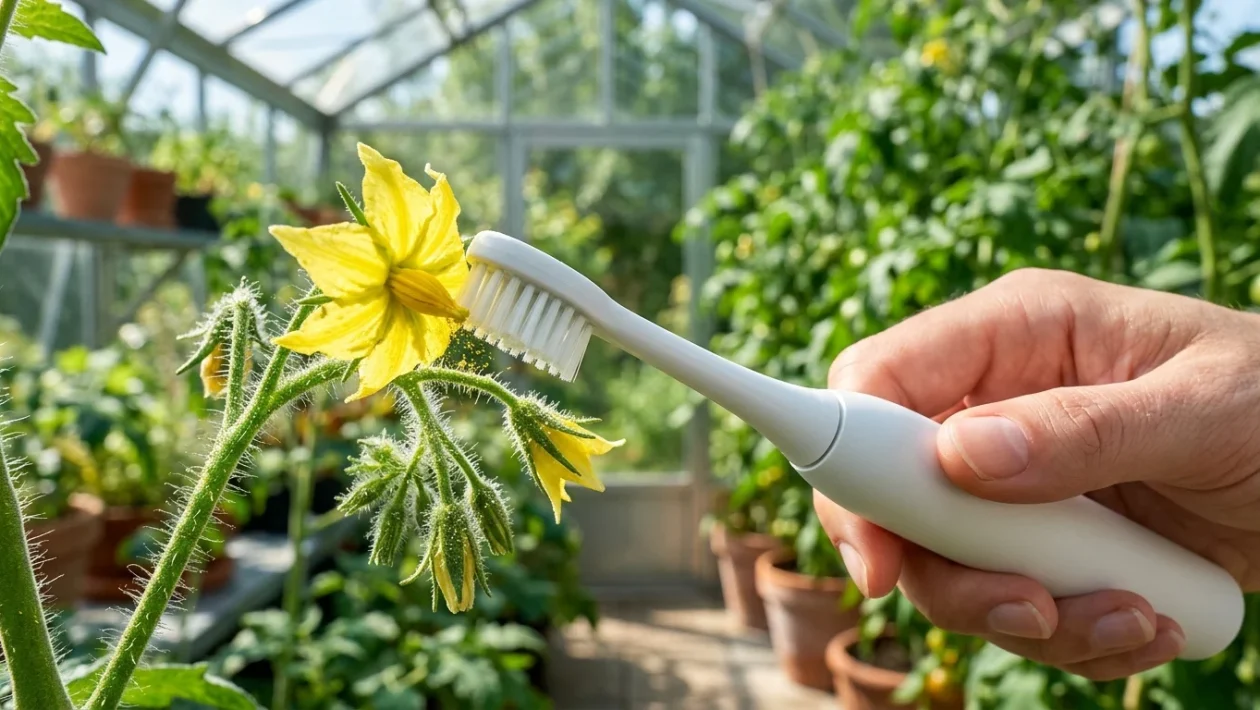
A person holding a vibrating electric toothbrush against a yellow tomato flower.
Gardeners are taking their oral hygiene tools out of the bathroom and into the greenhouse.
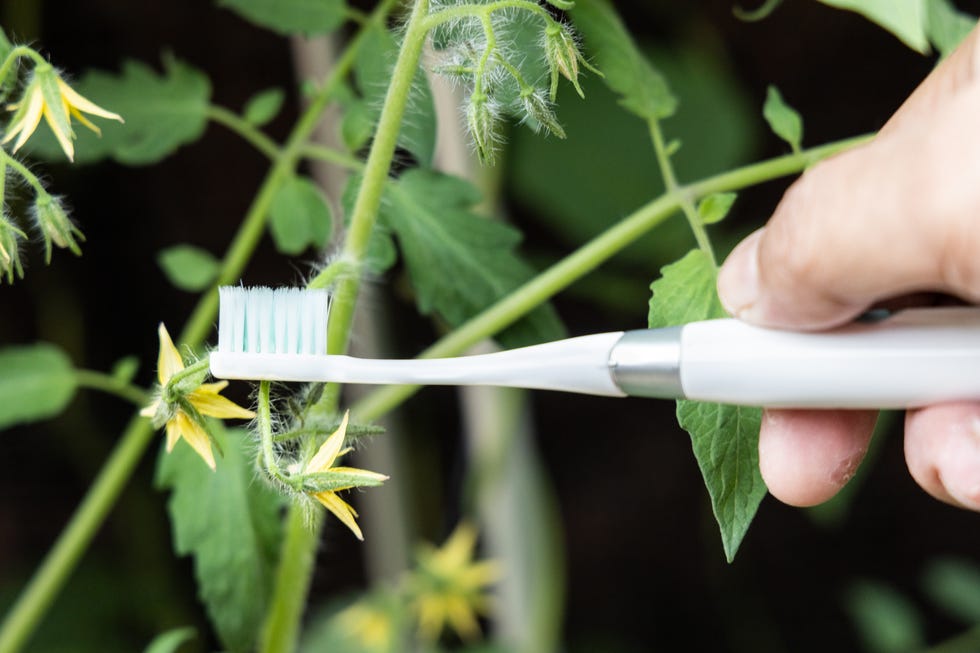
A gardener holding an electric toothbrush against a tomato plant branch.
It sounds like a strange internet fad, but applying a vibrating toothbrush to tomato plants is actually a proven horticultural technique. The method aims to replicate a natural phenomenon that vastly increases a plant’s yield.
The Science of Buzz Pollination
“The use of an electric toothbrush is supposed to mimic the buzz pollination produced by certain bees with the aim of improving the fruit set,” explains Elizabeth Mooney, a horticulturist at RHS Garden Wisley.
While the visual is comical, horticulturists insist it works. “As odd as it sounds, gently vibrating tomato flowers with some form of vibrating tool isn’t just a social media trend—there’s real science behind it,” says Luke Newnes, a gardening expert at Hillarys.
Tomato flowers are entirely self-pollinating, meaning each bloom contains both male and female parts. However, they still need physical movement to transfer the pollen.
Normally, “tomato plants rely on wind or bees to shake their flowers in order to release pollen for pollination,” says Richard Barker, a horticultural expert at LBS Horticulture. In still environments like greenhouses or sheltered conservatories, an electric toothbrush perfectly replaces the missing breeze.
How to Hand-Pollinate Your Plants
Close-up of vibrant yellow tomato flowers in full bloom.
Timing is critical for maximum fruit production. Wait until your indoor tomato plant begins to flower, and plan your pollination for midday when the blooms are fully open.
Turn on your electric toothbrush and gently press the vibrating head against the stem just behind the flower cluster for a few seconds. You will need to repeat this process every few days as new flowers continue to open.
When Will the Fruit Appear?
You will not have to wait long to see if your manual pollination worked.
“After pollinating tomato plants, you should see results within a few days as small, green bumps will appear after the flowers drop their petals,” Barker notes.
Once those bumps appear, your job is largely done. Barker says it takes three to four weeks for the fruit to reach its full size, and another week or two for the tomatoes to finally ripen and change color.
Do Outdoor Plants Need This Trick?

A flourishing green tomato plant growing outdoors in a garden setting.
If your tomatoes are planted outside, leave your toothbrush in the bathroom. Natural wind and local insect populations create more than enough movement to shake the pollen loose.
“Plants have evolved to be pollinated by insects, and we encourage gardeners to attract and encourage pollinators into their gardens instead, allowing nature to do the work,” Mooney advises.
RHS Chief Horticulturist Guy Barter agrees, noting that cultivating a pollinator-friendly garden is the best way to guarantee a massive harvest. By letting local bees do the heavy lifting, you secure a bumper crop without ever lifting a finger.