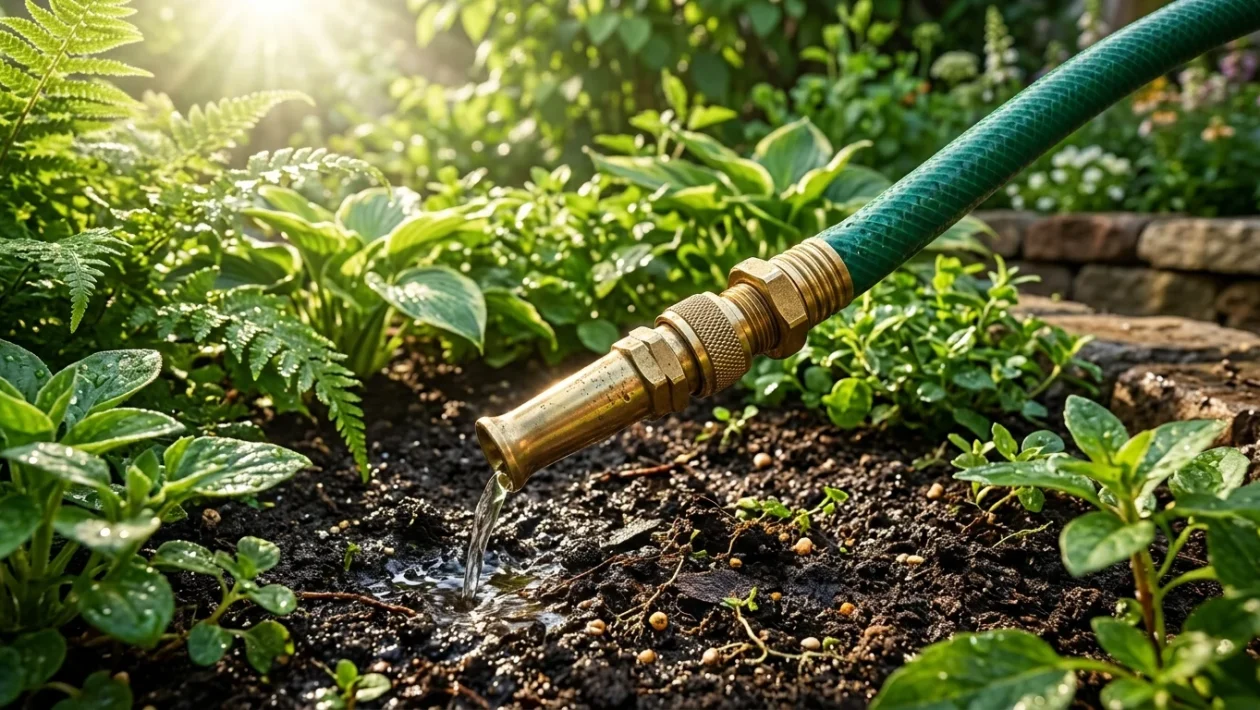
Water spraying gently from a green garden hose onto soil and plants.
Water spraying gently from a garden hose onto a lush garden bed
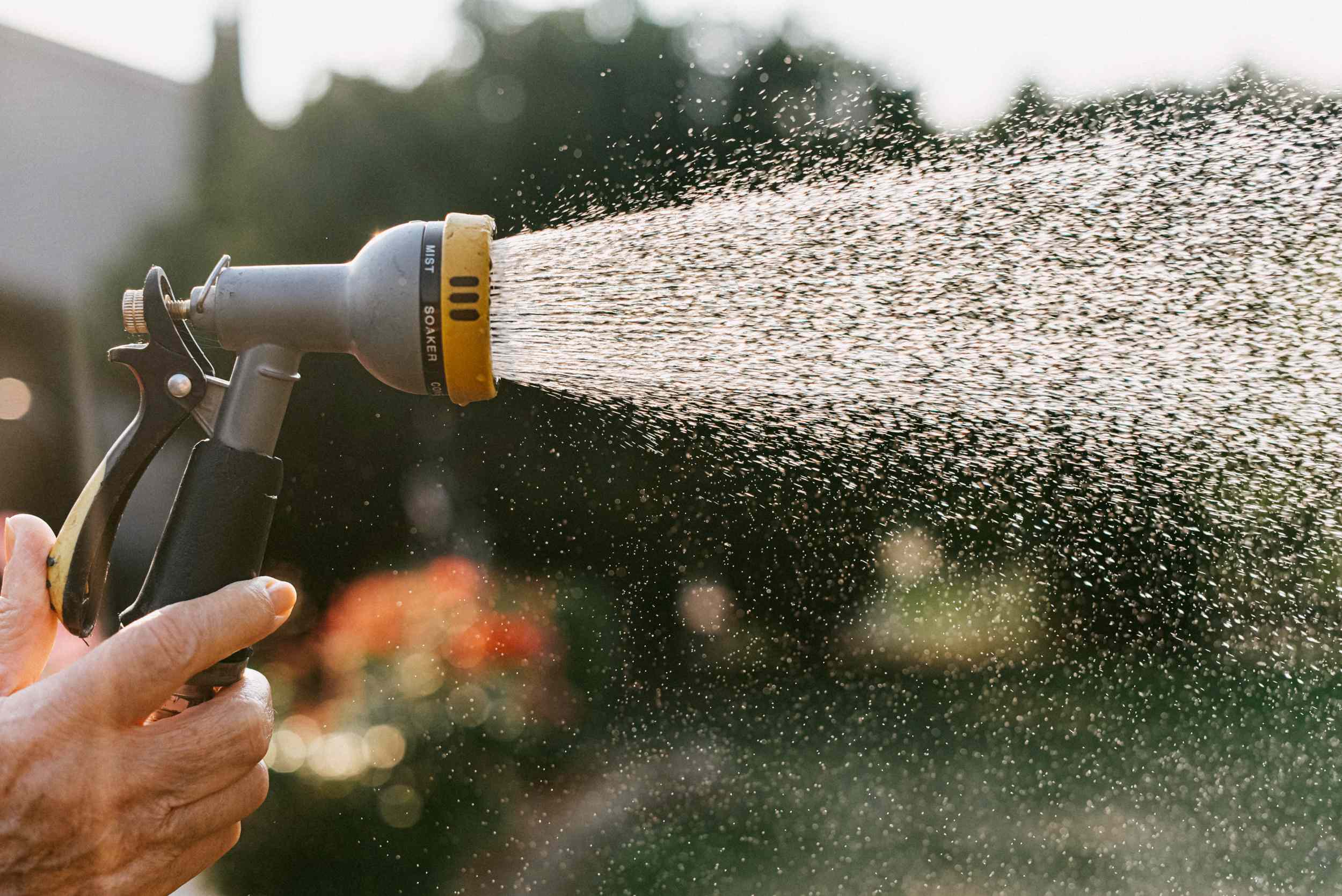
Close up of a garden hose nozzle watering green plants
Keeping your yard alive during dry spells can drain your bank account quickly. But lowering your water bill does not require investing in a complex, high-tech irrigation system.
According to Richard Restuccia, author of Waterwise Gardening, the most effective tool is likely already coiled up in your yard.
“Hand watering with a garden hose is one of the most efficient ways to water,” Restuccia says. “This is because you can see exactly when the soil can’t take any more water and starts to run off.”
Using a basic hose correctly takes a specific technique. Here is exactly how landscape experts recommend watering your plants without wasting a drop.
Ditch the Full Blast for a Slow Trickle
Most homeowners crank the spigot handle all the way open before they start watering. Noelle Johnson, author of The Water-Smart Garden, warns this is a costly mistake.
“Don’t turn on the hose full blast when watering plants,” Johnson says. “In many cases, water runs off before it has a chance to permeate the soil.”
Instead, she advises turning the valve to a slow trickle. This allows the moisture to sink deeply into the earth, reaching the root zone and encouraging strong, deep rooting.
To master this method, lay the end of your garden hose directly on the soil inside your garden bed.
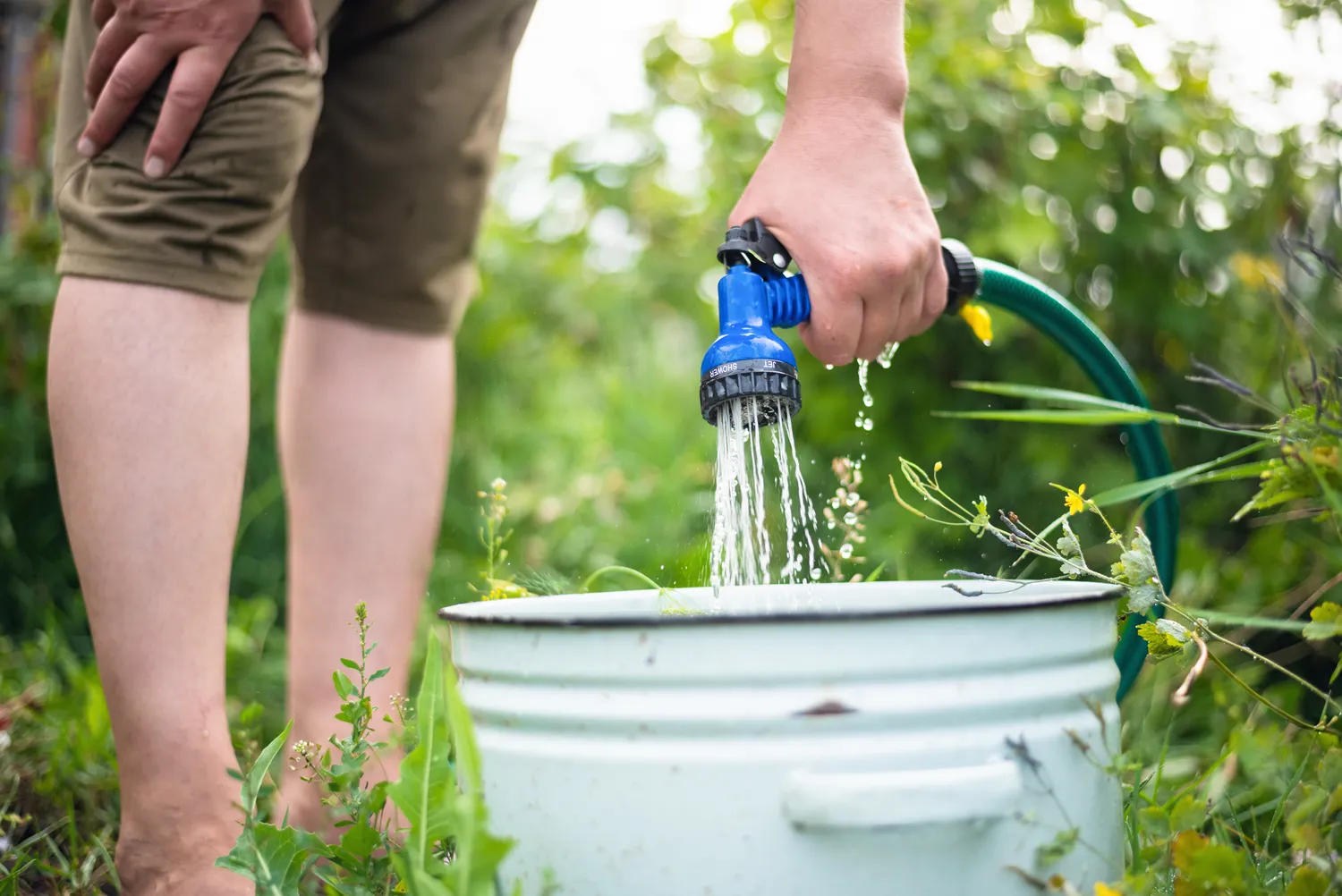
A gardener applying fertilizer to a green residential lawn
Since a slow trickle can take over an hour to properly soak a large area, always set a timer so you remember to shut the water off. The massive upside is that a deep soaking means you will need to water far less frequently.
Target the Roots, Not the Leaves
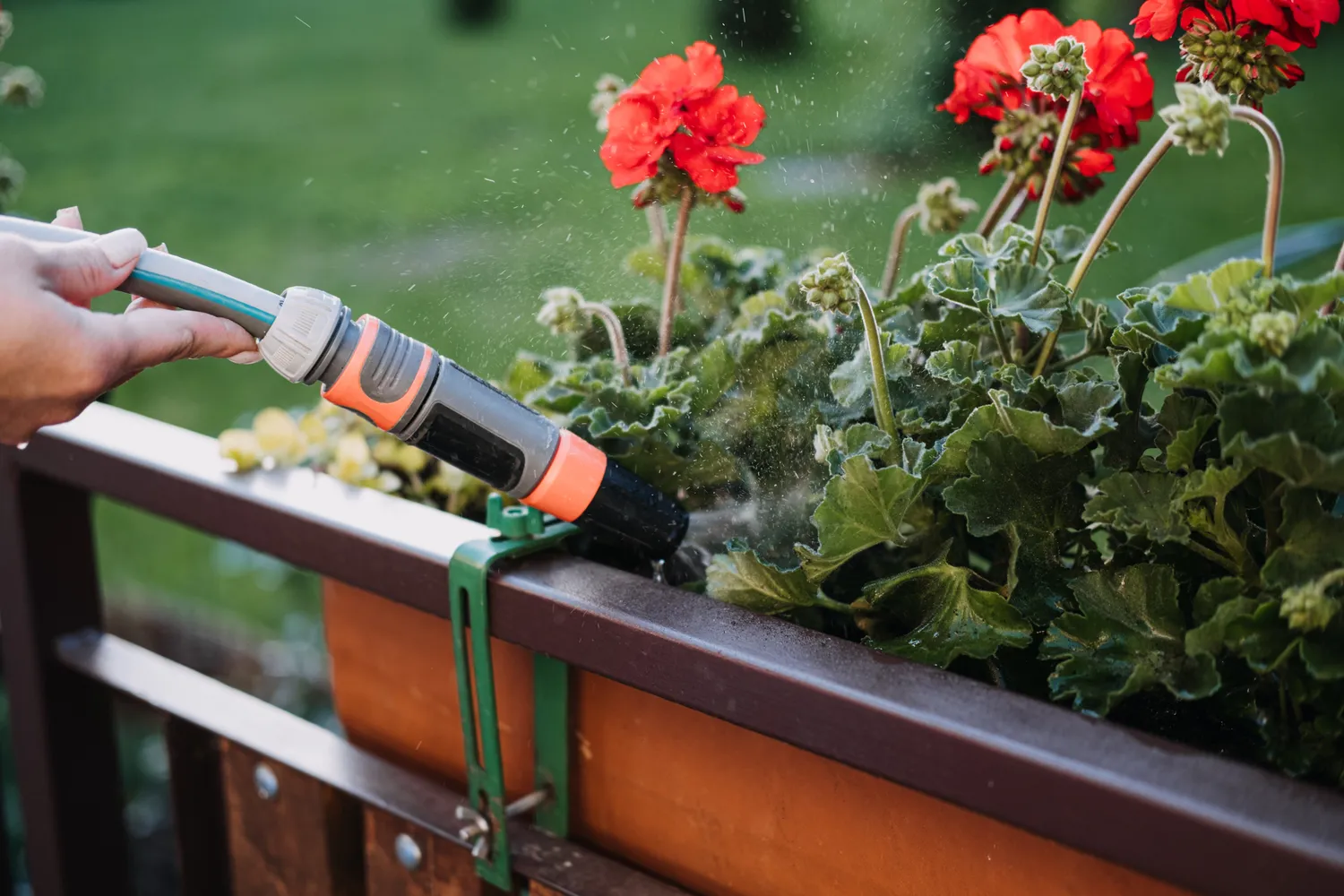
A garden hose resting on the soil next to a blooming plant
Sustainable landscape designer Brooke Addison points out that hose positioning drastically impacts water waste.
“Focus your hose around the base of your plant,” Addison says. “We want to get water to the roots, not drench the entire plant.”
Spraying water wildly into the air guarantees that a large percentage will simply evaporate before it ever benefits the plant. This exact problem is why Addison advises against traditional sprinklers.
Morning is the Ideal Watering Window
The time of day you drag the hose out dictates how much moisture your plants actually absorb.
“You want to avoid watering in the midday when it’s hottest,” Addison says. She warns that high noon watering leads to rapid evaporation and risks scorching the plant leaves.
Early morning is the absolute best time to hydrate a garden. This schedule gives the plants the entire day to dry off in the sun. Watering at night leaves moisture sitting on the foliage for hours, creating a perfect breeding ground for destructive pathogens.
Adjust for Evapotranspiration
Restuccia emphasizes that watering times should fluctuate based on the daily weather forecast. Hot, windy, and sunny days require significantly more hose time than cool, overcast afternoons.
“Evapotranspiration (ET) is how much water your plants use and how much water evaporates from the soil,” Restuccia says.
When temperatures spike or wind rolls in, ET levels jump. During peak summer conditions, ET can easily exceed one inch per week. To maintain a healthy landscape, gardeners must return that exact amount of water to the soil.
Calculate Your Hose’s Flow Rate
If you do not know how long it takes your specific hose to output a gallon of water, you are likely overwatering. Most standard garden hoses measure 5/8 inch in diameter, which Restuccia notes can unleash anywhere from 9 to 17 gallons per minute.
“The amount of water it flows depends on how wide you open the valve and how much pressure you apply,” he says.
To eliminate the guesswork, Restuccia recommends a simple baseline test. Turn your spigot to its usual setting and let the water run straight into a one-gallon bucket. Time exactly how long it takes to fill, and use that number to dictate your watering schedule moving forward.