
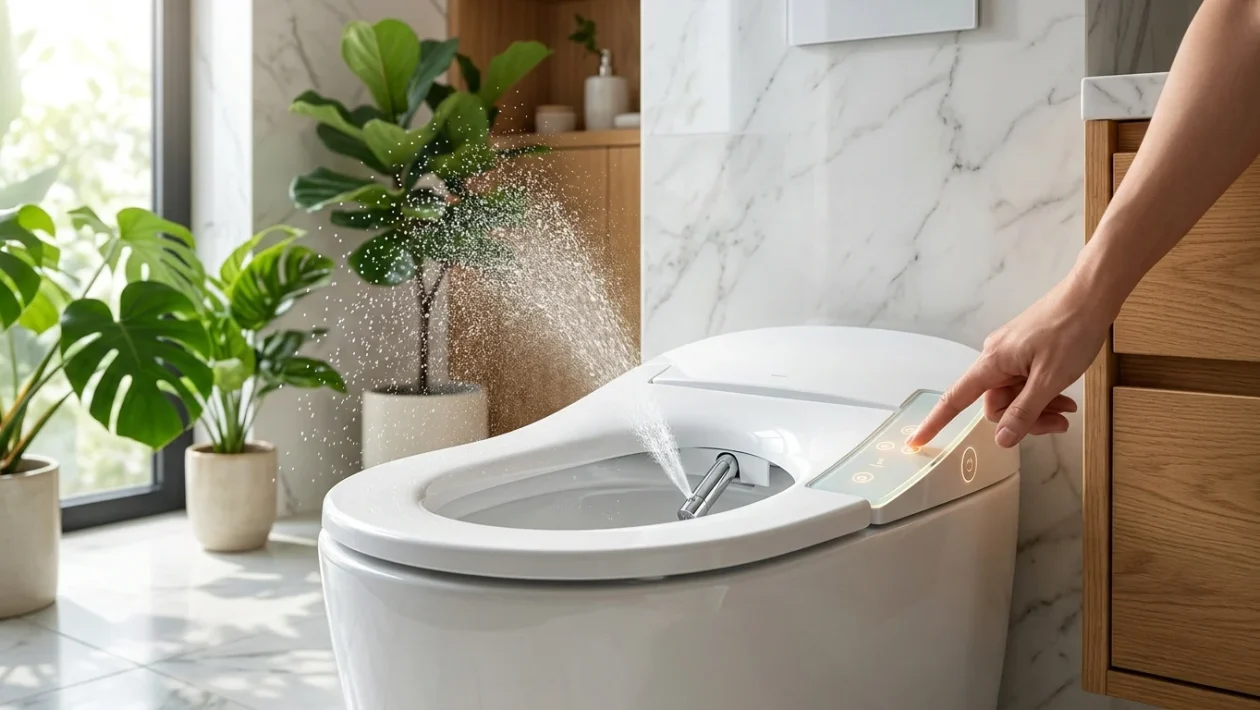
A sleek, modern smart toilet with an illuminated control panel in a contemporary bathroom setting.
The bathroom is no longer just a functional space. Smart toilets are shifting from a high-tech novelty to a dominant global trend, completely reshaping daily hygiene.
Once viewed as a privilege reserved for luxury hotels or Asian travel destinations, these advanced fixtures are rapidly expanding into homes worldwide. Consumers are driving this market shift in pursuit of superior comfort, cleanliness, and efficiency.
From Japanese Innovation to Global Standard
Originally developed in Japan, the “washlet” combines a standard toilet and a bidet into a single, seamless unit. The core appeal lies in its advanced technology designed to elevate personal cleanliness.
Users can customize their experience with adjustable water temperature, pressure, and direction. Premium models also feature warm air drying, heated seats, and automatic motion sensors that detect approaching users.
The rise of this hardware aligns with the broader push toward smart homes. Architects and interior designers increasingly treat these devices as standard inclusions in contemporary residential projects.
Sustainability Over Toilet Paper
The most profound change smart toilets introduce is the near-total elimination of toilet paper. Using water simply provides a much more thorough and hygienic clean than traditional dry methods.
The environmental benefits are undeniable. Cutting out daily paper usage drastically reduces the demand for natural resources, positioning washlets as a highly sustainable household choice.
Beyond resource conservation, the technology is gentler on the skin and minimizes direct physical contact with bathroom surfaces. Built-in antibacterial systems and automatic self-cleaning cycles further elevate sanitary standards.
Maintenance Remains Essential
Despite heavy automation, fundamental hygiene cannot be ignored. Users must still maintain basic disinfection routines to prevent bacteria buildup and odors, even with advanced self-cleaning hardware.
App Connectivity and Resource Tracking
Modern smart toilets now integrate directly with mobile applications. This connectivity allows users to tweak personalized settings remotely from their smartphones.
More importantly, these applications allow homeowners to monitor their exact water and energy consumption in real-time. This transforms a basic bathroom fixture into an active tool for household resource management.
As ecological awareness rises, the global adoption of smart toilets highlights a major shift in domestic habits. Consumers are actively embracing technology that makes daily life both more comfortable and environmentally responsible.


