The WindRunner aircraft carrying massive wind turbine blades over a remote landscape
Solving the Wind Energy Bottleneck
Colorado-based aerospace company Radia is developing a massive solution to a growing industrial problem.
They are building the WindRunner, a 108-meter-long aircraft specifically designed to transport giant wind turbine blades to remote locations.
Moving 100-meter-plus turbine blades overland is currently a logistical nightmare. Narrow roads, sharp curves, and low bridges make ground transport slow, costly, and inherently dangerous.
This bottleneck severely limits the deployment of larger, more efficient wind turbines. Radia’s solution takes the transport of these massive parts to the sky, bypassing the need for complex road networks and specialized port infrastructure.
Meet the WindRunner: An Aviation Titan
The WindRunner is purpose-built to move heavy wind components directly from manufacturing plants to isolated wind farms.
The sheer scale of the aircraft dwarfs traditional commercial planes. Key specifications include:
- Length and Wingspan: At 108 meters long with an 80-meter wingspan, it significantly outstretches the Boeing 747.
- Engine Power: Four high-thrust engines optimized for heavy-lift cargo operations.
- Runway Versatility: The ability to safely land on packed dirt runways as short as 1.8 kilometers.
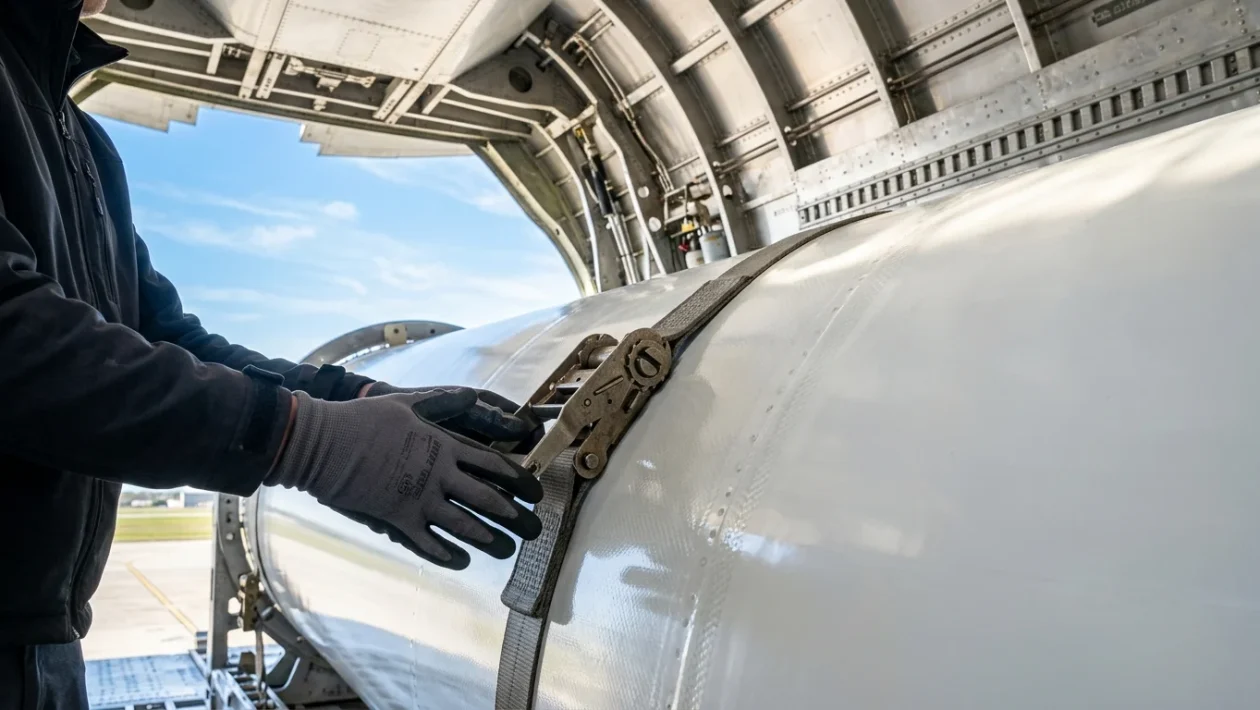
- Cargo Capacity: A massive interior bay large enough to hold wind blades up to 105 meters long, or multiple components in a single flight.
The Launch Timeline and Financial Backing
Radia has already secured key supplier agreements to bring the WindRunner from concept to reality.
The project requires billions of dollars in investment. This funding is partially backed by government initiatives designed to support clean energy and aviation innovation.
The aircraft is currently in its advanced design stage. Radia anticipates the first test flight will take place by the end of 2029.
Commercial operations are slated for 2031, pending official certification from the Federal Aviation Administration (FAA).
Expanding the Future of Clean Energy
Mark Lundstrom, founder and CEO of Radia, is straightforward about the industry’s core challenge.
“Wind energy is stuck if we don’t find a viable way to transport giant pieces by air,” Lundstrom stated.
He explained that next-generation 10-megawatt turbines are essential for generating cheaper, cleaner electricity. However, their physical size makes ground transport impossible in many regions.
According to a study commissioned by the company, deploying these larger turbines could boost operational efficiency by up to 20 percent, drastically reducing costs and carbon emissions.
Strategic Advisors and Military Potential
The initiative carries significant global weight. It is backed by high-profile advisors, including former U.S. Secretary of Energy Ernest Moniz and former Australian Prime Minister Malcolm Turnbull.
While clean energy remains the primary focus, the aircraft’s unprecedented cargo capabilities have attracted attention from other sectors.
Radia confirmed the WindRunner could eventually be adapted for heavy-lift military operations, heavily broadening its strategic and commercial scope.