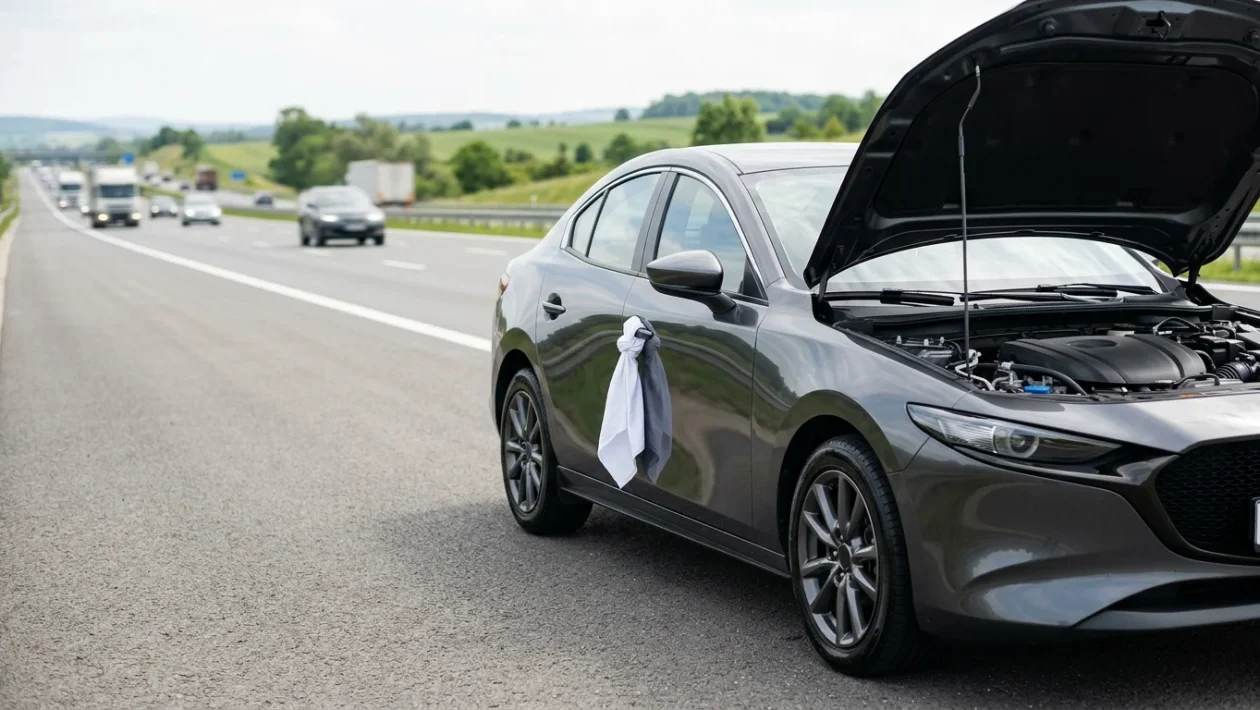
A white cloth tied to the left door handle of a stranded vehicle to signal a mechanical breakdown.
The Hidden Language of the Highway
Drivers share an unspoken language on the road. While hazard lights and turn signals are standard, informal codes are just as critical during a crisis.
One of the most important is tying a white cloth to a vehicle. This simple act serves as an immediate distress signal to other motorists and highway patrols.
It acts as a universal alert, indicating that the driver is facing a severe emergency and requires immediate assistance.
Official DMV Recognition
This signal goes beyond a mere urban legend. Departments of Motor Vehicles (DMV) actively recognize this protocol in their official safety guidelines.
According to the North Carolina Driver’s Handbook, a white cloth specifically indicates that a vehicle has suffered a mechanical breakdown.
In everyday practice, drivers also use this signal when speeding toward a hospital. It warns surrounding traffic that the vehicle is operating under a life-threatening medical emergency.
How to Deploy the Emergency Signal
Authorities provide strict instructions on how to properly display this alert so it is not missed by passing cars.
Drivers should tie the white cloth securely to the left door handle or the radio antenna. This placement ensures maximum visibility for traffic passing on the left.
If the vehicle is completely immobilized, officials recommend raising the hood to reinforce the call for help.
Essential Breakdown Safety Protocols
A white cloth is just one component of a broader highway breakdown strategy. Officials recommend following specific steps to prevent secondary accidents.
- Pull the vehicle completely off the highway and onto the shoulder.
- Always exit the car from the passenger side to avoid stepping into oncoming traffic.
- Do not remain inside the stranded vehicle.
- Stand well clear of the road. Never position yourself directly in front of or behind the car.
- Leave the hood raised to make the mechanical failure obvious.
- Activate parking lights or hazard flashers, especially at night or in low visibility.
- Keep emergency flares and flashlights accessible for unforeseen situations.
Using the white cloth alongside these safety measures creates a clear, undeniable alert. It bridges the communication gap on chaotic roads, ensuring help arrives when seconds matter most.