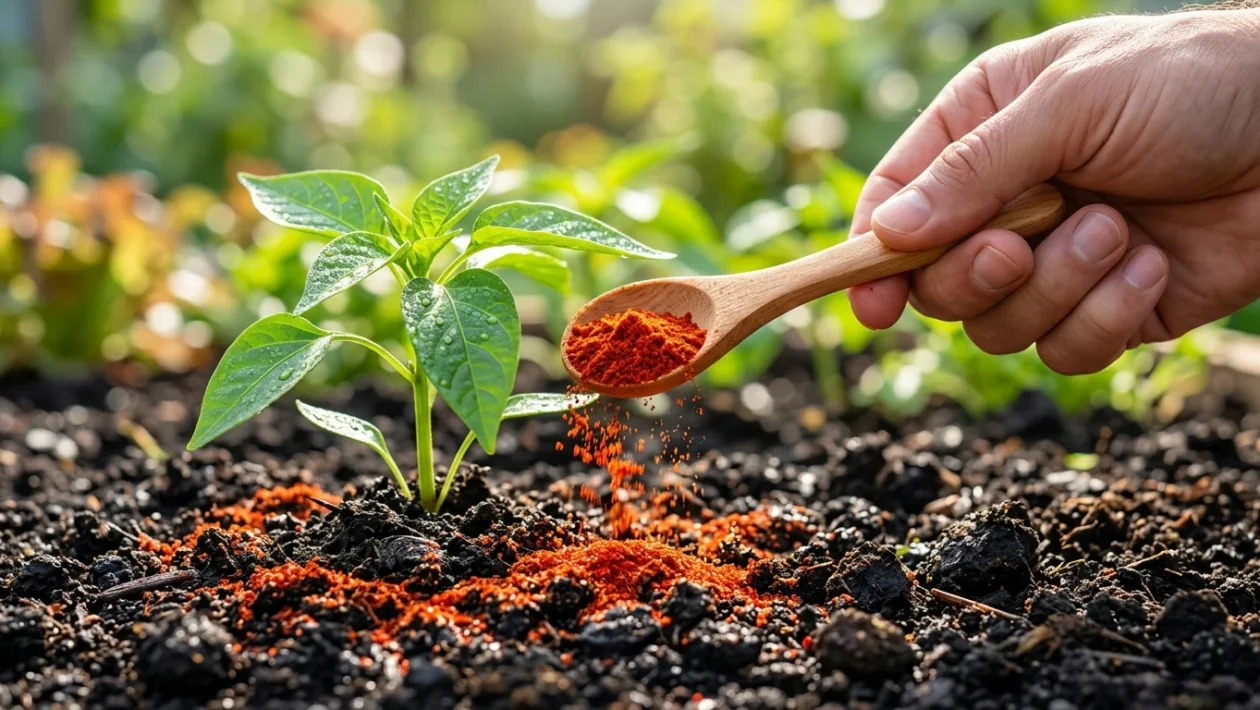
Red cayenne pepper powder sprinkled on garden soil near green plant bases to deter pests.
Gardeners across the United States are abandoning chemical pesticides for a common kitchen staple: cayenne pepper. This potent spice acts as a natural, non-lethal deterrent for garden pests.
Instead of poisoning animals, the fiery powder simply irritates their senses. It forces hungry wildlife to search for food elsewhere, keeping your crops intact and chemical-free.
Why Cayenne Pepper Works in the Garden
The secret lies in capsaicin, the active compound responsible for cayenne’s signature heat. When mammals come into contact with it, they experience a sharp, immediate burning sensation.
This biological reaction makes cayenne highly effective against deer, rabbits, squirrels, and other crop-damaging rodents. However, the spice has a distinct blind spot.
Birds cannot physically detect capsaicin, meaning the spicy powder will not stop them from pecking at your plants. Gardeners must also avoid over-applying the pepper, as excessive amounts can inadvertently harm beneficial wildlife and household pets.
How to Apply Cayenne Pepper as a Pest Repellent
To maximize protection, you should apply cayenne preventatively before you spot chewed leaves or dug-up roots. There are three primary ways to deploy the spice effectively:
- Sprinkle the dry powder directly around the base of vulnerable plants.
- Create a continuous barrier by distributing it along the outer edges of your garden beds.
- Mix a liquid spray using one to two tablespoons of cayenne powder per gallon (3.8 liters) of water.
Maintaining the Spicy Barrier
Cayenne pepper is a temporary solution. The powder easily washes away and loses its potency over time.
You must actively reapply the treatment after rain, sprinkler irrigation, or heavy morning dew. During peak pest season, expect to renew the perimeter every few days.
If you use the liquid spray method, adding a mild surfactant helps the capsaicin bond directly to plant leaves. This simple addition significantly extends the lifespan of your natural defense system.