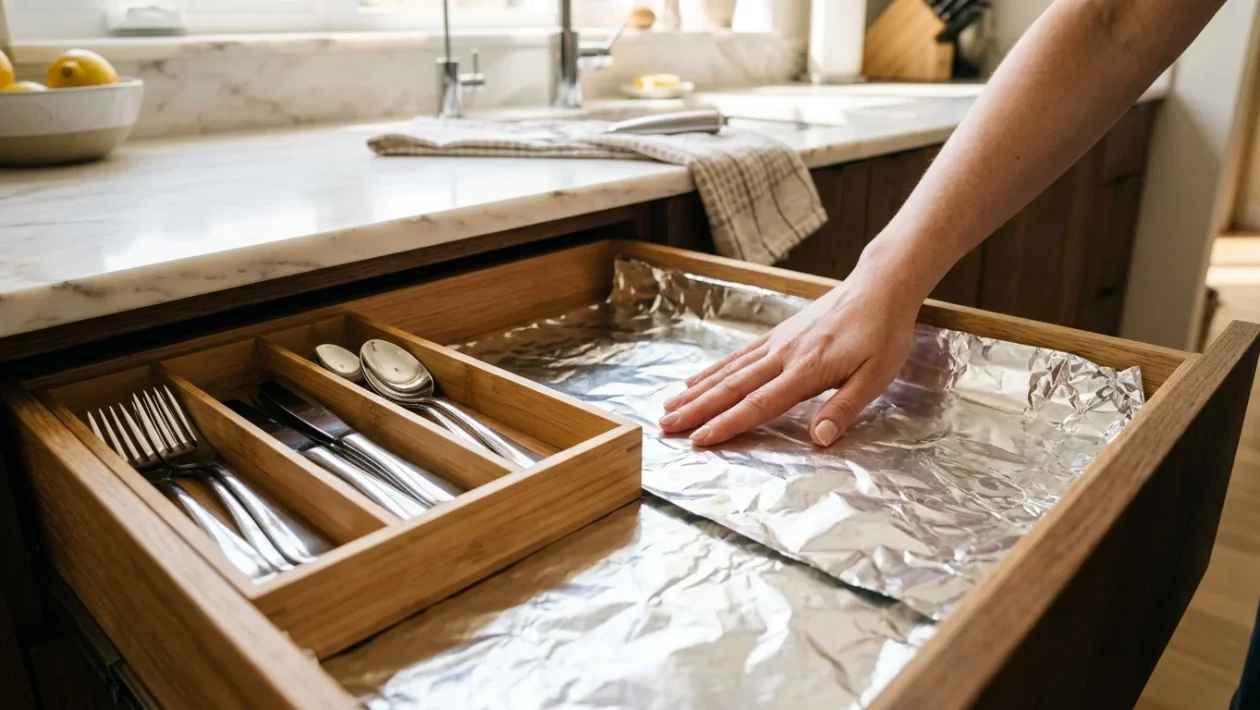
A kitchen drawer lined with aluminum foil to protect silverware from rust and moisture.
Aluminum foil is a staple for everyday household problem-solving. Beyond basic food storage, its unique properties make it a highly effective tool for preserving kitchen utensils.
Placing a layer of foil inside your cutlery drawer protects silverware from external damage. Closed spaces easily trap humidity, which quickly generates hard-to-remove stains and damages metal surfaces.
How Foil Blocks Oxidation
Foil acts as a natural insulating barrier. Placing it at the bottom of a drawer blocks the moisture that naturally emanates from wooden cabinets, preventing it from reaching your utensils.
By cutting off this direct contact with ambient dampness, you drastically reduce the conditions that cause metal to rust. This keeps your forks, knives, and spoons pristine for much longer.
Setting Up Your Drawer
Implementing this kitchen hack requires minimal effort. Follow these quick steps to protect your utensils:
- Measure the internal dimensions of your cutlery drawer.
- Cut sheets of aluminum foil to perfectly match the bottom surface.
- Lay the foil flat against the base of the drawer.
- Place your standard cutlery organizer directly on top.
For the best results, monitor the setup over time. Simply replace the foil sheets with new ones as soon as they begin to feel damp.
Diagnosing Wall Moisture with Foil
The isolating properties of aluminum foil also make it an excellent diagnostic tool for identifying damp walls. This technique allows you to isolate a specific problem area and discover the true origin of a leak.
Tape a square of foil securely to the affected wall and leave it untouched for 48 hours. Afterward, peel it back and inspect the side that was touching the paint.
If you find water droplets or stains on the interior side of the foil, the moisture is originating from within the home’s structural walls. If the side touching the wall is entirely dry, the dampness is simply caused by environmental condensation in the room.
Keep in mind that this trick is strictly a quick home diagnostic tool. Resolving structural leaks will still require a proper technical inspection.