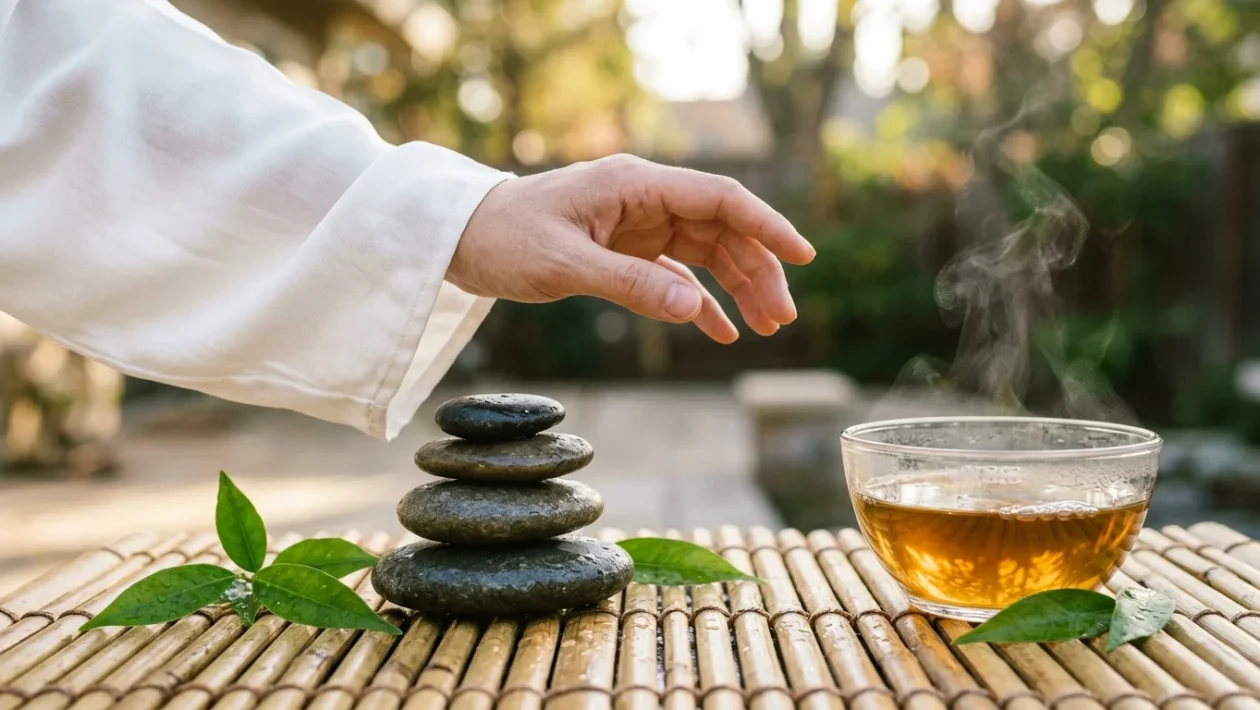
A focused individual practicing a low-impact Tai Chi routine.
No gym membership, running shoes, or heavy weights are required. Tai chi is steadily gaining recognition as an elite, low-impact exercise that delivers serious health benefits.
Originating in China, this discipline blends slow, deliberate movements with deep breathing and razor-sharp mental focus. Often called “meditation in motion,” it relies on a continuous flow of gentle steps inspired by martial arts and animal movements.
Because it completely eliminates sudden, jarring motions, Harvard University endorses it as a highly accessible workout for individuals of all fitness levels.
Building Core and Lower Body Strength
According to Harvard publications, the physical payoff of tai chi easily rivals brisk walking or traditional resistance training. Despite its famously slow pace, scientific evidence proves the practice effectively builds muscle in both the upper and lower body.
- Stronger legs: Sustained, controlled postures deeply engage and strengthen the lower body.
- Core and back stability: The continuous motion forces the abdomen and lower back muscles to stabilize the trunk.
- Upper body toning: While completely unweighted, holding the arms in suspension builds noticeable strength over time.
A Shield for Your Joints
The massive appeal of tai chi lies in its incredibly low impact on the human body.
The prescribed movements are relaxed, entirely preventing extreme muscle tension. More importantly, joints are never fully extended or locked out, dramatically slashing the risk of injury.
Beyond raw strength, this regular physical practice actively improves flexibility, balance, and overall body coordination.
How to Start Your Practice
Harvard experts note that kicking off a tai chi routine is remarkably simple. You don’t need expensive gear or a baseline level of extreme fitness to begin.
To ensure success, keep these fundamental guidelines in mind:
- Find an instructor: Learning in a formal class helps you nail the precise mechanics and receive vital corrections.
- Stick to short forms: Beginners should focus on routines with fewer movements to master the basics without getting overwhelmed.
- Dress smart: Wear loose, flexible clothing that allows for a completely unrestricted range of motion.
- Commit to 12 weeks: Consistency is key. Standard initiation programs require one or two weekly classes paired with at-home practice over three months.
The ultimate goal is to maintain a slow, unbroken flow of movement while breathing deeply and tuning into your body’s physical sensations.