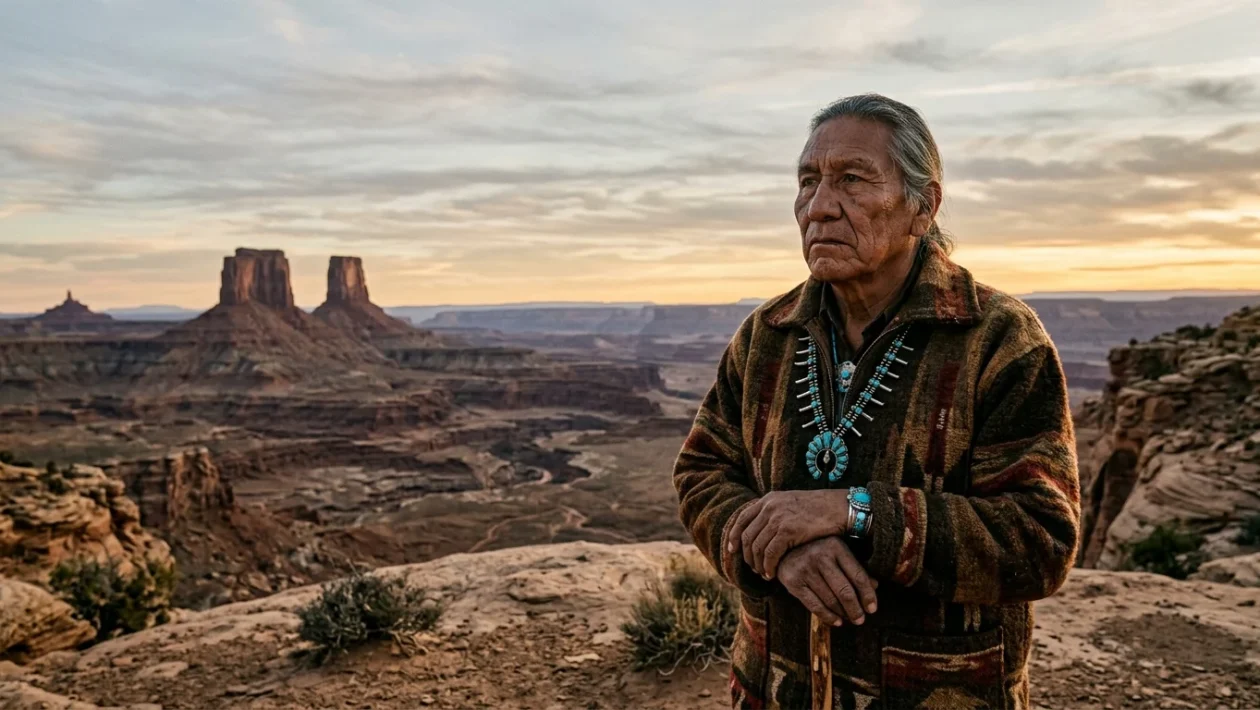
Twin rock formations of Bears Ears rising above the canyon landscape.
A vast desert canyon landscape bathed in sunlight.
President Donald Trump signed proclamations on July 13, 2026, slashing the size of Utah’s Bears Ears and Grand Staircase-Escalante national monuments by roughly 90%. By September, nearly 3 million acres will lose their protected status.
The Antiquities Act of 1906 grants presidents the authority to establish or alter national monuments. This latest reduction follows a relentless campaign by Utah’s Republican leadership to open the restricted land to commercial mining.
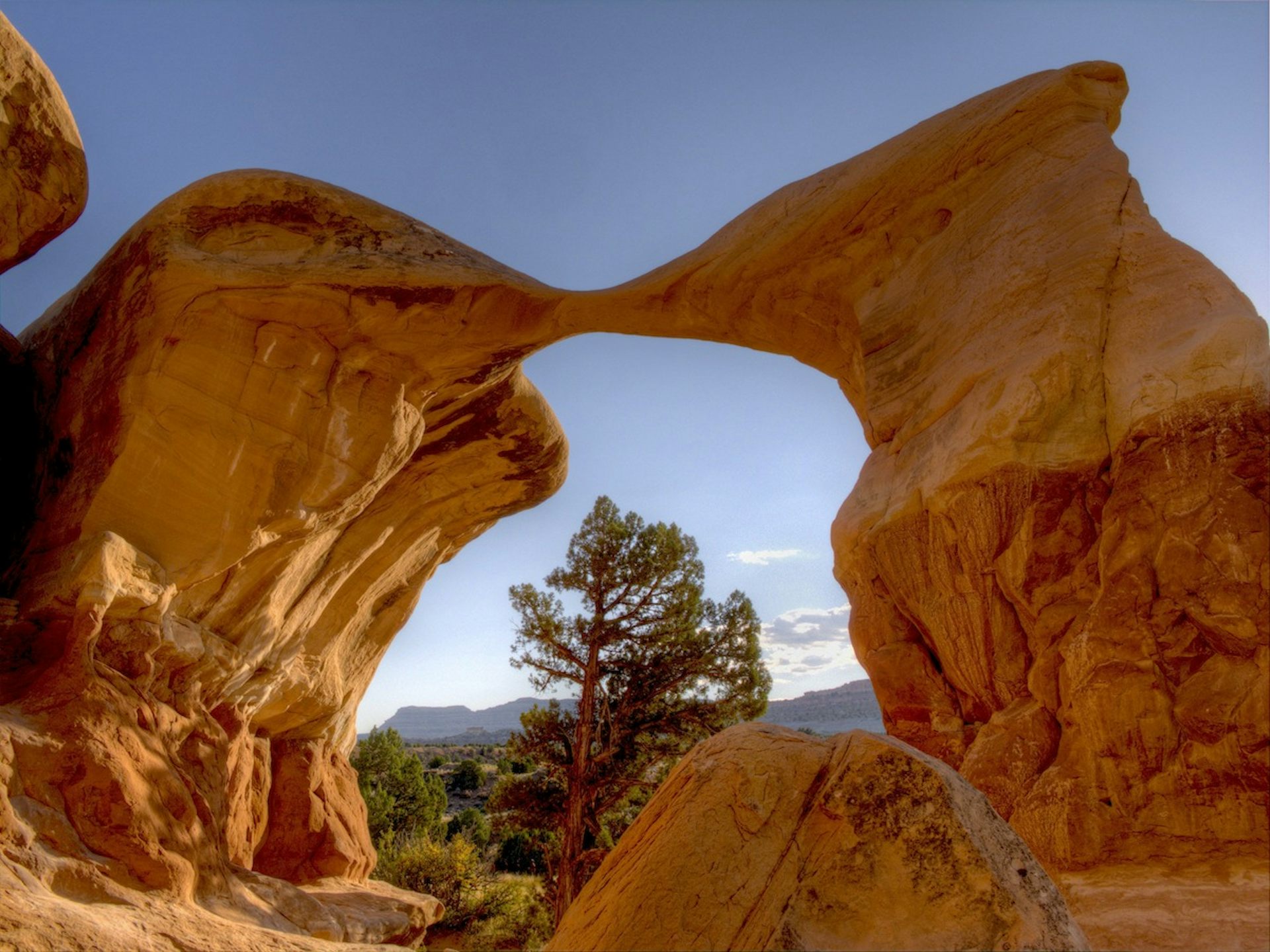
A rugged view of the canyon terrain showing deep geological layers.
Gov. Spencer Cox and members of the state’s congressional delegation flanked Trump at the signing. Sen. Mike Lee stated he had spent 18 months engineering the reduction.
Proponents of the cuts argue the original monuments violated the Antiquities Act, which restricts designations to the “smallest area compatible” with protecting historical objects. Bill Clinton designated Grand Staircase-Escalante in 1996, and Barack Obama established Bears Ears in 2016.
The new proclamations explicitly target underground copper and uranium, labeling the minerals a matter of national security. Meanwhile, the tribal nations that hold this land sacred report they were completely excluded from the decision-making process.
The Grand Staircase-Escalante Inter-Tribal Coalition condemned the executive action, calling it an attempt to “virtually eliminate” the monuments entirely.
A Living, Sacred Landscape
Bears Ears gets its name from twin buttes that pierce the skyline above southeastern Utah, resembling the ears of a bear.
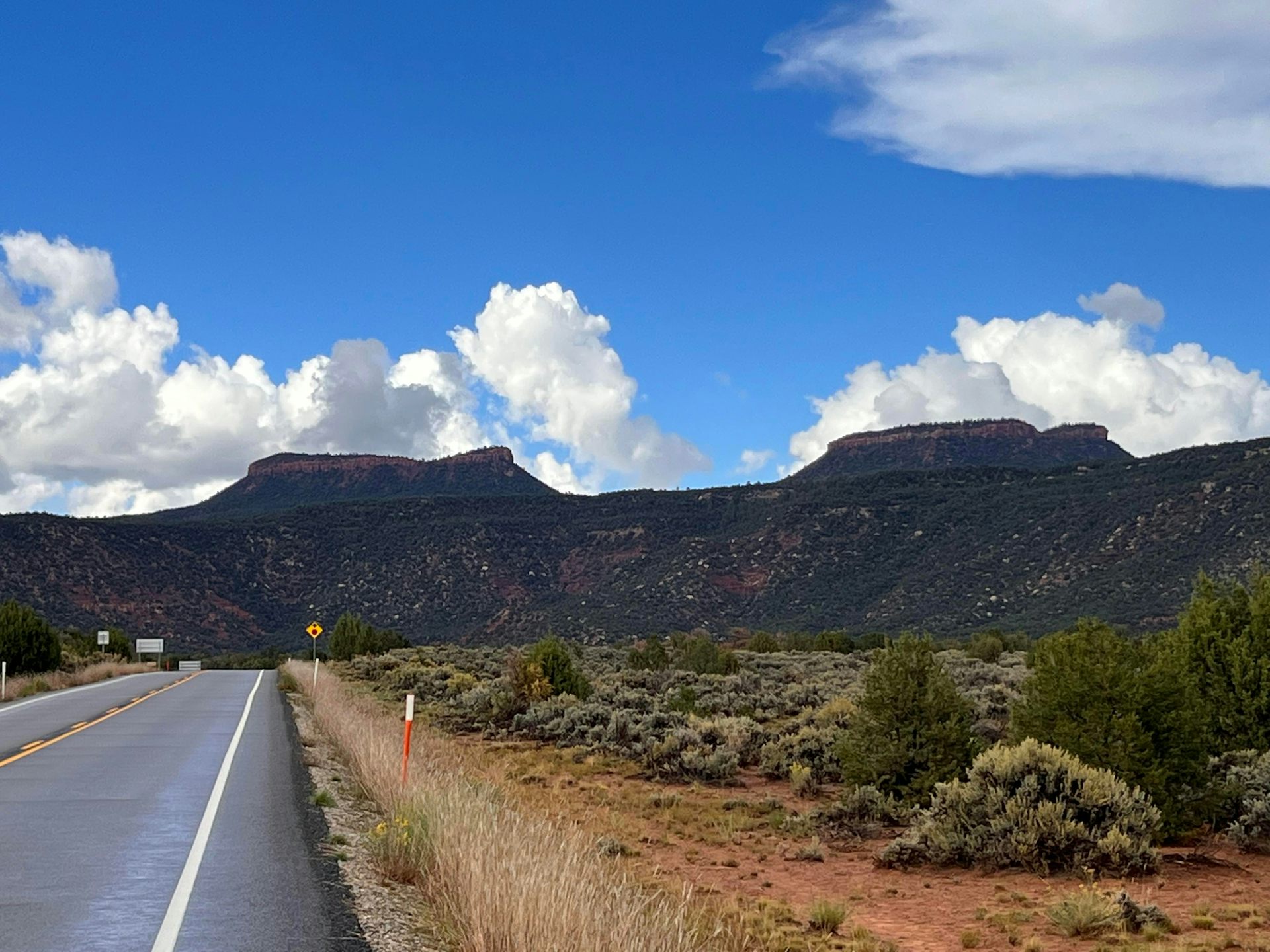
Twin rock buttes towering over a forested canyon rim.
The Indigenous nations tied to this land each carry their own name for the region: Hoon’Naqvut in Hopi, Shash Jaa’ in Navajo, Kwiyagatu Nukavachi in Ute, and Ansh An Lashokdiwe in Zuni.
For the Hopi and Zuni, Bears Ears is the physical setting of their origin stories. Zuni oral history dictates that their ancestors emerged from the earth at the Grand Canyon, migrating across the plateau and into the Bears Ears region.
Here, the Zuni constructed villages, altars, and shrines that remain sacred today. “Once those structures were built, they were consecrated,” Jim Enote, a Zuni tribal member and former director of the A:shiwi A:wan Museum, told National Geographic in 2018. “We never consider them abandoned.”
Federally funded anthropological research confirms that Southern Paiutes view Grand Staircase as a holy land granted at Creation. This sacred bond requires generations of stewardship.
Today, members of all five nations gather ceremonial plants, water, and firewood across the landscape. A 2021 study revealed that 31 culturally significant plant species, including the Four Corners potato, thrive heavily near ancient Native habitation sites.
A History of Blood and Sanctuary
Both monuments double as historical grounds of refuge. In the 1860s, the U.S. Army violently expelled the Diné (Navajo) from the Four Corners region.
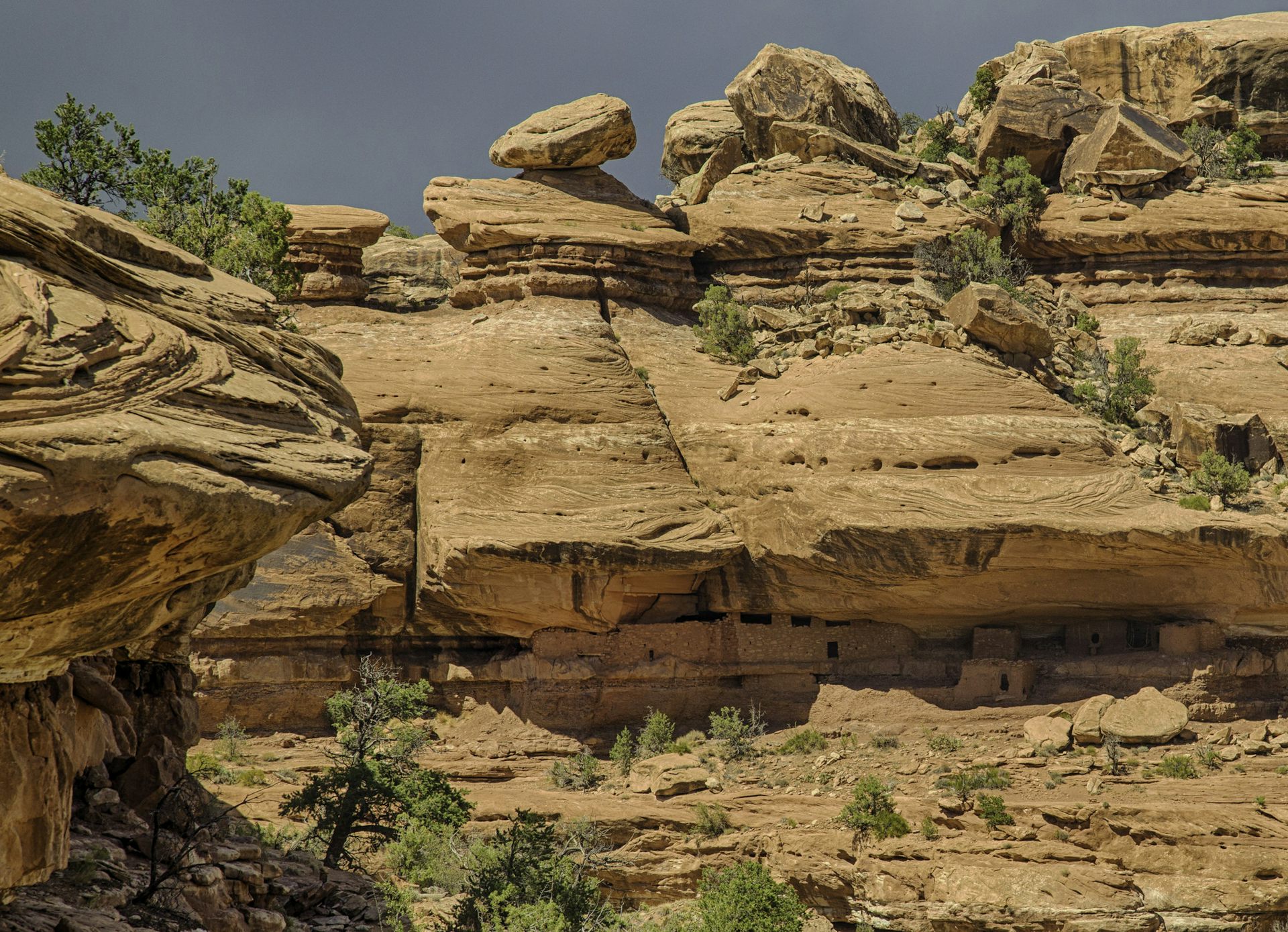
A historical depiction of a canyon landscape steeped in cultural history.
Thousands were marched more than 300 miles east to Bosque Redondo in what is now remembered as the devastating Long Walk. Families who managed to escape hid deep inside the Bears Ears canyons.
The Paiute sheltered and fed those fleeing the cavalry. “The Paiute Nation fed and clothed and sheltered us,” recalled Davina Smith-Idjesa, a Navajo Nation representative on the Bears Ears Inter-Tribal Coalition.
U.S. law consistently fails to grasp this deep-rooted connection. Indigenous leaders argue the sacredness cannot be fenced off into tiny parcels while the surrounding earth is hollowed out for uranium. “These are sacred places, not sacred sites,” Enote explained. “A site to me is a point on a map.”
A Century of Broken Promises
The federal government has acknowledged the historical value of this region since at least 1904. Early advocates warned Congress that Southwestern cultural sites were facing total destruction, eventually leading to the Antiquities Act.
However, the government protected the inanimate artifacts while criminalizing the living people. Under the Religious Crimes Code of 1883, the U.S. actively jailed traditional healers for performing Native ceremonies like the Sun Dance.
Congress attempted a course correction with the American Indian Religious Freedom Act of 1978, supposedly protecting Native access to sacred sites. But a decade later, the Supreme Court permitted a federal logging road to slice through sacred high country in Northern California.
Blackfeet scholar Rosalyn LaPier noted the court viewed the 1978 act as mere policy, entirely devoid of legal teeth.
When Bears Ears was designated in 2016, it signaled a historic shift. The Hopi Tribe, Navajo Nation, Ute Mountain Ute Tribe, Ute Indian Tribe, and the Pueblo of Zuni petitioned for the monument together. It was the first national monument ever created at the direct request of tribal nations.
Yet monuments remain politically fragile. Congress builds national parks; presidents decree monuments. Trump cut Bears Ears by 85% in 2017. Biden restored the boundaries in 2021. Now, Trump has gutted them again.
When September arrives, Indigenous runners will still carry prayers 50 miles from Bluff, Utah, to the high country. Zuni pilgrims will still read ancestral petroglyphs carved into the rock.
The land’s sacred nature will not change. Only the legal barrier preventing industrial mining operators from tearing into the earth will vanish.