Bottles of vinegar and cleaning supplies arranged for household chores
You stare at two identical jugs in the supermarket aisle. One says “white distilled vinegar,” while the other reads “cleaning vinegar.”
They look identical and share the same pungent smell. However, mixing them up at home can ruin your dinner recipe or permanently damage your countertops.
Both products rely on acetic acid. This chemical strips away grime, breaks down dirt, and gives the liquid its sharp bite.
The One Percent Rule
Standard white vinegar contains exactly 5 percent acetic acid. Cleaning vinegar bumps that number up to 6 percent.
That single digit sounds insignificant, but it actually makes cleaning vinegar a massive 20 percent stronger than its culinary cousin.
This amplified acidity makes it a powerhouse for breaking down hard water deposits, cutting through kitchen grease, and making glass shine.
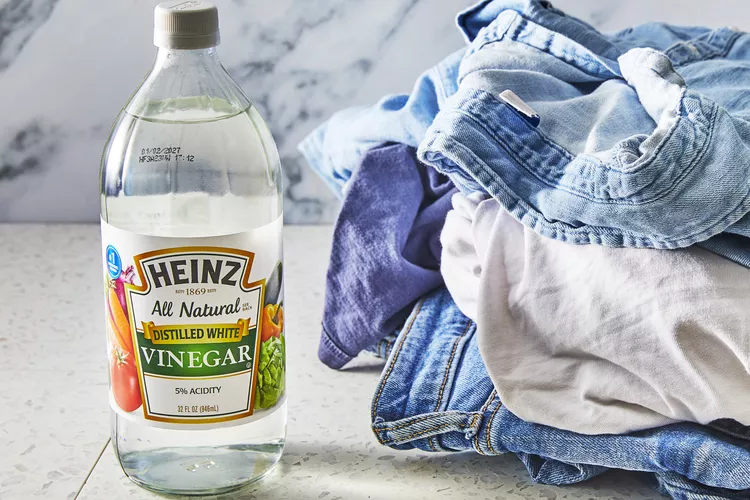
Bottles of household cleaning liquid placed next to a laundry basket
Keep Cleaning Vinegar Out of the Kitchen
Never use cleaning vinegar for pickling, marinades, or cooking. It is simply too potent for food preparation.
Because manufacturers design it exclusively for chores, the production process is entirely different. Cleaning vinegar often contains impurities and industrial additives that are strictly unsafe for human consumption.
Keep it out of your pantry entirely. Use it instead in the laundry room to deep clean your washing machine and naturally soften fabrics.
Knowing When to Dilute
Cleaning vinegar is an aggressive acid. Using it straight out of the bottle can ruin sensitive household materials.
Never spray it on natural stone countertops, aluminum, or cast iron cookware. The high acid content will quickly pit, etch, and corrode these surfaces.
For general household use, always cut the strength. A 50-50 mixture of cleaning vinegar and tap water is highly effective and much safer for everyday wiping.
Can Pantry Vinegar Clean Your House?
Technically, yes. Plain, distilled white vinegar is an excellent—albeit slightly weaker—household cleaner.
However, avoid using specialized cooking vinegars for chores. Sweet balsamic will immediately stain light surfaces and leave a sticky, sugary residue behind.
Unfiltered options, like raw apple cider vinegar, will leave a cloudy, odorous mess across your floors. If you want a dual-purpose liquid for both cooking and cleaning, stick exclusively to standard white distilled vinegar.