
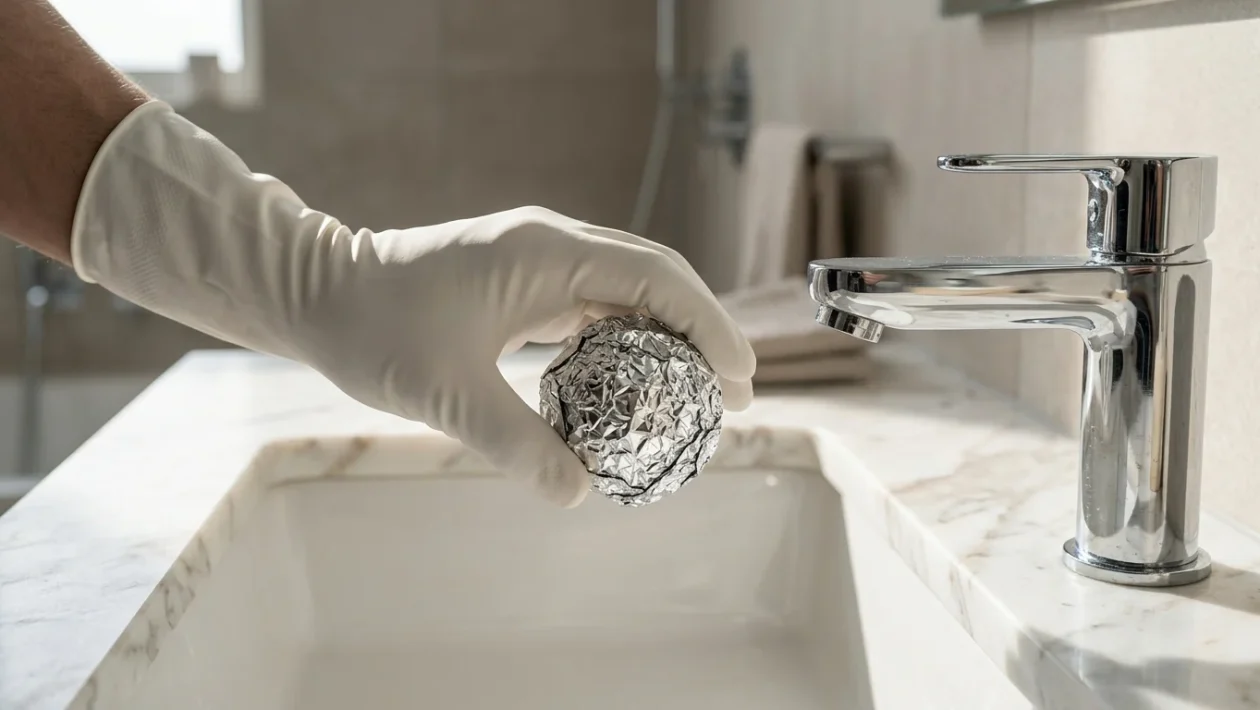
A crumpled ball of aluminum foil resting next to a shining stainless steel bathroom faucet.
Aluminum foil is a staple in almost every kitchen, primarily used for cooking and food storage. However, its practical applications extend far beyond the culinary world.
A highly effective household trick involves rubbing aluminum foil directly onto faucets. This simple method helps eliminate surface stains and keeps bathroom and kitchen fixtures looking brand new.
The success of this technique relies heavily on the current state of your hardware and the specific type of grime that has accumulated over time.
Why Aluminum Foil Works on Metal Fixtures
When aluminum foil is moistened and rubbed against a metal tap, it acts as a very fine, mild abrasive. This reaction safely breaks down buildup without requiring harsh chemical cleaners.
Using this household item can directly help you:
- Remove minor tartar and limescale deposits.
- Eliminate stubborn dry water spots.
- Restore the original shine of the metal.
- Lift away tough, stuck-on residues.
This cleaning hack is particularly effective on stainless steel or chrome-plated faucets that suffer from dullness and superficial dirt.
Step-by-Step: How to Polish Faucets with Foil
Applying this cleaning method is incredibly straightforward. You only need standard kitchen foil and a bit of water.
Follow these exact steps to restore your fixtures:
- Tear off a piece of aluminum foil and crumple it into a loose ball.
- Moisten the foil ball with plain water.
- Rub the foil over the stained or dull areas using gentle, circular motions.
- Rinse the entire surface with clean water.
- Wipe the faucet completely dry using a clean microfiber cloth.
By using foil, you harness the material’s natural properties to dislodge mineral deposits safely. It provides just enough friction to clean the metal without leaving permanent scratches.
Safety Reminder
Even when using chemical-free methods, it is always recommended to wear household gloves. This protects your skin from dislodged grime and the potentially sharp edges of the crumpled metal.


