A highly modified Boeing 747-8 aircraft serving as the secure Air Force One presidential transport.
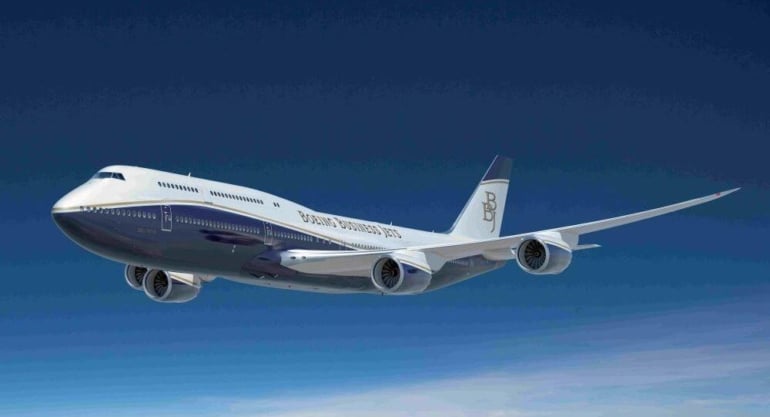
A conceptual rendering of the next-generation Air Force One in flight.
Boeing’s next-generation Air Force One program has finally established a solid timeline for its airborne debut. The aerospace manufacturer confirmed that the first of two VC-25B presidential aircraft will begin flight testing in 2027.
This critical milestone keeps the highly classified jets on schedule for their targeted delivery in 2028. Reaching the flight test phase marks the first real proof that the heavily modified airframes are approaching operational readiness after years of engineering hurdles and financial strain.
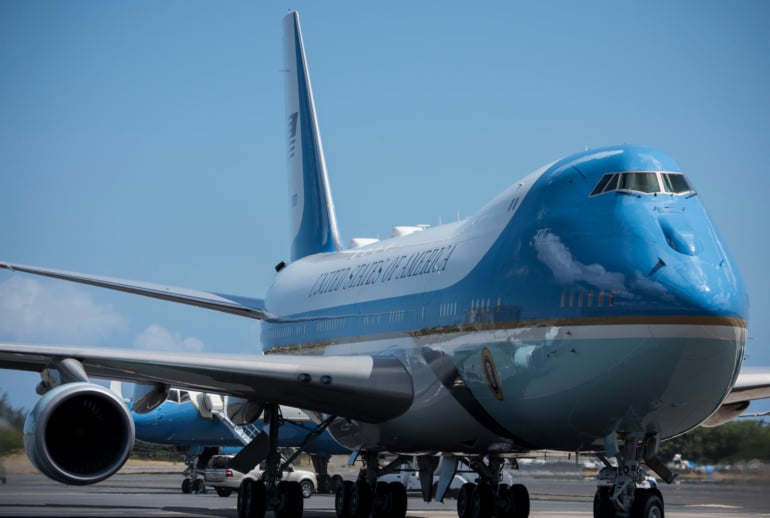
A Boeing aircraft positioned on a sunlit tarmac.
The program’s budget has swelled significantly since its inception. Originally awarded as a $3.9 billion fixed-price contract in 2018, the project now costs Boeing more than $5 billion.
The company has absorbed nearly $2 billion in overruns. Despite these financial losses, Boeing Defense, Space & Security CEO Steve Parker recently confirmed the company remains confident in its revised schedule, as first reported by Defense News.
Transforming Abandoned Airliners into Flying Fortresses
A Boeing 747 aircraft viewed from a low angle.
The VC-25B aircraft began their operational lives as standard Boeing 747-8 Intercontinentals, but the final product will share little with a commercial airliner. The two airframes were originally manufactured for Russia’s Transaero Airlines.
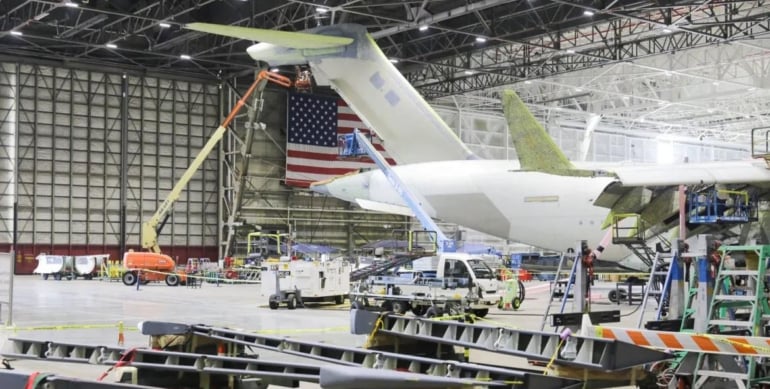
When the Russian carrier collapsed, the planes were placed in storage. The U.S. Air Force eventually acquired the unused jets, launching an exhaustive conversion process at Boeing’s facility in San Antonio, Texas.
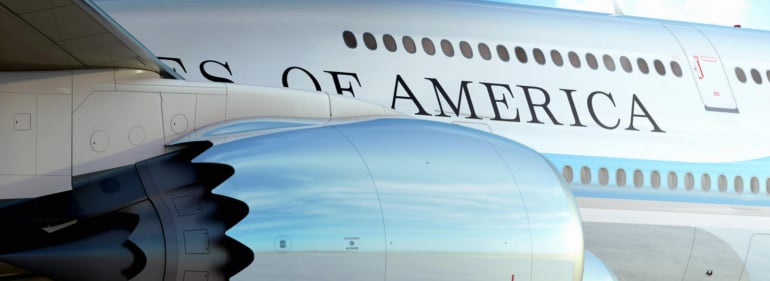
A side profile of the iconic presidential aircraft on the runway.
The primary objective is to build a flying White House capable of sustaining executive leadership during global crises or collapsed ground communications. Boeing is outfitting the jets with top-tier military avionics, an integrated self-defense suite, and extensive electromagnetic hardening to survive a nuclear blast.
The jet features autonomous boarding stairs, a self-contained baggage loading system, dedicated rest areas, and fully equipped medical facilities. The communications network is designed to mirror the capabilities of the Oval Office seamlessly.
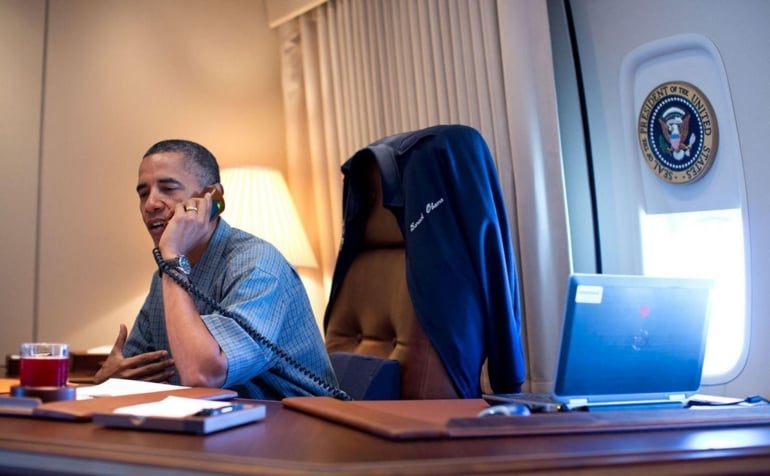
Former President Barack Obama working aboard Air Force One.
Initial design requirements demanded at least 70 simultaneous voice or data connections and two concurrent secure video conferences. This architecture supports everything from unclassified data to Top Secret/Sensitive Compartmented Information.
Engine Upgrades and Missing Features
The presidential aircraft soaring through a clear blue sky.
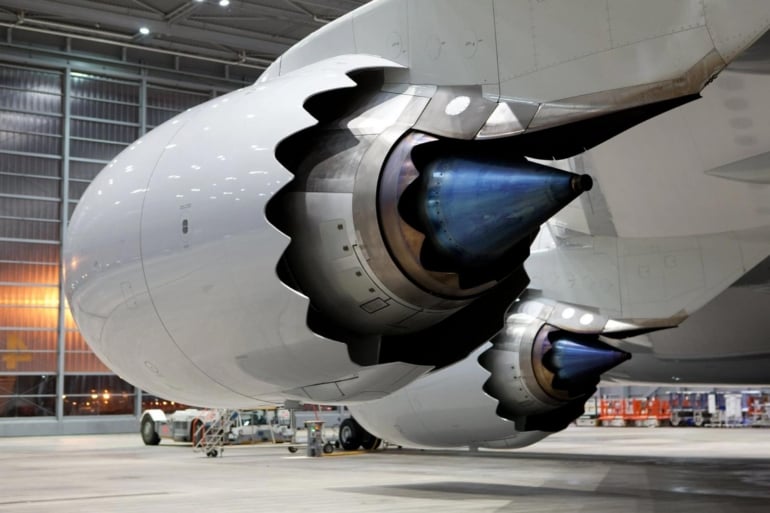
Measuring roughly 250 feet long with a 224-foot wingspan, the VC-25B relies on General Electric GE Aerospace GEnx-2B engines. These powerplants allow the massive 747-8 to cruise at Mach 0.85 with a range of approximately 7,700 nautical miles.
The new engines consume up to 15 percent less fuel than the older CF6 engines used on the current presidential fleet.
A wide view of the current Air Force One during takeoff.
However, the new VC-25B fleet will lack a signature capability of its predecessor: aerial refueling. The Defense Department removed the mid-air refueling requirement to reduce program costs, determining the 7,700-nautical-mile range was sufficient for virtually all presidential missions.
The Path to 2027 Flight Certification
Before the first aircraft takes to the skies next year, Boeing’s engineering teams must execute a rigorous series of ground tests at Port San Antonio. These include hydraulic and pneumatic checks, engine runs, environmental control testing, and software integration.
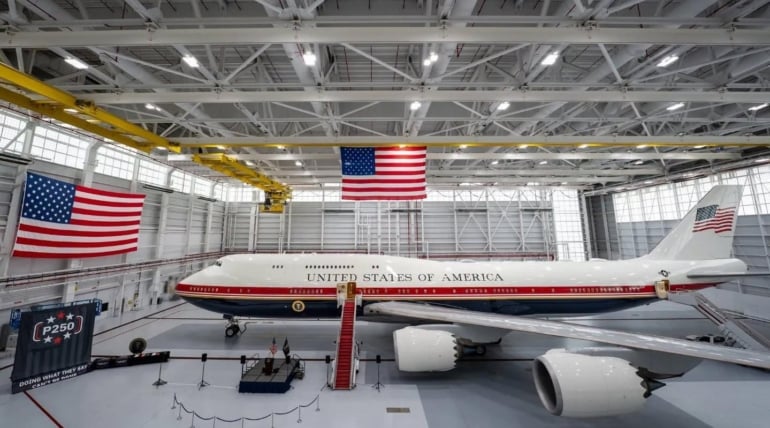
The aircraft parked securely on a military tarmac.
Once secure communications validations and taxi trials are complete, the aircraft will fly for the first time in its full VC-25B configuration. This first flight will test handling qualities, flight controls, pressurization, and the interaction of newly installed avionics.
A grueling certification campaign will then validate emergency procedures, electromagnetic compatibility, and satellite communications before the jets are handed over for presidential use.
Bridging the Gap with Qatar’s Donated Jet
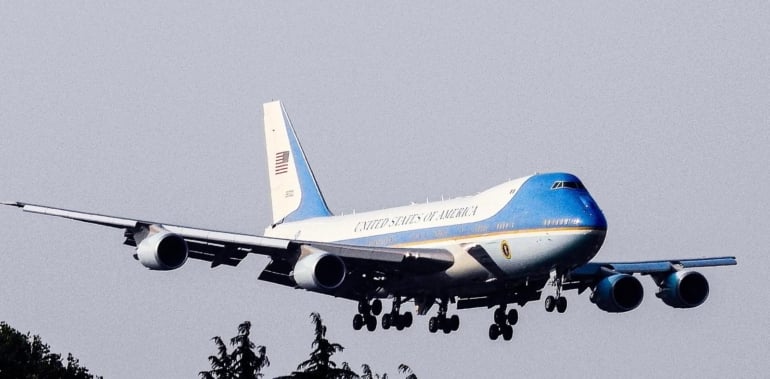
An older generation VC-25A banking during flight.
While Boeing finalizes the VC-25B, the aging VC-25A fleet remains in active duty. Introduced in 1990 under President George H.W. Bush, these modified Boeing 747-200s will continue flying the commander-in-chief on critical overseas missions until 2029.
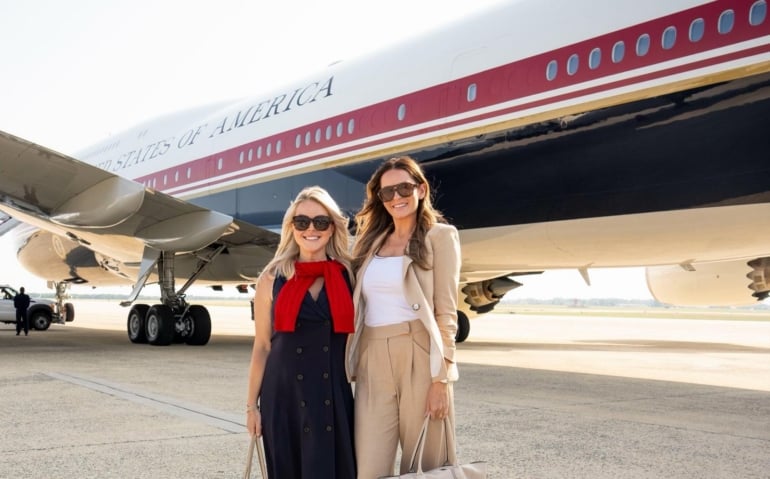
Interior view of the modernized passenger cabin on the bridge aircraft.
To ease the operational strain on the 1990s-era jets, the United States accepted a separate Boeing 747-8 donated by Qatar. Serving as an interim “bridge” aircraft, this luxury jet entered service on July 4 following a $400 million makeover at an L3Harris facility in Waco, Texas.

Sheikh Tamim bin Hamad Al Thani of Qatar, whose royal family donated the bridge aircraft.
The Qatar-donated aircraft has already transported the U.S. president on an international trip. However, because it lacks the comprehensive missile detection and countermeasure systems of the primary fleet, it will return to Texas in the coming weeks.
Boeing will install necessary upgrades to strengthen the bridge aircraft’s defensive capabilities, ensuring it can safely support domestic and limited international travel until the permanent VC-25B fleet arrives in 2028.