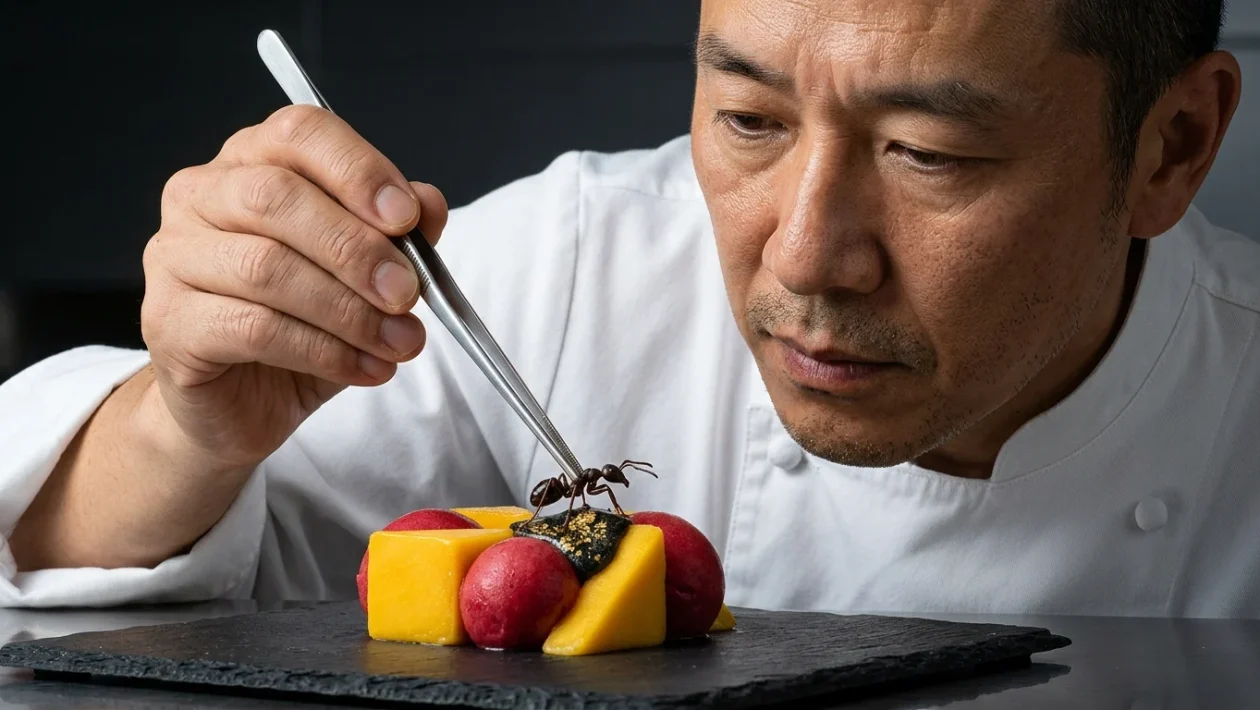
Extreme close-up of a dark ant resting on a textured surface.
A close-up view of a dark ant used as a controversial culinary ingredient.
South Korean prosecutors are seeking a one-year prison sentence for the owner of a two-star Michelin restaurant. The culinary crime involves garnishing luxury desserts with unauthorized ants.
During a recent court hearing, prosecutors also requested a 20 million Korean won ($13,510) fine for the unnamed restaurateur.
A Toxic Culinary Secret
The illegal ingredient was discovered after officials from the Ministry of Food and Drug Safety monitored diner reviews online. Photographs clearly showed high-end dishes sprinkled with ants.
Investigators found that the restaurant imported approximately 49,000 ants from the United States and Thailand over a four-year period.
Health authorities issued a severe warning about the safety of these specific insects. According to a report in The Chosun Daily, the imported ants contained up to 55 times more heavy metals than legally permitted edible insects.
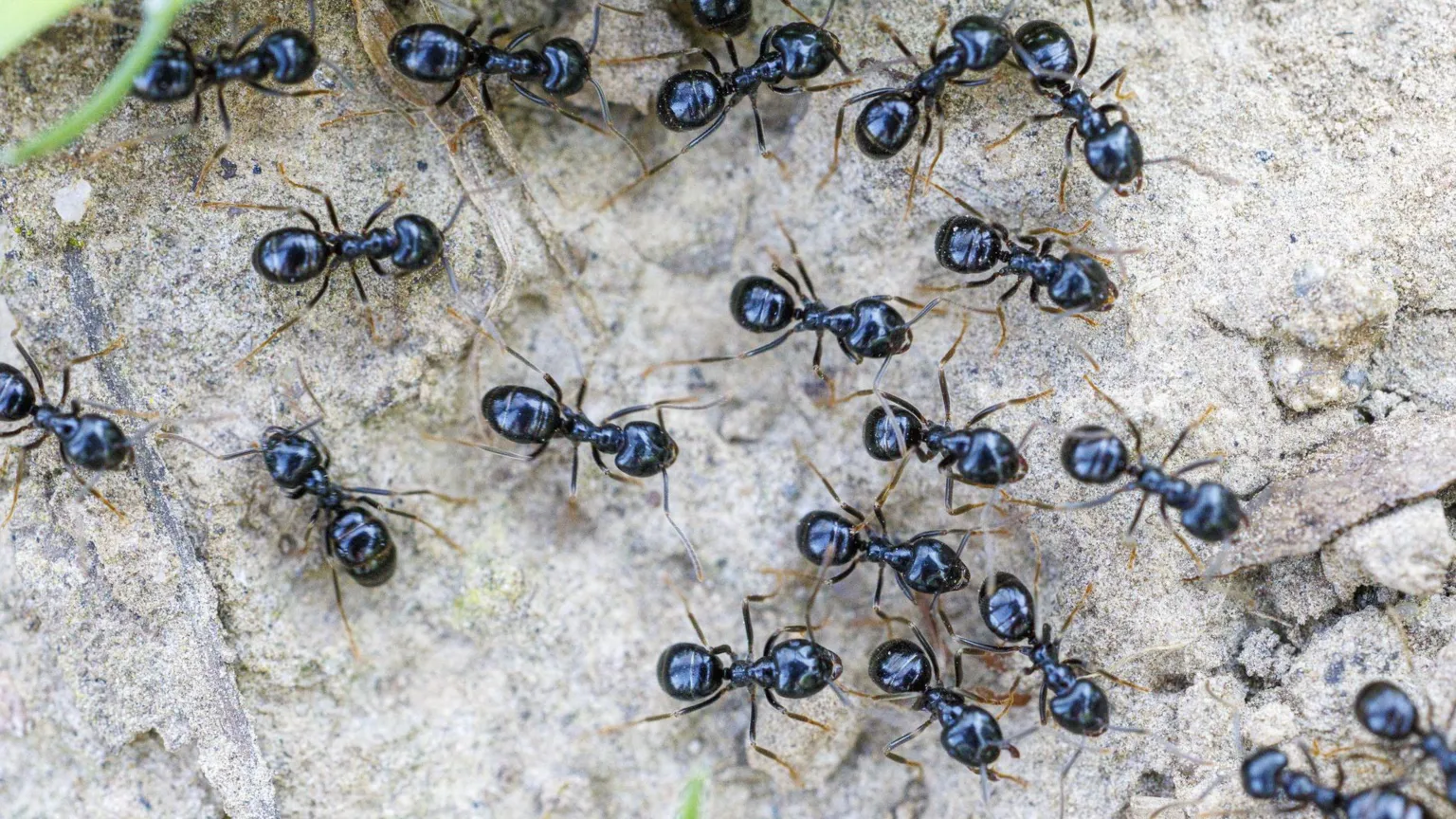
Macro shot highlighting the anatomy of an ant before culinary preparation.
The Michelin Defense
The restaurant owner admitted to serving the insects but attempted to minimize the scale of the violation. He argued the ants were a “small part” of a sprawling 15-course menu, used strictly as a sorbet topping.
According to the defense, diners were not forced to eat the insects. Only 60% of guests opted for the ants, while the remaining customers received fermented vinegar and edible flowers.
The owner also argued that elite restaurants in Australia, Denmark, and the UK regularly feature ants on their tasting menus.
Strict Insect Food Laws
Under South Korean law, ants are entirely banned for human consumption. The government currently approves just 10 insect species, including grasshoppers, locusts, and two-spotted crickets.
Authorities evaluate potential edible insects against rigorous criteria. Approval requires extensive testing for toxicity, food safety risks, nutritional value, and hygienic breeding environments.
While weaver ants and queen ants are prized delicacies in countries like Cambodia, Thailand, and Colombia, South Korea maintains a zero-tolerance policy for unapproved species.
Ten restaurants in Seoul currently hold two Michelin stars, a prestigious designation awarded for “excellent cooking” that is “worth a detour.” The court is scheduled to deliver its final verdict on the ant-garnishing chef on September 2.