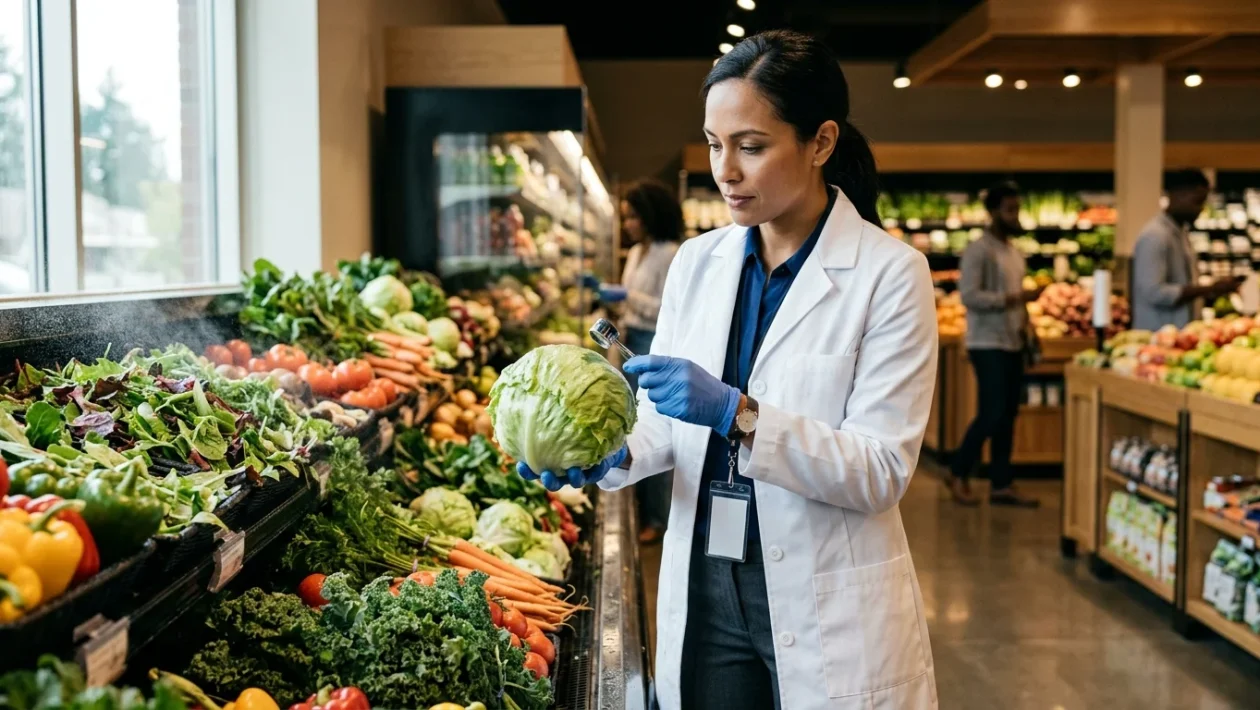
Pre-packaged salads and lettuce displayed on a grocery store shelf.
Salad consumers are facing serious mixed signals after a parasite outbreak linked to “explosive diarrhea” sickened more than 1,600 people across five states.
Last week, the FDA traced the illness to shredded iceberg lettuce served at Taco Bell. The agency quickly identified the source as Taylor Farms in Central Mexico. The agricultural giant supplies lettuce and salad kits to major retailers including Walmart, Target, and Whole Foods, along with regional markets nationwide.
By Saturday, Taylor Farms initiated a massive recall of all iceberg lettuce sourced from its Mexican facilities.
Then came a twist. On Sunday, the FDA announced that the initial positive test for the cyclospora parasite in the lettuce was actually a false positive. In fact, no physical lettuce samples have officially tested positive for cyclospora yet.
Pre-packaged salads on display in a grocery store produce section.
Why the FDA is Still Warning Against Iceberg Lettuce
Despite the testing hiccup, the FDA is not backing down. Investigators say their traceback data still clearly points to shredded iceberg lettuce from Taylor Farms in Central Mexico.
The agency urges consumers to avoid all recalled iceberg lettuce from Taylor Farms. The affected products were distributed across 27 states over a two-week window. Check packaging dates against the FDA’s official recall list before eating.
Dining out also carries risks. Taylor Farms is a major supplier for Sysco, the largest food distributor in the US, which stocks kitchens in restaurants, delis, schools, and sports venues.
Why did the FDA get a false positive? Food safety experts explained to the New York Times that detecting cyclospora in food is incredibly difficult. Because a genuine positive sample contains a very low number of parasite eggs, lab tests often pick up DNA “noise” from similar, harmless microbes.
The only highly accurate way to detect cyclospora is by testing human feces, where the parasite actively grows. Unfortunately, this does little to help investigators pinpoint the contaminated food source.
Symptoms and Safe Produce Guidelines
As of Friday, the parasite left a trail of over 1,600 sickened individuals who dined at Taco Bells in five states.
Cyclosporiasis is a severe intestinal infection. Symptoms include intense cramping, nausea, vomiting, profound fatigue, and watery, explosive diarrhea. While some infected people remain asymptomatic, others require hospitalization.
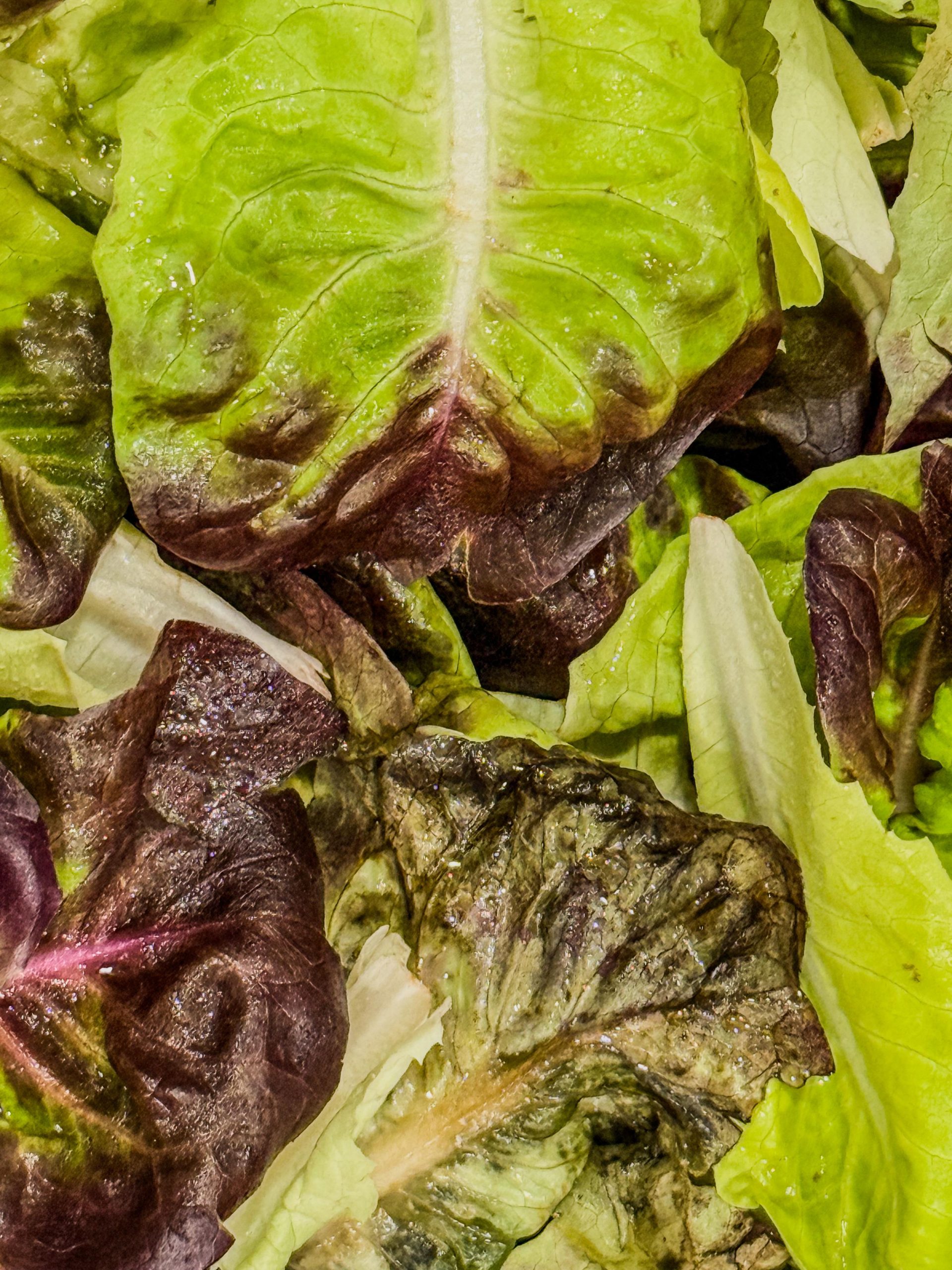
Fresh heads of lettuce and leafy greens lining a supermarket shelf.
Should you avoid all romaine and fresh produce? Health experts say no, but they advise caution. Just because iceberg lettuce from Taylor Farms is the primary suspect doesn’t rule out other suppliers or foods.
However, swearing off all raw produce is a “draconian” overreaction, according to Dr. Aaron E. Glatt, chief of infectious diseases and hospital epidemiologist at Mount Sinai South Nassau.
“Consumers shouldn’t lose confidence in eating fresh fruits and vegetables,” added Melissa Vaccaro, a senior food safety program specialist at the National Environmental Health Association. “Produce is an important part of a healthy diet.”
How to Protect Yourself from Cyclospora
Historically, cyclospora outbreaks have been tied to bagged salad mixes, fresh berries, and herbs like cilantro and basil. Health officials in Michigan, the state hit hardest by the current outbreak, recommend buying whole heads of lettuce instead of pre-bagged mixes.
Cooking your vegetables remains the most effective way to kill parasites and bacteria.
If you plan to eat your greens raw, thoroughly washing whole produce is your next best defense. However, it is not a perfect solution.
“The parasite can be difficult to remove from leafy produce because it may become trapped in folds, crevices, or areas that water does not reach easily,” Vaccaro warned.
For those with weakened immune systems, the stakes are much higher. Dr. Manish N. Trivedi, director of infectious diseases at AtlantiCare, suggests immunocompromised individuals avoid ordering fresh greens at restaurants or buying pre-prepared salads.
“I’m not saying that they’re not taking all the precautions they necessarily need to, but individuals need to really weigh up their risks and benefits,” Trivedi noted. “Each individual is different.”
Immunocompromised patients often react dramatically differently to the infection than those with healthy immune systems. The traumatic diarrhea symptoms can last significantly longer and lead to severe dehydration.
Ultimately, basic food hygiene goes a long way. Dr. Perry N. Halkitis, dean of the Rutgers School of Public Health, reminds consumers to always wash fresh herbs and berries under running water and refrigerate them properly, regardless of active outbreaks.