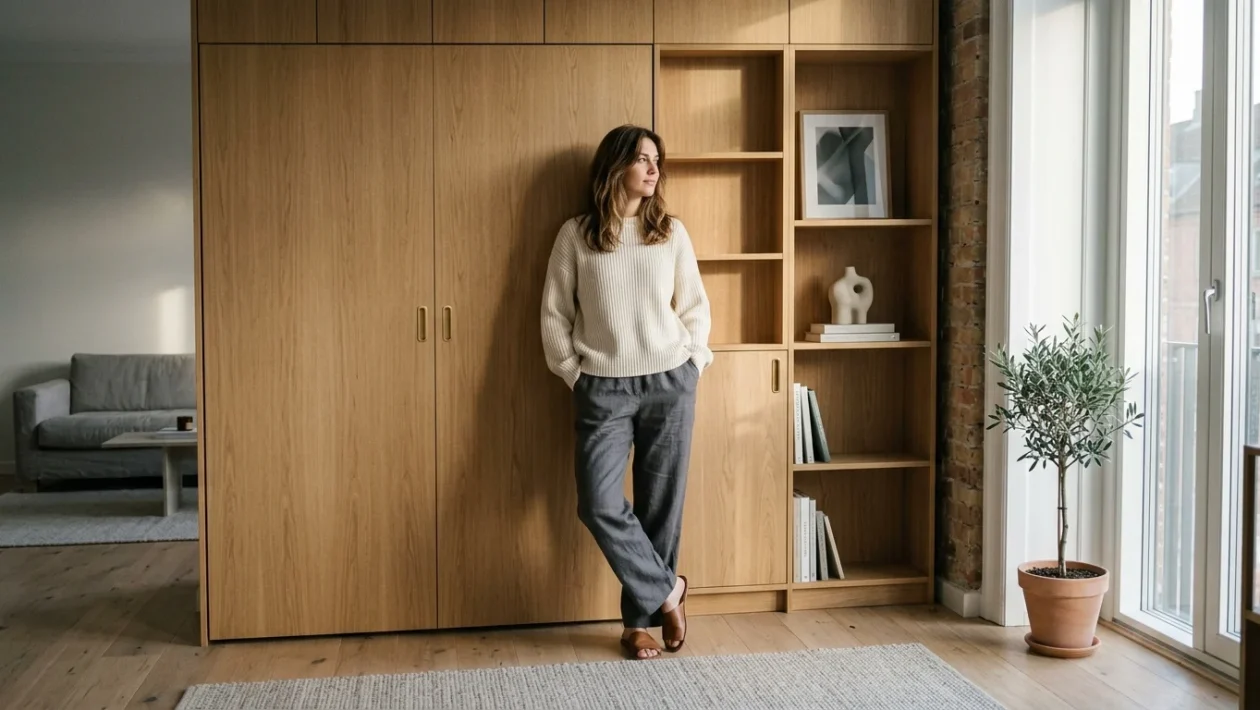
A modern wall bed folded seamlessly into a minimalist wooden cabinet in a studio apartment.
Urban living is forcing a radical shift in interior design. As of 2026, wall beds have emerged as a dominant global trend, quietly replacing the traditional bedroom setup.
This foldaway system frees up critical square footage in seconds. It has become an essential upgrade for remote workers and residents of studio apartments where spatial efficiency is mandatory.
Expanding Space Without Relocating
The surge in wall bed adoption is driven by major advancements in modern furniture design. Manufacturers now integrate these beds seamlessly into closets, bookcases, and fold-down desks.
These multifunctional pieces are built to match minimalist, Nordic, and contemporary interior styles.
During daylight hours, the bed retracts into a vertical or horizontal housing unit. The newly opened floor space instantly converts the room into a living area, home office, or workout zone.
At night, the structure easily pulls down into a standard bed, complete with a conventional mattress and a rigid support base.
Why Wall Beds Are Dominating the Market
Several practical factors have accelerated the transition away from traditional stationary bed frames:
- Industrial durability: Modern units feature reinforced hardware and heavy-duty hinges designed to withstand daily use.
- Simple maintenance: The exterior structures are built from easily cleanable melamine or solid wood.
- Mattress protection: Because the bed remains enclosed during the day, the mattress stays entirely dust-free.
- Aesthetic utility: The outer panels often double as mirrors, built-in niches, shelving, or decorative facades that enhance visual depth in tight rooms.
For renters and owners in compact apartments, this alternative offers a distinct advantage. It instantly multiplies a home’s usable square footage without requiring expensive construction or remodeling permits.