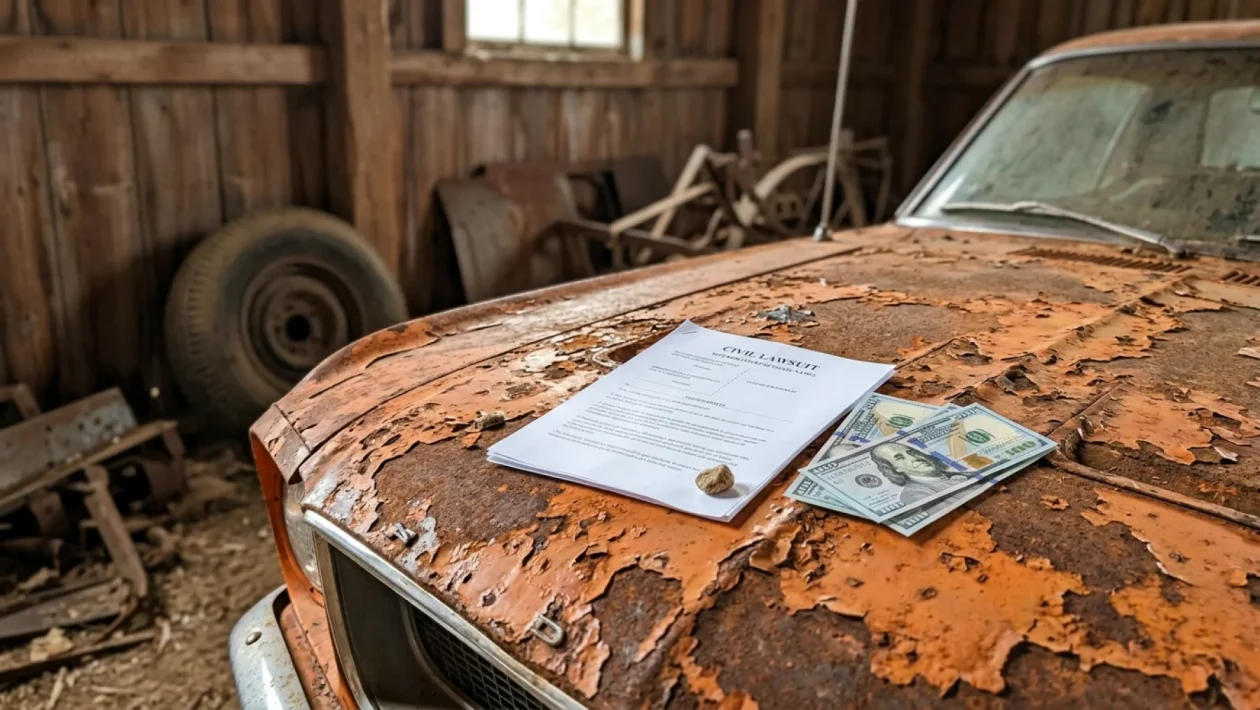
You finally buy that dream acreage, and it comes with a few “bonus” items in the shed. Maybe it’s old tires, some scrap wood, or in this case, three classic car bodies. You agree to let the previous owner’s junk sit there for a while, figuring you’re just doing the guy a solid. Big mistake. That casual favor is exactly how a landowner recently found himself staring down the barrel of a $24,000 lawsuit over rusty metal he sold for pocket change. We are diving into why you must never rely on verbal agreements and how to legally evict other people’s garbage without ruining your life.
Abandoned property laws: The hidden trap in your new backyard
When you sign the closing papers on a new property, you assume everything left behind is yours to keep, toss, or sell. Unfortunately, abandoned property laws rarely make it that simple.
If there is any kind of agreement—even a casual verbal one—you aren’t dealing with abandoned trash. You have suddenly become an unpaid storage facility.
Here is a reality check that catches most folks off guard. According to real estate legal experts, nearly 25% of residential property disputes stem directly from informal agreements regarding items left behind after closing.
How a $600 handshake deal triggered a $24,000 lawsuit years later
Let’s look at a real nightmare scenario that just hit the legal advice forums this May 2026. A property owner bought a piece of land back in 2012.
Inside the barn sat three classic car bodies. Instead of demanding they be removed, the new owner made a fatal error: a “handshake agreement” to store them until the seller had the funds to tow them.
Fast forward to 2018. A fire rips through the barn, damaging the cars. By 2020, the seller’s son reached out. The landowner gave him an ultimatum: I’m cleaning up the property this summer, come get them or they are gone.
Crickets. So, in May of 2020, the owner sold the burnt husks for a whopping $600.
Thinking the headache was over, the landowner moved on. But now, exactly six years later in 2026, the son slapped him with a civil complaint demanding $24,000 for the value of those cars. Because there was no written timeline, that friendly handshake turned into a massive legal liability.
How to protect your land (and your wallet) from legacy junk
You don’t want to spend your weekends battling former owners in court. You want to be at Home Depot picking out patio furniture, or firing up the grill on your new deck.
If you find yourself stuck with someone else’s property, you need an ironclad strategy to clear it out without opening yourself up to a lawsuit.
- Check your closing documents: Ensure your purchase contract explicitly states that any items left on the property at the time of closing become your sole property.
- Never make a handshake deal: If you agree to let them keep items on site, get a written, signed contract with a hard deadline and a storage fee penalty.
- Send certified ultimatums: If they leave stuff behind anyway, send a certified letter giving them 30 days to claim it. Keep the receipt.
- Document everything: Take time-stamped photos of the items’ condition before you dispose of or sell anything.
Why paper trails beat verbal promises every time
When it comes to property, memories fade but ink doesn’t. If you end up in front of a judge, it comes down to what you can prove.
| Handshake Agreement | Written Contract |
|---|---|
| He-said, she-said scenario | Clear, undeniable proof of terms |
| Open-ended timeline | Strict, enforceable deadlines |
| Zero protection against damage | Liability waivers included |
“A verbal agreement isn’t worth the paper it isn’t written on. If you don’t have a legally binding clause in your closing documents stating the leftover property is yours, you are essentially acting as a free, liable storage locker.”
Frequently Asked Questions
What is the statute of limitations for property lawsuits?
It varies wildly depending on where you live. In the Minnesota case mentioned above, the limit is exactly six years, which is why the lawsuit arrived right at the wire in 2026. Always check your local provincial or state laws.
Can I counter-sue for storage costs?
Absolutely. Many legal professionals recommend that if a previous owner sues you for the value of the goods, you should immediately file a counter-suit calculating a daily storage fee from the day you bought the property.
Does the original contract apply to the seller’s kids?
Usually not, unless the original owner passed away and the child is the executor of the estate. This is called a “privity issue,” and it’s a fantastic defense if a random family member tries to sue you out of nowhere.
Final thoughts on dealing with property baggage
🤝 Listen up, homeowners: Your property is your sanctuary, not a free junkyard for the previous owner. Set firm boundaries the second the ink dries on your deed.
💡 Don’t let a good deed go punished: Doing someone a favor with a handshake agreement is the fastest way to get sued. Always get it in writing, even if it feels overly formal.
📱 Protect your investment: If you are dealing with a similar headache right now, take a breath, review your closing documents, and consult a local professional before you drag that rusty truck to the scrapyard.
👇 Share your thoughts in the comments below! Have you ever inherited a massive mess from a previous property owner? Good luck out there, and stay sharp!