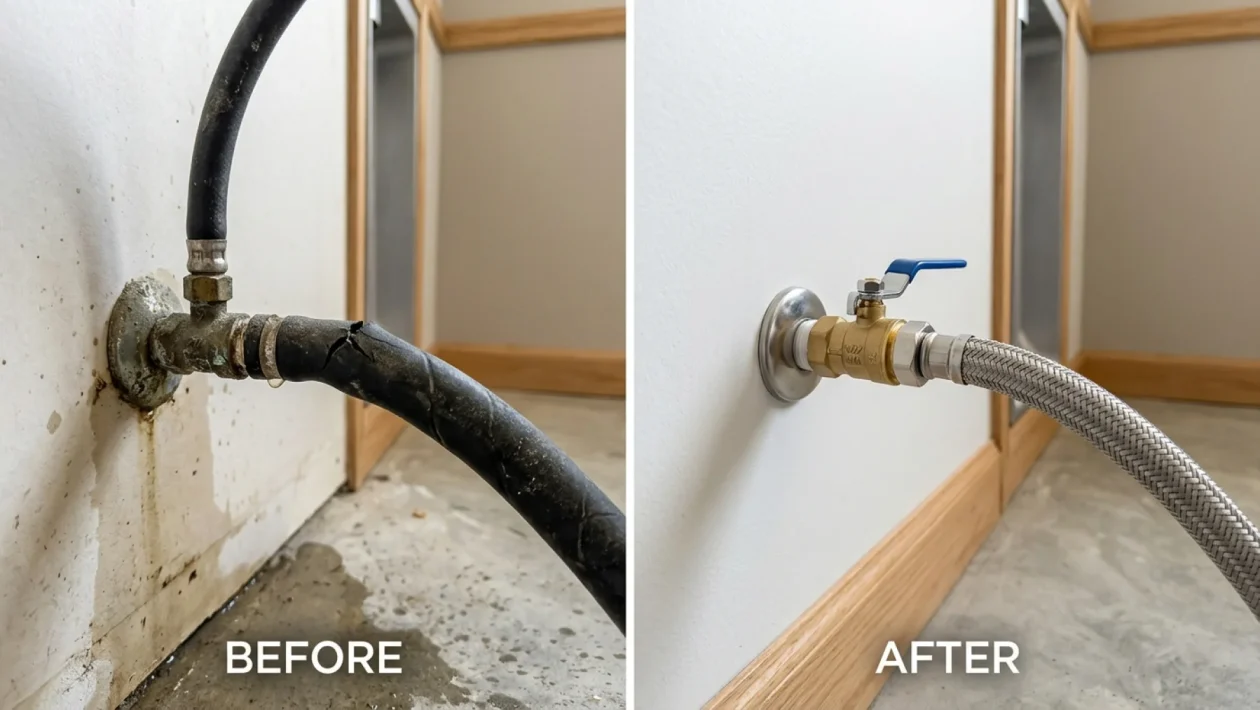
Imagine walking into your basement laundry room and stepping right into three inches of standing water. That flimsy rubber tube hiding behind your washer is a ticking time bomb, holding back immense municipal water pressure day and night. Upgrading this overlooked part is the absolute cheapest, fastest way to protect your home from a massive plumbing disaster.
Most of us just hook up the appliance and forget about it for a decade. But those basic utility lines are not designed to last forever.
Washing Machine Hoses: Why These Hidden Tubes Fail
Your washer actually relies on a few different washing machine hoses to get the laundry done. You have the pressurized supply lines feeding fresh water in, and a thicker plastic drain hose pumping the dirty water out.
While modern high-efficiency machines usually just pull cold water and heat it internally, older models use both hot and cold feed lines. Regardless of your specific setup, these inlet tubes are constantly battling high pressure from your home’s plumbing system.
Over the years, this constant mechanical stress and temperature fluctuation cause the inner lining to become brittle. Even if the outside looks perfectly fine, the structural integrity of the material is slowly breaking down with every single load of towels you run.
The 5-Year Replacement Rule: Timing Your Swap Perfectly
Here is the hard truth: standard rubber tubes have a maximum safe lifespan of three to five years. If you cannot remember the last time you changed yours, you are officially living on borrowed time.
Braided stainless steel lines will buy you a little more leeway thanks to their durable exterior armor. However, manufacturers still strongly recommend swapping them out at the five-year mark just to be safe.
“Most homeowners don’t realize these lines degrade from the inside out. By the time you see a visible blister on the rubber, you are literally hours away from a major blowout,” warns David, a veteran Canadian master plumber.
Preventative maintenance is always cheaper than emergency cleanup. You can grab a premium pair of steel hoses at Canadian Tire or Home Depot for under thirty bucks.
To Save Your Floors: The Real Cost Of A Burst Pipe
Ignoring this chore can trigger a nightmare scenario. A complete rupture means your home’s main supply is dumping directly onto your floor with zero restriction.
A burst washer hose can pump out over 600 gallons of water in a single hour. If you are at work or away for a summer long weekend, that rogue water will quickly destroy your hardwood, ruin drywall, and seep through the floorboards to the levels below.
Even a microscopic, slow leak shouldn’t be ignored. Chronic dampness behind the machine creates the perfect breeding ground for toxic black mold, rotting your baseboards long before you ever notice a puddle.
How To Inspect Your Setup Today
You don’t need to be a general contractor to audit your laundry room. Here is a quick, painless way to check your system right now:
- Kill the pressure: Turn off the hot and cold water valves at the wall so you can safely handle the connections.
- Feel for deformities: Run your hands along the entire length of the tube, feeling for bubbles, bulges, or rigid spots where the rubber has severely hardened.
- Check the fittings: Look closely at the metal connection points. If you see any rust, green oxidation, or mineral crust, the internal seal is already failing.
- Inspect the clearance: Ensure the lines aren’t severely kinked or crushed flat against the wall by the sheer weight of the appliance.
Quick Comparison: Finding The Right Upgrade
When it is time to hit the hardware store, you will generally face two main replacement options. Here is how they stack up against each other:
| Material Type | Pros & Cons |
|---|---|
| Standard Rubber | Cheap and flexible, but highly prone to blistering and bursting under pressure. Shorter overall lifespan. |
| Braided Stainless Steel | Highly resistant to bursting and physical wear. Costs slightly more, but offers maximum peace of mind. |
Frequently Asked Questions
Can I just patch a cracking hose with waterproof tape?
Absolutely not. The water pressure inside these lines is far too intense for any adhesive tape or quick-fix putty to hold. If you spot a crack, shut the water off immediately and replace the part.
Does turning off the wall valves between washes extend the lifespan?
Yes! Shutting off the water supply when the machine isn’t in use relieves the constant pressure on the internal rubber gaskets. It is a brilliant habit to build, especially if you are leaving town for a few days.
What about the plastic drain hose?
The thick plastic drain pipe doesn’t hold standing pressurized water, so it rarely bursts on its own. Just ensure it is securely fastened to your laundry sink or standpipe so the pump’s force doesn’t knock it loose mid-cycle.
Time To Take Action
🤝 You’ve got this. Swapping out these lines is a simple, five-minute DIY project that literally anyone can tackle with just a standard pair of slip-joint pliers and an old towel.
💡 Don’t wait for a flooded basement to force your hand. Head down to your laundry room today, shine a flashlight behind the machine, and see exactly what you are dealing with.
📱 Share your thoughts or pass this article along to a friend who just bought their first home. A quick heads-up could save them thousands of dollars in restoration repairs!
👇 Good luck with your home maintenance this season, and keep those floors dry!