The screaming 1,000-horsepower engines of May 2026 are already echoing across the St. Lawrence River. If you are heading down to Montreal this weekend, you aren’t just walking into a race; you are stepping into a high-octane battleground built on pure, hometown grit. We are bypassing the fluffy sports commentary today to strip the Formula 1 engine down to its absolute core. I am going to show you exactly how Canadian F1 drivers have shaped the most dangerous corners of global motorsport, and how you can spot the hidden track traps the pros fear most.
Canadian F1 Drivers: The Hometown Heroes
There is a specific breed of insanity required to strap yourself into a ground-hugging rocket ship. Up here, we have produced some of the most fearless pilots to ever grip a carbon-fibre steering wheel. It all started with the legendary Gilles Villeneuve, a man who famously wrestled his Ferrari around impossible apexes with zero regard for his own safety.
Here is a cold, hard fact for your next garage debate: Jacques Villeneuve remains the only Canadian to ever win the F1 World Drivers’ Championship, a monumental feat he locked down in 1997. It proved that our boys don’t just participate; they dominate. Today, racers like Lance Stroll carry the maple leaf forward into the highly technical modern era.
When the hometown crowd roars, you can literally feel the vibration in your chest. Whether you are watching from the grandstands or turning wrenches in your own garage with a black coffee from Tim Hortons in hand, you know the local stakes are massive.
Unpacking the Montreal Grand Prix Legacy
Montreal isn’t just a stop on the F1 calendar. It is a full-blown mechanical takeover that transforms the city.
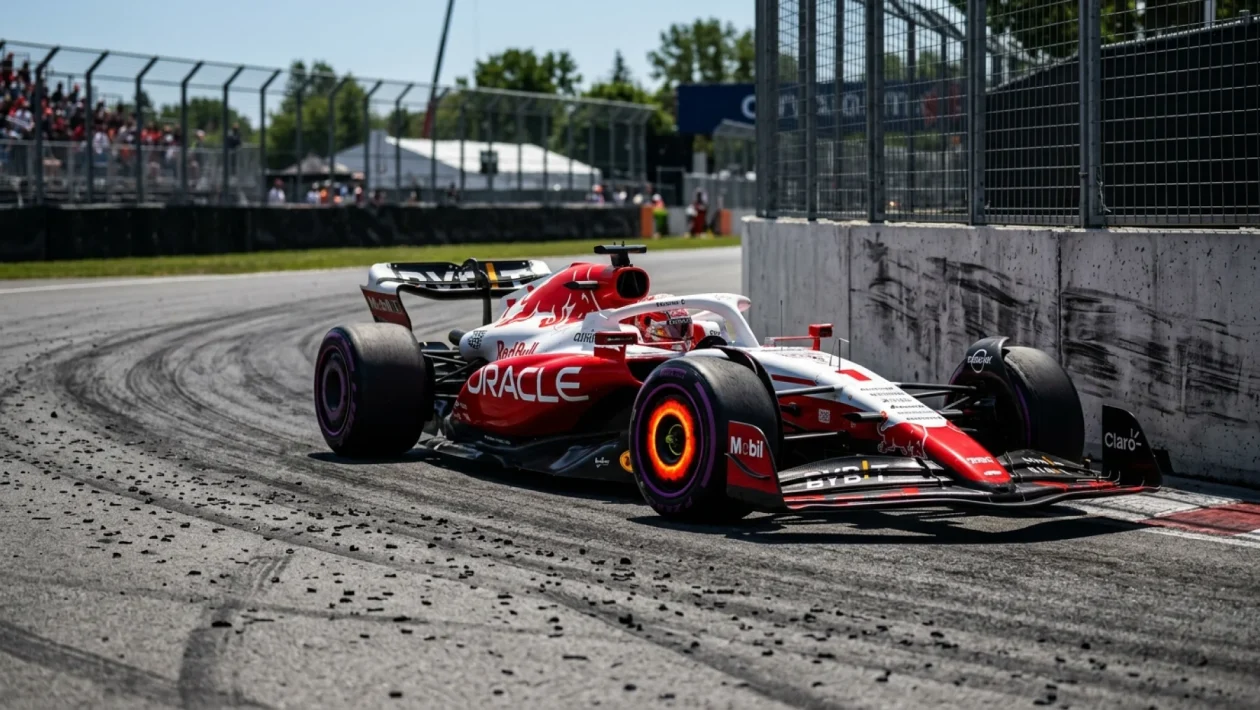
Notre Dame Island turns into a gladiator arena where the world’s best engineering meets unforgiving concrete. This legacy isn’t built on corporate sponsors or fancy VIP tents. It is built on shattered suspension parts, boiling brake fluid, and entirely unpredictable grip levels.
To really grasp how brutal this track is compared to the rest of the calendar, let’s look at the numbers.
| Track Metric | Circuit Gilles Villeneuve |
|---|---|
| Top Speed Reached | Over 330 km/h |
| Brake Wear Level | Critically High |
| Famous Track Hazard | The Wall of Champions |
Track Secrets: Surviving the Circuit
If you want to understand what these drivers are actually dealing with out there, you need to look at the telemetry data. Montreal is what engineers call a “stop-and-go” track. You are either burying the throttle into the firewall or standing on the brake pedal with enough force to snap a normal man’s ankle.
“This circuit is an absolute brake-killer. You go from 330 km/h down to 100 km/h in less than two seconds. If you don’t manage your rotor temperatures perfectly, you are hitting the concrete.” — F1 Track Analyst
Want to know how the pros survive the most dangerous sector of the track? Here is the exact mental checklist every driver runs through entering the final chicane.
- Find the Braking Point: Spot the 100-metre board on the right side and smash the brake pedal at exactly the right millisecond.
- Ride the Curbs: Throw the car violently over the right-hand curb to shorten the distance, letting the suspension absorb the massive impact.
- Dodge the Wall: Immediately flick the steering wheel left, feathering the throttle to avoid kissing the infamous Wall of Champions on the exit.
Frequently Asked Questions
Who is the track in Montreal named after?
The track is officially named Circuit Gilles Villeneuve. It honors Canada’s iconic Ferrari driver who tragically lost his life during qualifying for the 1982 Belgian Grand Prix. His “never-give-up” driving style is still the gold standard in the paddock today.
Why is it called the Wall of Champions?
The concrete barrier on the outside of the final chicane earned its brutal nickname during the 1999 race. In that single weekend, it ended the races of three separate Formula 1 World Champions: Damon Hill, Michael Schumacher, and Jacques Villeneuve. It does not care how many trophies you have on your mantle.
Where can I watch the 2026 Canadian Grand Prix?
You can catch all the action live on the official F1 TV app, or tune into local Canadian sports broadcasters. If you are lucky enough to be in Montreal from May 22 to 24, grab a grandstand seat near the hairpin for the best overtaking action.
🤝 It’s going to be a wild weekend. There is nothing quite like the smell of burning rubber and high-octane fuel cutting through the crisp spring air in Quebec.
💡 Pay close attention to how the drivers manage their tires on Sunday. The guy who saves his brakes for the final ten laps is usually the one spraying the champagne.
📱 Share your thoughts below if you are heading to the track this year, and let me know who you think is taking home the trophy.
👇 Good luck to our local boys out there, and keep the shiny side up!