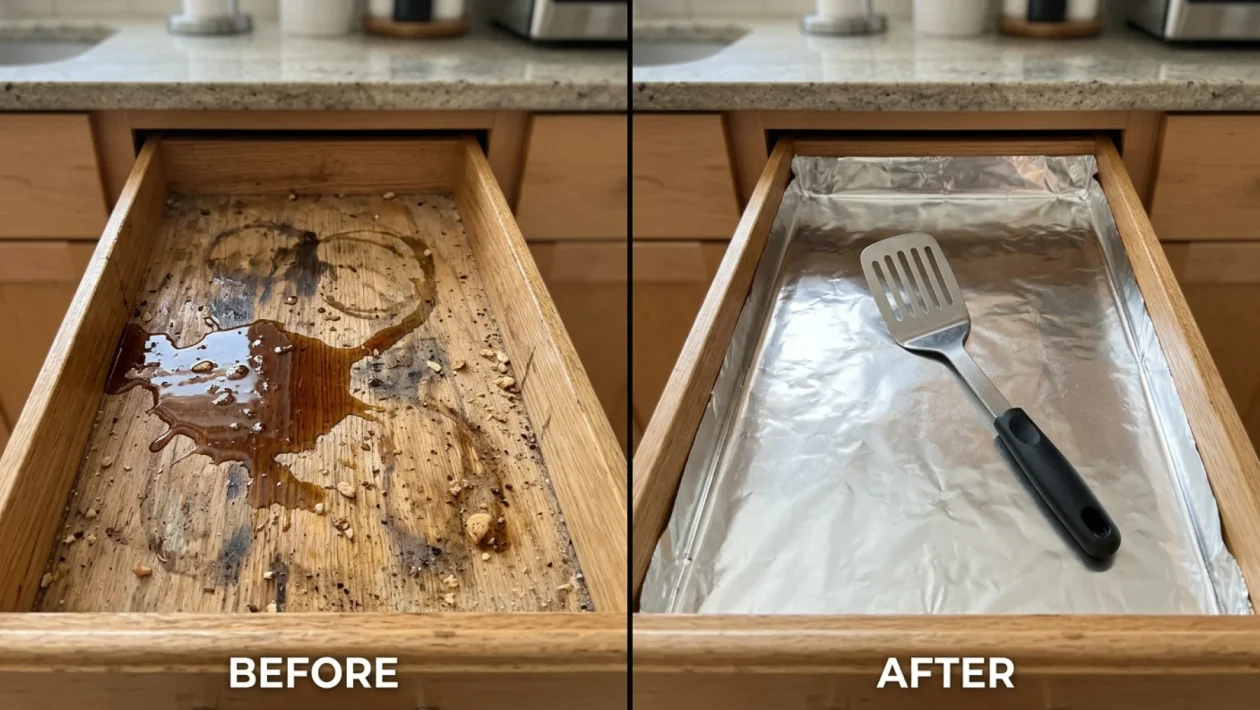
You open your utensil drawer to grab a spatula, and your hand brushes against a sticky, mysterious puddle of syrup that somehow leaked through the woodwork. We have all been there. Wooden kitchen drawers are absolute magnets for moisture, ambient grease, and impossible-to-scrub stains. But before you drive down to Home Depot to blow fifty bucks on thick, rubbery shelf mats that just trap dirt anyway, open your pantry. The ultimate protective cabinet shield is already sitting right next to your parchment paper.
Aluminum Foil Liners
Kitchen cabinets face a daily, invisible assault from cooking vapors and wet, freshly washed utensils. Bare wood actively absorbs this ambient moisture, leading to warped bottoms, swelling joints, and eventually, destructive mold.
Lining your storage spaces with an everyday household item acts as an impenetrable moisture barrier. It completely seals the vulnerable wood away from the damp, chaotic environment of a busy home kitchen.
According to indoor air quality studies, a standard North American kitchen produces over four gallons of airborne grease and moisture vapor every single year. Brands like Alcan or Reynolds Wrap aren’t just for covering leftover summer barbecue ribs; they provide a commercial-grade vapor barrier for absolute pennies.
Why Smart Homeowners Are Ditching Expensive Mats
Thick plastic or rubber mats might look like a premium upgrade on day one, but they quickly turn into a high-maintenance nightmare. They slide around, trap crumbs underneath, and require a full, soapy scrubbing session in the sink the second they get dirty.
Foil flips that script entirely because it is perfectly disposable. When a bottle of olive oil leaves a greasy ring, you don’t scrub anything. You simply lift the metallic sheet, toss it in the recycling bin, and lay down a fresh one.
Plus, it kills static electricity on contact. If you have a dedicated drawer for plastic grocery bags, Ziplocs, or cling wrap, you know how they stubbornly cling to one another. A metal lining grounds the drawer, making it incredibly easy to pull out a single plastic bag without dragging out the whole messy pile.
| Feature | Aluminum Foil | Store-Bought Rubber Mats |
|---|---|---|
| Cost per Drawer | $0.15 | $8.00+ |
| Cleaning Method | Toss and replace | Scrub with soap and water |
| Moisture Barrier | 100% Waterproof | Traps dampness underneath |
The 5-Minute Upgrade You Need
Ready to bulletproof your custom cabinetry? The actual installation process takes less time than brewing your morning coffee.
You do not need double-sided tape, messy glues, or special measuring tools. The natural, everyday weight of your kitchen utensils will hold the metallic sheet perfectly flat.
- Empty and prep: Clear out the drawer completely and wipe the wooden base with a dry microfiber cloth to remove dust.
- Measure and tear: Roll out your foil and cut it to size, leaving about an inch of extra margin on all four sides.
- Reflect the light: Place the foil into the base with the shiny side facing the ceiling to maximize its reflective and moisture-blocking properties.
- Crease the edges: Use your thumbs to press the excess foil tightly into the corners so it sits perfectly flush without any annoying air bubbles.
“People spend thousands on custom maple cabinetry, only to let a leaky soy sauce bottle ruin the finish in a week. A thin layer of foil is the cheapest, most effective insurance policy you can buy for your kitchen.”
Frequently Asked Questions
Does this trick work inside the refrigerator, too?
Absolutely. Placing a layer of foil at the bottom of your fridge’s crisper drawers is a massive time-saver. Onion skins, dirt from fresh carrots, and spilled berry juice will land squarely on the foil instead of staining your expensive plastic appliance bins.
Which side of the foil should face up?
Always keep the shiny side facing up. The shiny side is slightly smoother due to the manufacturing process, which makes it marginally easier to wipe away dry crumbs and dust with a damp cloth.
How often do I actually need to replace it?
In heavy-traffic zones like your main silverware or spice drawer, you might want to swap it out once a month. For occasional storage drawers, a single sheet can easily last up to six months before looking wrinkled or tired.
🤝 Protecting your home shouldn’t cost a fortune. Sometimes, the oldest, most basic pantry staples outshine the expensive gadgets sold in hardware stores.
💡 Try this method on your messiest drawer today. You will be absolutely shocked at how much cleaner and brighter the inside of your cabinets look instantly.
📱 Share your thoughts in the comments below, or send this quick weekend project to a friend who is planning a summer kitchen renovation!