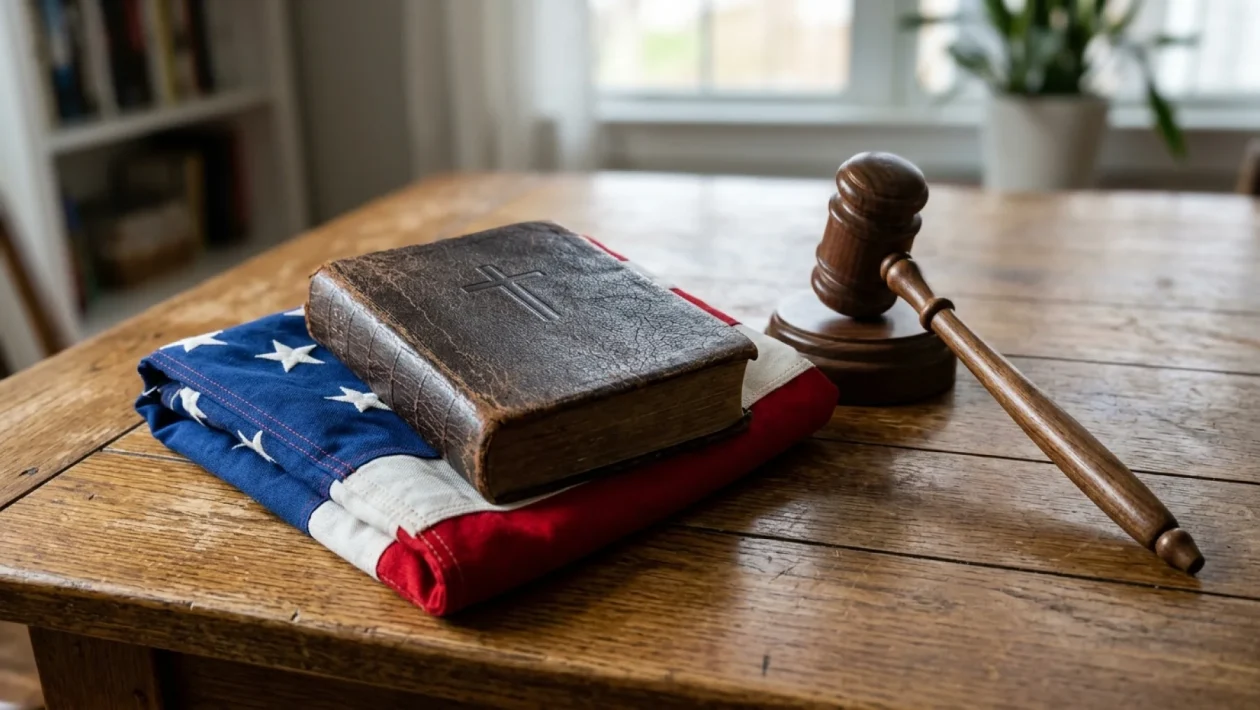
If you have tuned into any news feed lately, you have probably seen the phrase Christian nationalism thrown around like a political hand grenade. It is dominating the airwaves, sparking intense debates at family barbecues, and making headlines across the globe. But cut through the partisan yelling, and you are left with a massive controversy: a growing movement actively pushing faith into the legislative driver’s seat.
As we sweat through the dog days of July 2026, understanding this shift is no longer just for political junkies. We are going to look under the hood of this ideological engine. I will break down exactly what this movement is, why constitutional watchdogs are hitting the panic button, and how this American political earthquake is sending shockwaves straight into our own backyards.
Defining Christian Nationalism Without The Political Spin
Let us get one thing straight right out of the gate. Being a Christian and being a Christian nationalist are two entirely different things.
Christian nationalism is a specific political ideology. It operates on the belief that the American nation was founded explicitly as a Christian nation and that the government should take active, legal steps to keep it that way. It is not just about personal faith; it is about merging church identity with state power.
Whether you are scrolling through the morning headlines on CBC News or chatting with your neighbor over a Tim Hortons coffee, it is easy to brush this off as a fringe movement. But the numbers tell a different story.
According to recent tracking data from the Public Religion Research Institute, roughly 30 percent of Americans now either adhere to or sympathize with Christian nationalist views. That is not a fringe minority; that is a massive voting bloc capable of swinging elections and rewriting local laws.
The Rising Threat To US Democracy
So, why is this causing such a massive democratic controversy? The core of any healthy democracy is pluralism. It is the messy, beautiful reality that people of all faiths, or no faith at all, have an equal say at the ballot box.
When you start legislating that one specific religious viewpoint is the undisputed bedrock of a nation’s laws, you inevitably sideline everyone else. This is where the friction turns into a fire.
| Traditional Democratic Pluralism | Christian Nationalist Framework |
|---|---|
| Laws are secular and neutral to protect all citizens equally. | Laws should reflect specific biblical values and morality. |
| Separation of church and state is a foundational pillar. | Church and state should actively work together to guide the nation. |
When legal decisions on education, healthcare, and civil rights are dictated by a single religious interpretation, democratic checks and balances start to buckle under the weight. It changes the system from a representative republic into something resembling a theocracy.
“When divine authority is used to justify legislative bypasses, the foundational checks and balances of a republic begin to crack. You can’t debate policy when the opposing argument claims absolute moral supremacy.” – Dr. Samuel Harris, Constitutional Scholar
What This Controversy Means For Us
You might be sitting north of the border thinking, “That sounds like an American problem.” But think of the US-Canada border like a shared firewall in a duplex. If the neighbor’s side catches heat, you are going to smell the smoke.
Here is exactly how this political shift south of the border impacts us:
- Cultural Spillover: Social media does not have borders. The talking points, digital campaigns, and fundraising strategies developed by nationalist groups in the US are rapidly exported to Canadian political fringe groups.
- Trade and Foreign Policy: A US government heavily influenced by religious nationalism often adopts isolationist policies. This directly impacts North American trade agreements and collaborative defense strategies.
- Human Rights Pressure: As reproductive and civil rights shift radically in various US states, cross-border migration for healthcare and safe havens puts immense pressure on our local infrastructure and provincial budgets.
We cannot afford to ignore this. When the world’s most powerful democracy fundamentally changes how it defines freedom, the ripple effects hit our wallets, our borders, and our own political conversations.
Frequently Asked Questions
Is Christian nationalism the same as being a conservative Christian?
Not at all. Many conservative Christians strongly oppose Christian nationalism. They believe their faith is a personal journey and fiercely support the separation of church and state to protect religious freedom for everyone.
How does this impact the upcoming elections?
It is becoming a primary litmus test. Candidates in heavily contested districts are being pressured to embrace nationalist rhetoric to secure base voters, pushing moderate platforms entirely out of the race.
Are we seeing this movement in Canada?
Yes, though in a much quieter way. We are seeing American-style nationalist rhetoric creeping into provincial school board meetings and local municipal elections. It is a slow drip, but the strategy is identical.
🤝 Thank you for reading and taking the time to look past the political noise with me today.
💡 Staying informed is the absolute best tool you have in your belt when navigating these wild political times.
📱 Share your thoughts with your friends and family, because the best way to protect our democratic values is to actually talk about them out loud.
👇 Good luck out there this summer, stay cool, and keep your eyes peeled for the facts behind the headlines!