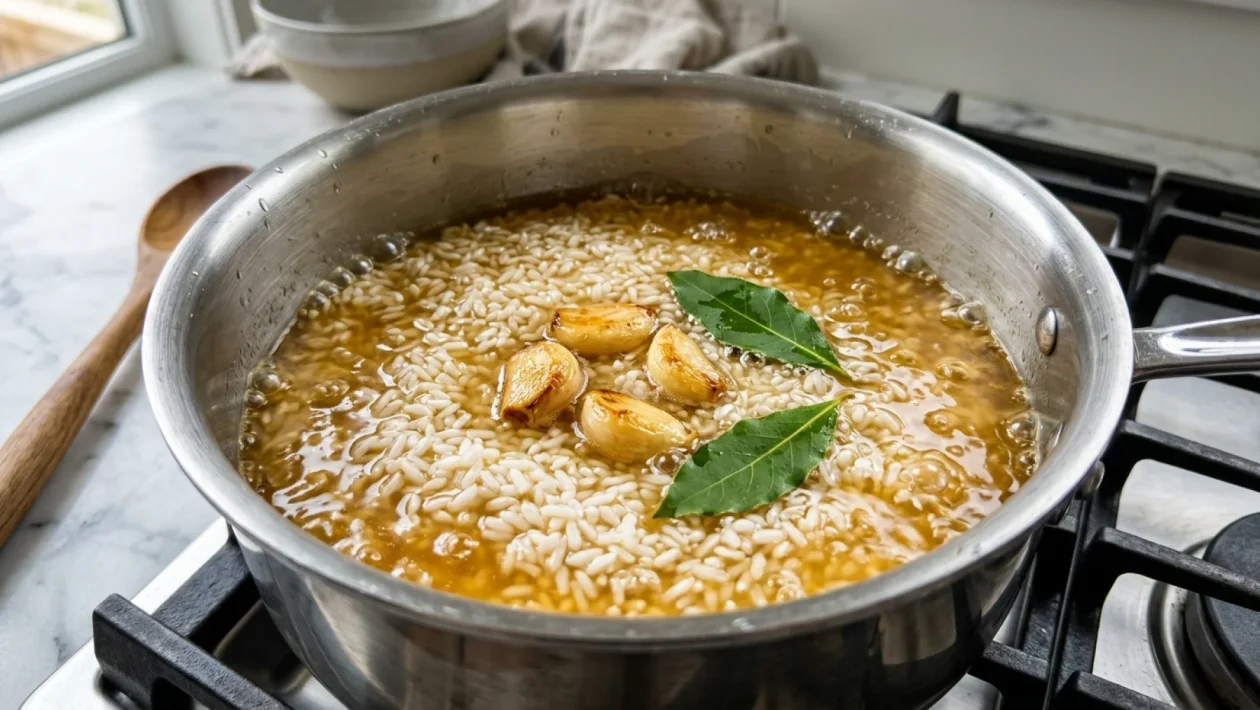
You are sabotaging your dinner, and your kitchen faucet is the main offender. Every night, millions of us dump premium dry grains into a pot of flavorless, boiling municipal water and wonder why the end result tastes like wet paper. The ultimate fix doesn’t require a culinary degree or an expensive kitchen renovation. By simply swapping out your cooking liquid and throwing in a few staple aromatics you already have in the pantry, you will instantly transform a boring, obligatory side dish into the undeniable star of the dinner table.
Perfect white rice requires ditching tap water
Think of a dry grain of rice like a microscopic sponge waiting to be put to work. A standard grain of long-grain rice will absorb roughly 200 percent of its original weight in liquid as it cooks. If you hydrate that sponge with absolute nothingness, you get a plate full of nothingness. Top chefs across the globe agree that cooking this staple food in plain water is a massive missed opportunity.
It is May 2026, and as grilling season aggressively ramps up across the country, you are probably focusing all your energy on the meats. But do not serve those premium cuts next to a sad, bland pile of starch. Ditching the tap forces you to build a foundation of flavor from the very first minute the heat turns on. When the grain swells, it locks in whatever profile you feed it. It is basic kitchen physics, and it is the easiest upgrade you can make to your weeknight routine.
The broth, garlic, and bay leaf method
The renowned chef Juanjo López recently sparked a major culinary conversation by stating a simple truth: rice should be cooked with three garlic cloves, two bay leaves, and a solid homemade stock. It is a no-nonsense, working-class approach to gourmet flavor. The garlic provides an earthy, aromatic punch, while the bay leaves infuse the pot with a subtle, herbal warmth that cuts right through the heavy starch.
If you don’t have a freezer full of homemade stock, do not sweat it. Grabbing a carton of President’s Choice Organics chicken broth or whisking together hot water and a spoonful of Better Than Bouillon works absolute wonders. The primary goal is to introduce savory depth before the liquid even hits a rolling boil.
“The true secret to a memorable rice dish isn’t just the quality of the grain or the timing on the stove, but the liquid foundation. If the rice absorbs a rich, aromatic broth, the grain itself inherits that entire personality.”
Step-by-step execution for flawless results
Knowing the ingredients is only half the battle. How you bring them together dictates whether you end up with a restaurant-quality side or a sticky, mushy disaster. Here is the foolproof breakdown.
- Sizzle the aromatics: Heat a generous splash of good olive oil in your pot. Toss in three whole, peeled garlic cloves and let them lightly brown to release their essential oils.
- Toast the grains: Add your dry white rice directly to the pot. Stir it around for a minute until the edges turn slightly translucent. This step creates a barrier that prevents clumping.
- Add the flavor liquid: Pour in your chicken or vegetable broth using the standard 2-to-1 ratio (two parts liquid to one part rice). Drop in the two whole bay leaves.
- Simmer and ignore: Bring the pot to a boil, drop the heat to the absolute lowest setting, cover with a tight lid, and walk away for 18 minutes. Do not peek.
- The butter finish: Turn off the heat, stir in a small pat of butter for a creamy, luxurious texture, and let it rest for five minutes before fluffing it with a fork.
Plain water versus the chef method
Still on the fence about sacrificing good chicken stock for a simple side dish? Let’s look at the realities of the pot. The difference in the final product is night and day, and it barely costs you an extra dime.
| Cooking Liquid | Final Result & Flavor Profile |
|---|---|
| Plain Tap Water | Bland, flat, and heavily reliant on extra salt or sauces to mask the lack of depth. |
| Broth, Garlic & Bay | Deeply aromatic, savory, slightly buttery, and entirely capable of standing alone. |
Frequently Asked Questions
Can I use vegetable broth instead of chicken?
Absolutely. Vegetable broth or even a light fish stock works perfectly depending on what you are serving it with. Just match the broth to your main protein. If you are grilling up some fresh Canadian salmon, a mild vegetable broth infused with the garlic and bay leaf will complement it flawlessly without overpowering the fish.
Do I need to chop or mince the garlic?
Leave those cloves whole! Minced garlic burns incredibly fast when you are toasting the rice in hot oil, which will introduce a harsh, bitter taste to the pot. Whole cloves slowly infuse the liquid and soften beautifully. You can easily fish them out at the end, or mash them directly into the grains if you love a roasted garlic kick.
🤝 Good luck next time you step up to the stove. By making this one minor adjustment, you are permanently elevating your home cooking game without adding any extra stress to your busy evening.
💡 Remember this simple rule: if the liquid you are cooking with doesn’t taste great on a spoon, it is not going to magically taste great once it is trapped inside a grain of rice.
📱 Share your thoughts and your results with me once you try this out. I guarantee your family will be asking what your secret is before they even finish their first serving.
👇 Ditch the tap water forever, respect the raw ingredients, and keep building those big, bold flavors right in your own kitchen.