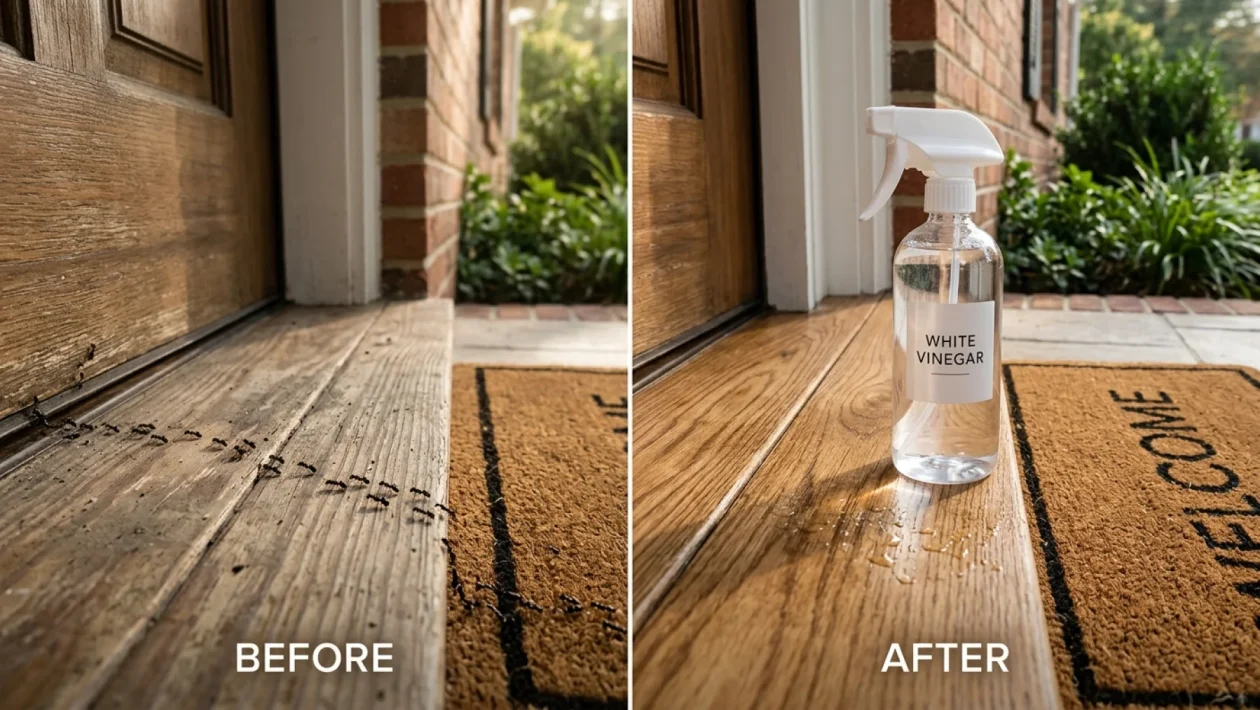
If you’re finding a trail of ants marching confidently across your foyer right now, you aren’t alone. Every May, millions of homeowners shell out a fortune on toxic bug bombs and sticky traps that barely make a dent in the six-legged invasion. Stop throwing your hard-earned cash at chemical-heavy solutions. The ultimate answer is completely natural, surprisingly cheap, and probably sitting right inside your pantry.
By simply applying a vinegar door spray to your home’s main entry points, you create an invisible fortress. This isn’t just an old wives’ tale; it is a proven, multi-purpose maintenance habit that contractors and home experts swear by. Let me show you exactly how this common kitchen staple will upgrade your home protection this season.
Vinegar Door Spray: Your Front Porch’s First Line Of Defense
Your front door is the busiest transit point in your house, and it takes a beating. From muddy boots to microscopic gaps in the weatherstripping, it is essentially a highway for exterior problems to become interior headaches. A routine vinegar door spray acts as a proactive shield.
Instead of waiting for a full-blown infestation to call an exterminator, you take control at the threshold. White vinegar is packed with acetic acid, a harsh compound that drastically alters the surface environment of your door frame. It is entirely safe for your family and pets, but absolutely devastating to unwanted intruders.
I always recommend picking up a heavy-duty spray bottle from Home Depot and a massive jug of standard white vinegar. It takes less time to spray down your door than it does to brew your morning coffee.
The $2 Pest Barrier: Stopping Unwanted Creepy-Crawlies
Insects operate entirely on scent trails and chemical signals. When you apply this acidic solution, you are essentially scrambling their radar. Spiders, roaches, and especially ants will immediately hit the brakes when they detect the intense odor.
Here is a wild fact: a single ant has four to five times more odor receptors than most other insects. When they encounter the sharp, acidic wall of a vinegar door spray, it overwhelms their senses and destroys the pheromone trails they use to guide their colony inside.
Let’s look at the sheer economic advantage of this method. Why pay for expensive aerosols when the grocery store alternative wins every time?
| Defense Method | Average Cost & Safety |
|---|---|
| Commercial Perimeter Spray | $25 – $40 (Contains harsh synthetic chemicals) |
| DIY Vinegar Spray | Under $2 (100% natural and pet-safe) |
Energy Cleanser: Sweeping Out The Heavy Vibes
Believe it or not, this practice goes far beyond pest control. For centuries, practitioners of Feng Shui and home harmonization have used vinegar as a powerful energy cleanser. The idea is that your entryway is the “mouth of chi,” where all energy enters your personal sanctuary.
Spritzing the door frame is believed to neutralize stagnant, negative vibrations that cling to you after a stressful day. By wiping down your threshold with intention, you are symbolically washing away the outside world’s baggage.
“Whether you believe in the metaphysical side or just love a squeaky-clean entrance, applying vinegar to your door frames fundamentally changes the atmosphere of a home. It literally smells like a fresh start.”
Many folks even recite a quick positive intention while spraying, such as welcoming only clean energy, opportunity, and abundance into their living space. It is a brilliant mental reset for any homeowner.
You Need Now: The 3-Minute Weekly Application Routine
You don’t need a degree in chemistry to mix up this powerful household tool. Grab a standard bottle of Allen’s White Vinegar from your local supermarket and follow this foolproof routine.
- Mix the Solution: Fill your spray bottle with equal parts white vinegar and tap water. If the smell is too pungent for your liking, add a few drops of lemon or peppermint essential oil.
- Target the Perimeter: Liberally spray the outside frame of your front door, paying special attention to the bottom sill and any tiny cracks in the brickwork or siding.
- Hit the Baseboards: Step inside and lightly mist the interior baseboards immediately surrounding the entryway.
- Maintain the Shield: Reapply this mixture once or twice a week, especially after a heavy spring rainstorm washes the exterior away.
Frequently Asked Questions
Will the vinegar smell ruin the entrance of my house?
Not at all. The strong acidic odor completely dissipates within about 30 minutes as the liquid dries. Insects will still be able to detect the barrier long after your human nose stops smelling it.
Can I use apple cider vinegar instead of white vinegar?
You should stick to pure white vinegar for this specific job. Apple cider vinegar contains natural sugars that can actually attract certain types of fruit flies, which completely defeats the purpose of your pest barrier.
Is this safe for all types of door finishes?
While vinegar is incredibly safe, repeated exposure to strong acids can sometimes dull unsealed wood or delicate varnishes over time. If you have a custom or antique wooden door, spray the concrete threshold and the surrounding brick or siding instead.
🤝 Thank you so much for taking the time to read through this guide today.
💡 Remember, maintaining a home doesn’t require a massive budget or toxic chemicals; sometimes the smartest solutions are the simplest ones.
📱 If you found this useful, share your thoughts and this article with your neighbors who might be battling spring pests right now.
👇 Good luck out there, keep those entryways clean, and enjoy a bug-free, positive home this season!