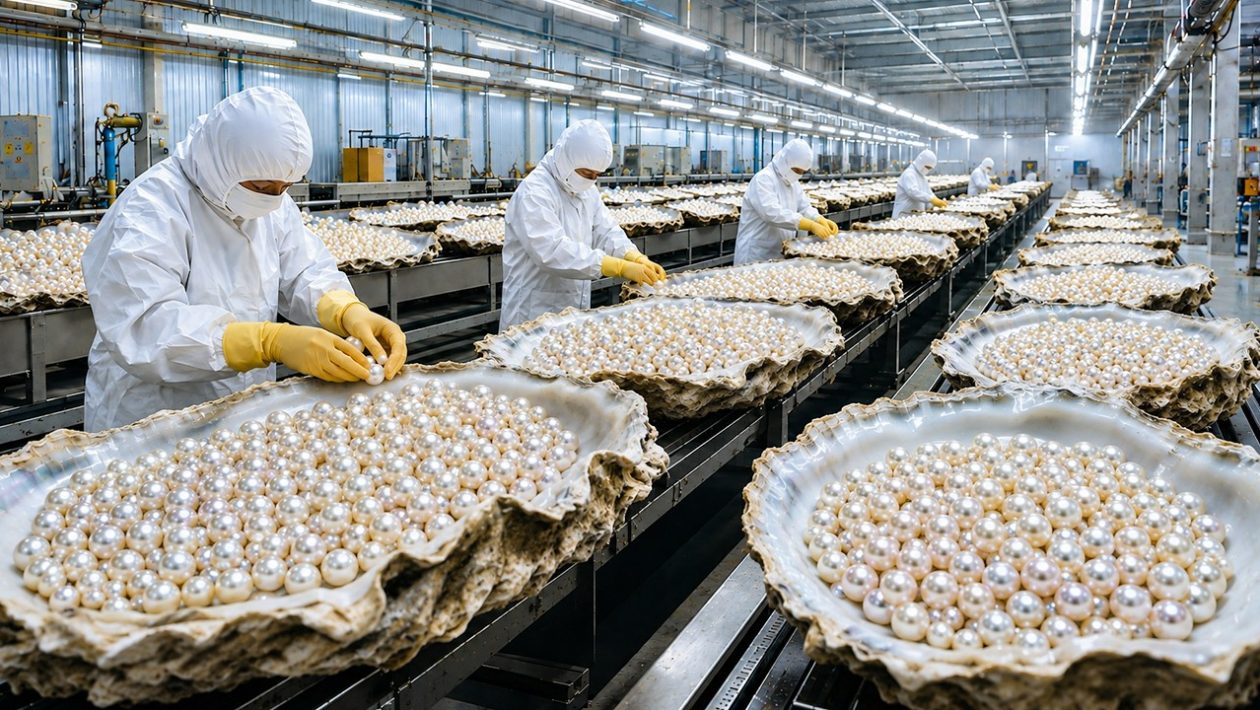
Cultured Pearls: Nature Under Control
The creation of a pearl is a biological process that humans have learned to accelerate. Unlike wild pearls, which are rare accidents, cultured pearls are the result of deliberate intervention.
Technicians gently open a mollusk and insert a small bead, typically made of shell, along with a tiny piece of mantle tissue from a donor mollusk. This serves as the “nucleus.”
Over months or years, the mollusk deposits layers of nacre—calcium carbonate and conchiolin—around the irritant. The quality of the final product depends on water temperature, the health of the oyster, and the length of the cultivation period.
The Chemistry of Lipstick
Lipstick manufacturing is a study in precise formulation and thermal control. While it appears simple, the product must balance texture, pigment distribution, and stability.
The process begins with melting waxes and oils. Common ingredients include beeswax, carnauba wax, or ozokerite. These provide the structural integrity required to keep the lipstick solid at room temperature while allowing it to soften upon contact with the skin.
- Pigment Milling: Colorants are ground into ultra-fine particles and mixed with oils to ensure a streak-free application.
- Melting and Mixing: Ingredients are heated and stirred in industrial tanks to create a homogenous “melt.”
- Molding: The hot liquid is poured into chilled, metal split-molds. As the mixture cools, it solidifies into the iconic bullet shape.
- Flame Polishing: Once removed from the mold, the lipstick passes through a flame tunnel to smooth the surface and improve its luster.
Pharmaceutical Tablet Manufacturing
Pharmaceutical manufacturing is arguably the most controlled industrial environment in the world. Every single tablet is subject to stringent quality standards to ensure consistency and patient safety.
The journey starts with raw materials, which are verified for purity. The active pharmaceutical ingredient (API) is then mixed with excipients—binders, fillers, and lubricants—that determine how the tablet will hold together and eventually dissolve in the body.
The powder blend undergoes granulation to improve flowability. Once granular, the material is fed into a high-speed compression machine. This device uses heavy-duty steel punches to squeeze the powder into a solid tablet at thousands of units per minute.
After compression, tablets are often coated. This thin polymer film protects the drug from moisture, hides the taste, and can even dictate where in the digestive tract the medication is released.
Quality Assurance and Standards
While the final products—jewelry, beauty supplies, and medicine—serve vastly different markets, they share a dependency on rigorous oversight.
In the pharmaceutical sector, this means testing for hardness, disintegration time, and chemical uniformity. In cosmetics, it involves rigorous batch testing to ensure the color remains consistent from one production run to the next.
For pearls, the grading process is largely manual, relying on experts to assess luster, surface quality, and shape. Whether through high-tech sensors or human expertise, each industry relies on a final, uncompromising filter to ensure the output meets the necessary specifications.