A Powerful Cleaning Combination
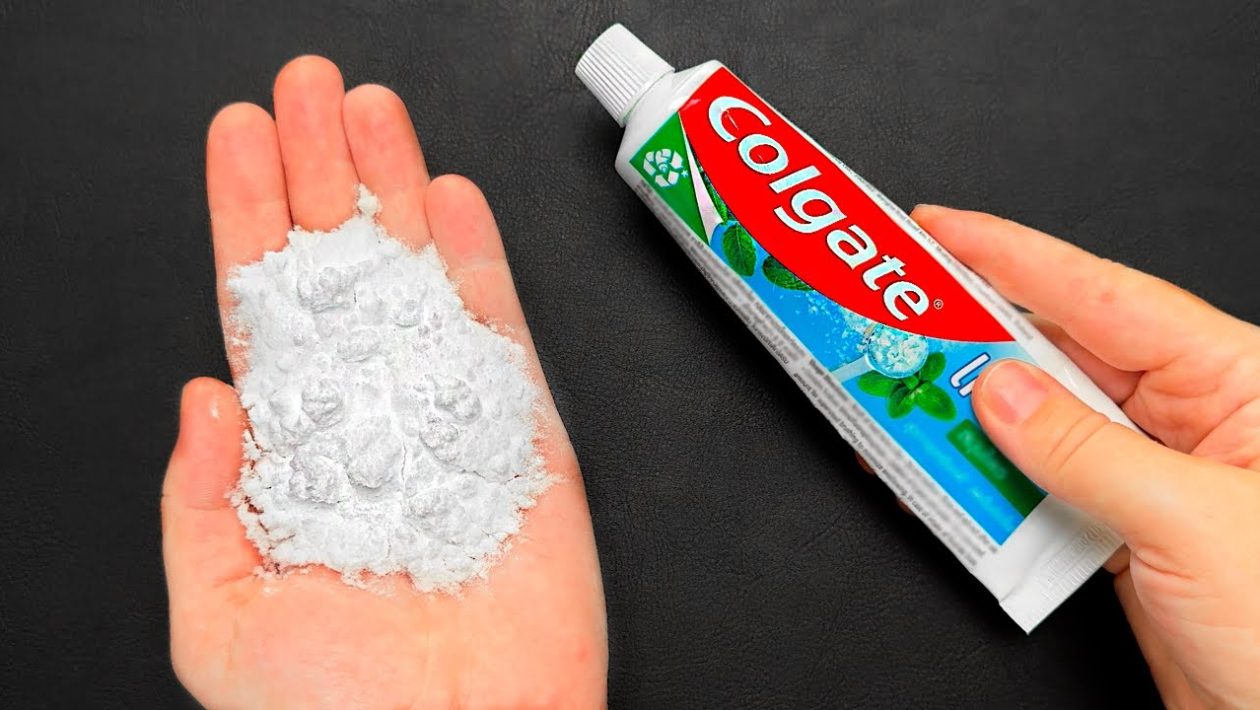
Most households already possess the two most effective cleaning agents needed to tackle tough kitchen grease. By combining simple baking soda with standard fluoride toothpaste, you create a mild abrasive paste that cuts through burnt-on food and stubborn residue with minimal effort.
This mixture works because of the chemistry involved. Baking soda acts as a mild alkaline abrasive, which helps to lift grime without scratching delicate surfaces. Meanwhile, the surfactants and silicas found in most toothpaste help to break down stubborn, oily films that traditional soap often leaves behind.

A mixture of baking soda and toothpaste applied to a cleaning tool for heavy-duty scrubbing.
Restoring Your Stovetop
Stovetops are notorious for collecting burnt-on spills that seem impossible to remove. Rather than relying on harsh chemical sprays with heavy fumes, this DIY method offers a safer, scent-neutral alternative.
To use this effectively, mix equal parts of baking soda and white toothpaste into a small bowl until a thick consistency is reached. Apply the paste directly onto the affected area and let it sit for approximately ten to fifteen minutes. This dwell time allows the components to soften the carbonized food particles.
Once the paste has dried slightly, use a non-scratch scrubbing pad to work in circular motions. The abrasive nature of the soda will lift the stain, while the toothpaste ensures the surface is left polished and free of streaks.
Reviving Scorched Pans
Pots and pans often develop dark, scorched bottoms after repeated use on gas or electric burners. This same paste can serve as a potent restorative treatment for stainless steel or enameled cookware.
- Apply generously: Ensure the entire burnt surface is covered with the mixture.
- Mechanical action: Use a bit of warm water to create a lather before scrubbing vigorously.
- Rinse thoroughly: Wash the item with hot water and dish soap to ensure no residue remains before using it for cooking again.
Why Skip Commercial Products?
Many commercial cleaning agents rely on strong acids or harsh solvents that can degrade your cookware’s finish over time. Because this DIY paste relies on the gentle abrasion of baking soda, it is significantly safer for long-term maintenance.
Beyond its effectiveness, this method is remarkably cost-efficient. Because these ingredients are household staples, you are likely already paying for them as part of your regular grocery budget. It eliminates the need to keep specialized, single-use chemical cleaners in your pantry, saving both cabinet space and money.
Always perform a small patch test on a non-conspicuous area of your appliance if you are concerned about potential surface reactions. However, for the vast majority of stainless steel, porcelain, and ceramic stovetops, this combination remains the gold standard for deep, chemical-free cleaning.