The Stakes of High-End Restoration
When a timepiece carries a market valuation of $200,000, it is no longer just a watch. It is an artifact of engineering, history, and craftsmanship.
Restoring such a piece is not a repair job—it is a surgical procedure. One slip of a screwdriver or a microscopic speck of dust can devalue a rare reference by tens of thousands of dollars.
The Diagnostic Phase
Every restoration begins with an autopsy. The technician must strip the caliber down to its smallest screw. This process reveals decades of wear: dried-out lubricants, oxidized gears, and the microscopic metal shavings that act like sandpaper on the movement.
In ultra-high-end pieces, the original parts are gold. The primary goal is preservation. Technicians avoid replacing components whenever possible. Instead, they meticulously clean, re-pivot, and refinish existing parts to factory specifications.
Advanced Cleaning and Lubrication
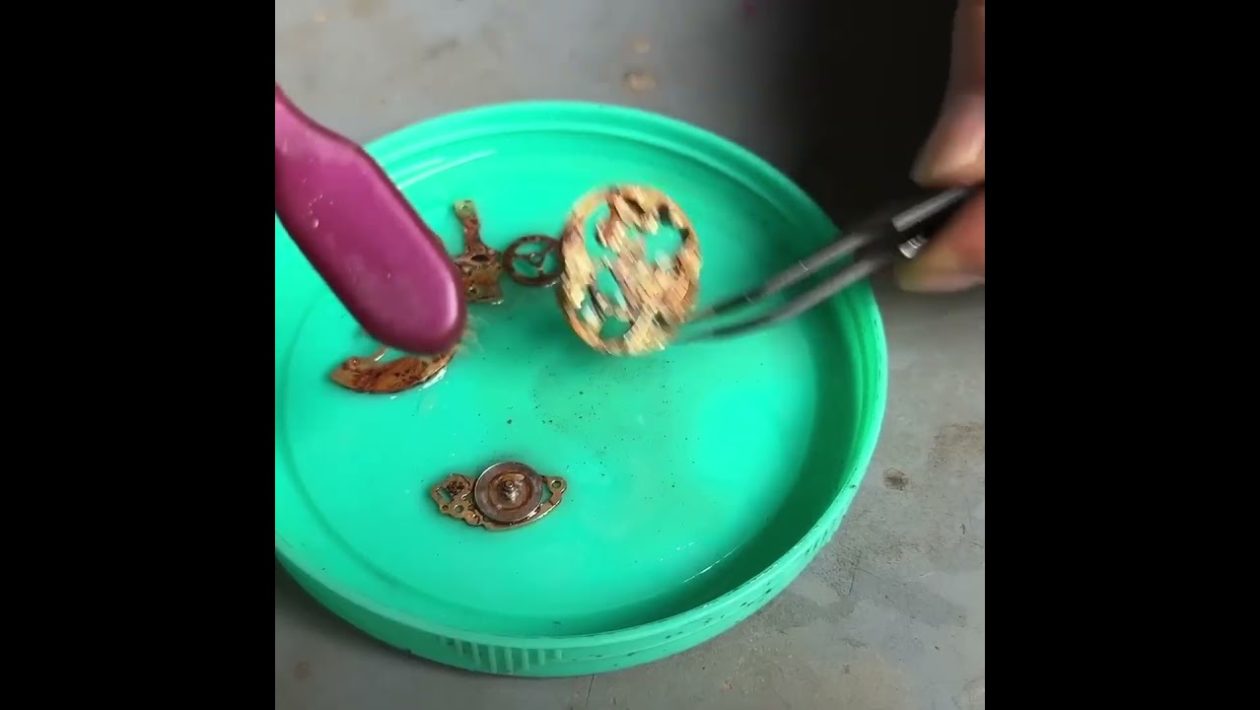
Precision cleaning is mandatory. Components are placed in specialized ultrasonic baths that remove debris at the molecular level without damaging the delicate vintage brass or steel finishes.
Once clean, the reassembly begins. This is where the skill gap becomes obvious. A master horologist uses specific oils and greases, applied in quantities measured in picoliters. Over-lubrication is as dangerous as under-lubrication; too much oil attracts dust and causes friction, while too little leads to immediate part failure.
Calibrating for Perfection
A $200,000 watch must function as reliably as a modern chronometer. After reassembly, the movement is tested on a timegrapher.
The technician monitors the “beat error” and “amplitude.” These metrics indicate the health of the balance wheel, the heartbeat of the watch. Adjustments are made by hand, often involving the manipulation of tiny balance weights or the hairspring, requiring steady nerves and a deep understanding of physics.
Preserving the Aesthetic Integrity
Physical restoration—the dial, the hands, and the case—is the most controversial aspect of the craft. Collectors in the United States and abroad increasingly value “patina,” or the natural aging of the watch.
A genius technician knows when to stop. Excessive polishing can remove the sharp edges of a case, ruining its “unpolished” status and destroying its value. The priority is to stabilize the watch, preventing further decay while maintaining the character earned through its decades of service.
The final result is a machine that functions as it did the day it left the manufacture, yet retains the soul of its long history.