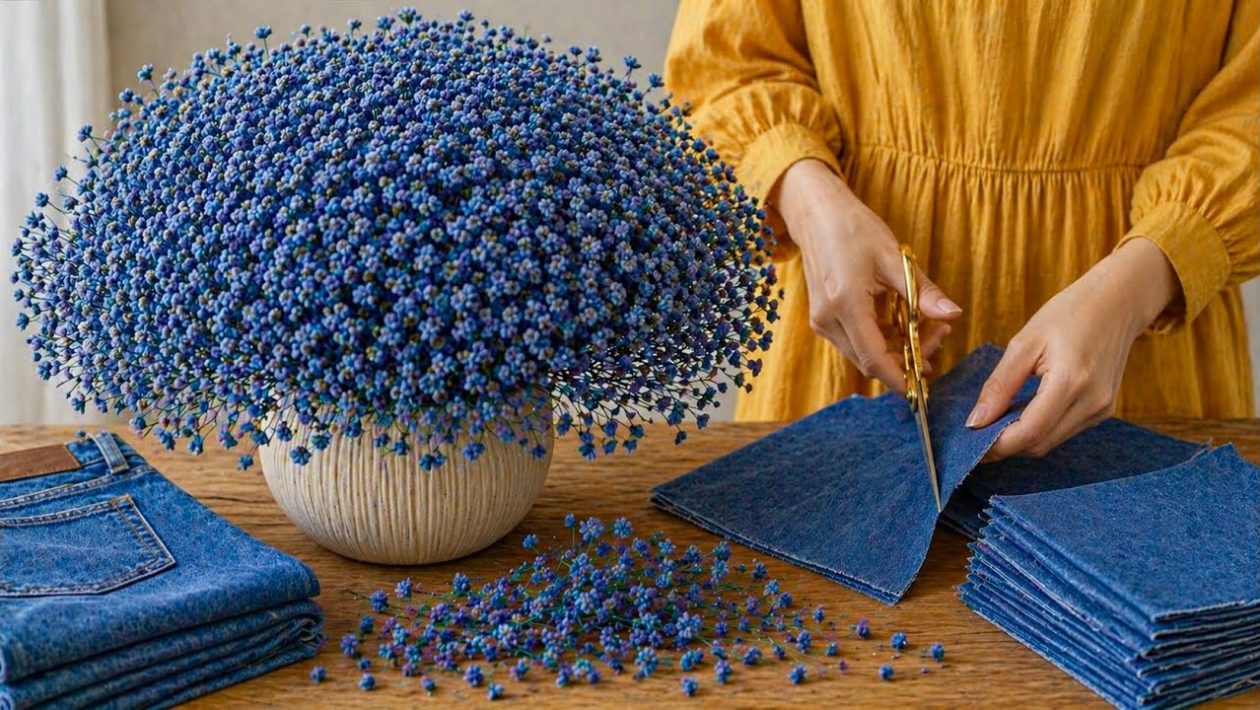
Breathing New Life Into Old Denim
Millions of pairs of jeans end up in landfills every year. Instead of tossing frayed or outgrown denim, you can upcycle that durable fabric into something entirely new.
Crafting denim flowers is a practical, eco-friendly way to repurpose old clothes. The textured, indigo-dyed material naturally creates a rustic, stylish aesthetic that works perfectly for home decor, handmade gifts, or custom wedding arrangements.
While you can craft large roses or daisies, creating clusters of delicate gypsophila—commonly known as baby’s breath—offers a uniquely striking contrast to the heavy denim fabric.
Essential Materials for Denim Crafting
Before cutting into your old jeans, set up a dedicated workspace. Denim sheds heavily when cut, so having a lint roller nearby is highly recommended.
You will need a few basic crafting supplies to get started:
- Old jeans: Any color works, but mixing light and dark washes adds visual depth.
- Sharp fabric scissors: Denim is thick, so standard paper scissors will struggle and fray the edges unevenly.
- Hot glue gun: Essential for quickly securing petals and stems.
- Needle and thread: An alternative to glue for a more secure, tailored hold.
- Floral wire: Required for the stems, especially if you are making bouquets.
- Scrap fabric: Useful for creating contrasting flower centers or wrapping stems.
Preparing and Cutting the Fabric
Start by cutting along the seams of the jeans to open up the legs. This gives you a large, flat canvas of fabric to work with. Iron the denim flat to remove any deep creases.
For gypsophila-style flowers, you need to cut very small, uniform pieces. Cut the denim into small squares, roughly one inch by one inch.
If you prefer a softer, more organic look, gently rub the edges of the cut squares to encourage minor fraying. This mimics the natural, imperfect edges of real flower petals.
Shaping and Assembling the Petals
Creating realistic flowers requires manipulating the stiff fabric into organic shapes. Take one of your small denim squares and fold it diagonally to form a triangle.
Pinch the bottom corners of the triangle together. Use a tiny dab of hot glue or a quick stitch with a needle and thread to hold this pinched base in place.
The top of the fabric will naturally flare out, creating a delicate, cup-like petal. Repeat this process dozens of times. Gypsophila is defined by its sheer volume, so you will need plenty of these small buds.
Building the Stems and Bouquets
Once your petals are prepped, it is time to attach them to the stems. Cut your floral wire into various lengths to create a natural, layered look for your arrangement.
Apply a small bead of hot glue to the tip of a wire. Carefully insert the glued wire into the pinched base of a denim petal. Hold it firmly for a few seconds until the glue sets.
To replicate the branching structure of baby’s breath, take three to five individual wire stems and twist them together about an inch below the flowers. Wrap the twisted wires with floral tape or thin strips of scrap fabric to conceal the joints.
Styling Your Upcycled Creations
Finished denim flowers require zero maintenance and will last for years. They offer endless styling possibilities for both personal use and craft businesses.
Place a large bunch of denim gypsophila in a galvanized metal bucket for a farmhouse-inspired centerpiece. You can also weave the wired stems into a grapevine wreath to create custom front-door decor.
For a personalized touch, use single denim blossoms as a substitute for traditional bows when wrapping gifts. The recycled denim instantly elevates standard kraft paper into a memorable, custom package.