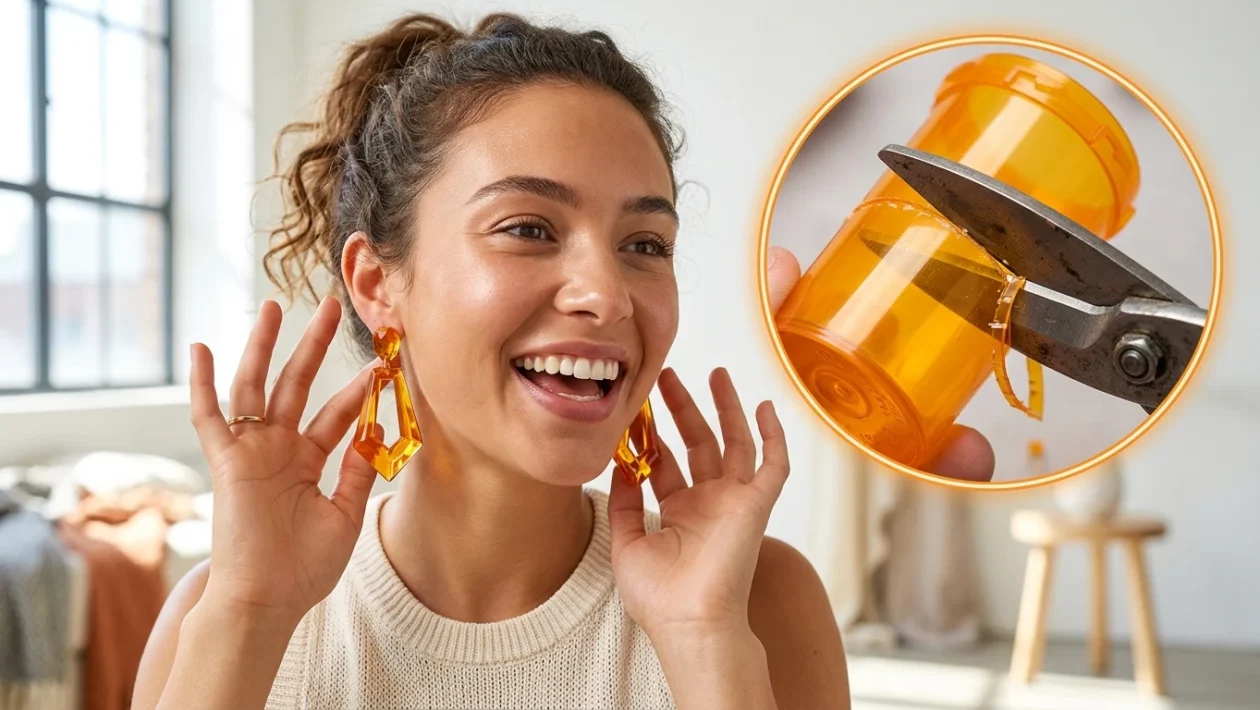
The Hidden Value in Medical Waste
Millions of orange prescription bottles enter the US waste stream annually. Most of them end up sitting in landfills for centuries. Enterprising crafters are changing that trajectory by turning this everyday medical waste into wearable art.
The concept is not just environmentally friendly; it is highly profitable. One artisan recently processed a personal stash of empty bottles, created 20 pairs of custom earrings, and sold the entire batch immediately. The demand for sustainable fashion is growing, and this accessible craft requires minimal upfront investment.
The Recycling Gap
Pharmacies rely on polypropylene, commonly known as plastic #5, to package medication. The material is lightweight, durable, and tinted to block UV light that degrades pharmaceuticals. However, this same durability makes it an environmental hazard.
While plastic #5 is technically recyclable, most municipal recycling centers reject items under two inches in diameter. Small pill bottles easily slip through sorting screens and jam processing machinery. Upcycling them into jewelry bypasses this broken recycling system entirely.
Sanitization and Privacy Prep
Before any crafting begins, proper preparation is mandatory. Prescription labels contain sensitive personal health information that must be thoroughly destroyed. Crafters should peel and shred these labels immediately.
Soaking the empty bottles in hot, soapy water softens the remaining paper. A heavy-duty adhesive remover or high-percentage rubbing alcohol will eliminate the stubborn sticky residue left behind. A final wash ensures the plastic is clean and ready to be manipulated.
Shaping the Plastic
The iconic amber plastic is surprisingly versatile. Crafters typically use heavy-duty shears or craft scissors to cut the cylindrical bottles into flat strips. From there, they can manually cut out geometric shapes, teardrops, or intricate floral patterns.
The natural curve of the bottle does not have to be an obstacle. Many designers incorporate this bend into the final product to give the earrings a dynamic, three-dimensional effect.
The Heat Treatment Technique
For a more refined, professional look, makers utilize controlled heat. When exposed to a standard craft embossing gun, the thin plastic reacts dramatically. It shrinks, thickens, and hardens.
This process transforms the lightweight material into sturdy, glass-like pendants. The amber color condenses and deepens into a rich, translucent shade. Crafters must perform this step in a well-ventilated area, using a heat-resistant silicone mat to prevent the hot plastic from fusing to work surfaces.
Assembly and Finishing Touches
Transforming these plastic fragments into retail-ready jewelry requires specialized hardware. Crafters use micro hand drills or heavy-duty hole punches to create perfectly sized anchor points. Precision pliers are then used to thread metal jump rings through the plastic.
Attaching high-quality, hypoallergenic ear wires—such as surgical steel or sterling silver—is crucial for making the pieces safe and appealing to buyers. Many artists finish the earrings with a brushed layer of clear UV resin to add a glossy, high-end shine.
The Economics of Upcycled Fashion
The profit margins on this specific craft are exceptionally high. The primary raw material is completely free, salvaged from personal use or donations from friends and family. The only overhead costs are the basic jewelry findings and minimal electricity for the heat tools.
Consumers are increasingly drawn to sustainable, zero-waste fashion. When marketed at local artisan markets, pop-up boutiques, or online platforms, these recycled pieces move fast. Buyers actively seek out unique conversation starters that carry a positive environmental impact.