The Hidden Cost of Worn Carbon Brushes
Angle grinders are the workhorses of any metal fabrication or home workshop. But when the motor suddenly sputters, arcs excessively, and dies, the culprit is almost always a worn-out carbon brush.
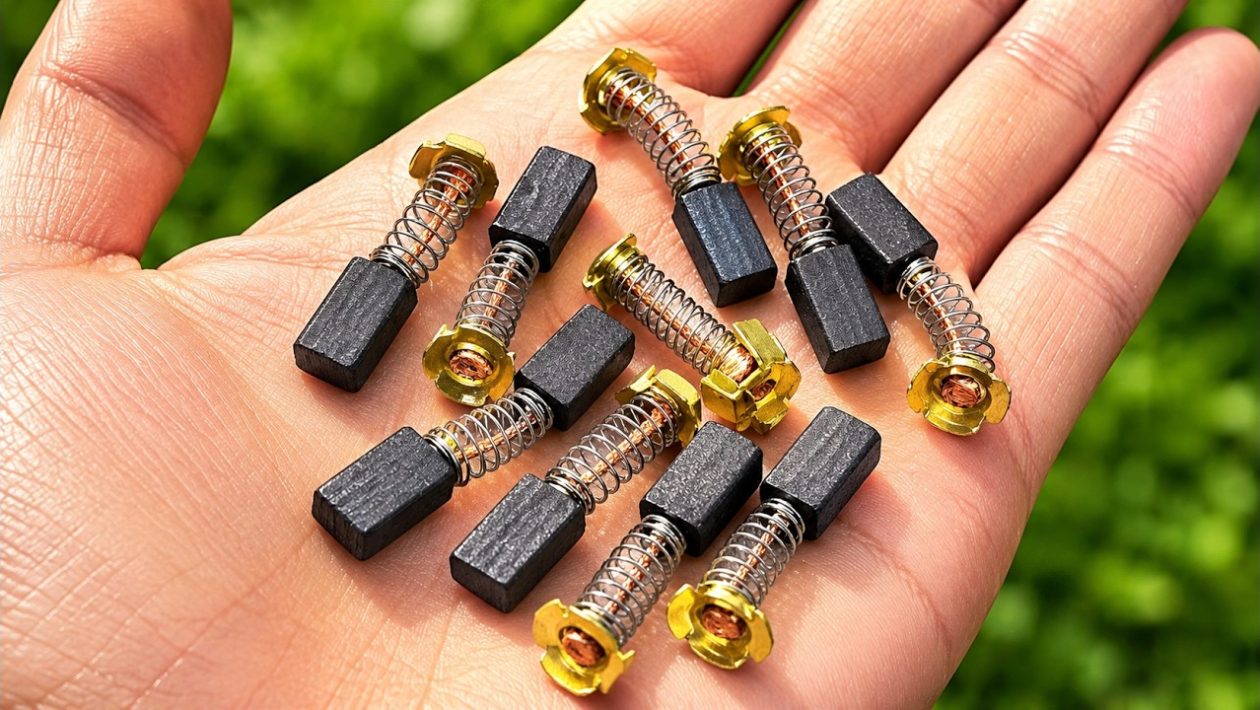
These small blocks of carbon conduct electricity to the spinning commutator of the motor. Over time, friction grinds them down to dust.
Instead of halting your project to order a specialized replacement part, the solution is likely already sitting in a drawer in your garage. You can manufacture your own high-quality replacements using household waste.
The Secret Material Hiding in Junk Batteries
To make a functional brush, you need conductive carbon. The easiest source is a standard “Heavy Duty” battery.
These are traditional zinc-carbon cells, commonly sold in dollar stores or found in old flashlights. The core of a zinc-carbon battery houses a solid, highly conductive carbon rod, which is the exact same material used in electric motor brushes.
Crucial Safety Warning: You must only use zinc-carbon batteries. Do not cut into alkaline batteries, as they leak caustic potassium hydroxide. Never cut into a lithium-ion battery, which poses a severe fire and explosion risk.
Extracting the Carbon Rod
Start with a D-cell or C-cell heavy-duty battery. The larger sizes ensure the internal rod is thick enough to match your grinder’s original brush.
Put on safety glasses and thick work gloves. Use a pair of heavy-duty pliers or a hacksaw to carefully peel back the outer metal and zinc casing of the battery.
Inside, you will find a black, messy paste surrounding a thick, solid black rod. Pull the central rod out carefully so it does not snap. Wash the rod thoroughly with warm water and baking soda to neutralize any remaining acidic residue, then dry it completely.
Shaping the Perfect Replacement Brush
Motor brushes are rectangular, but your salvaged battery rod is cylindrical. You will need to reshape the carbon to match the exact dimensions of your angle grinder’s brush housing.
Retrieve your worn-out brush to use as a measuring template. Lay a sheet of 120-grit sandpaper flat on your workbench.
Rub the carbon rod against the sandpaper, rotating it to gradually create four flat, even sides. Carbon is incredibly soft and sands away quickly, so check your progress every few seconds.
The goal is a precision fit. The new DIY brush must slide into the grinder’s brass holder smoothly, dropping in under its own weight without catching or wobbling.
Wiring and Final Assembly
Standard angle grinder brushes feature a braided copper wire and a small coil spring. You need to transfer these components to your new carbon block.
Use a small file or the edge of a hacksaw blade to cut a shallow groove into the back end of your newly shaped brush. Wrap the existing copper wire tightly around this groove so it makes solid electrical contact.
Place the spring directly behind the carbon block to provide consistent tension. Insert the brushes into the motor housing and secure the retaining clips.
Before putting the grinder under heavy load, plug it in and let it run freely for two to three minutes. This break-in period allows the soft carbon to physically wear down just enough to match the exact curve of the motor’s commutator, ensuring maximum power transfer and zero sparking.