Trading Grass for a Native Ecosystem
A Florida homeowner is demonstrating exactly how to eradicate a high-maintenance lawn using a surprisingly simple foundation: cardboard.
Instead of watering and mowing a sparse patch of traditional grass, the homeowner transformed the front yard into a thriving, native pollinator garden tailored to Florida’s natural climate.
The YouTube channel Food Forest Florida (@FoodForestFlorida) documented the entire front-yard makeover.
According to the creator, the project was intentionally “designed to function like a low-maintenance Florida oak hammock ecosystem.”
The Sheet Mulching Strategy
The transformation started by focusing on soil health and aggressive weed suppression.
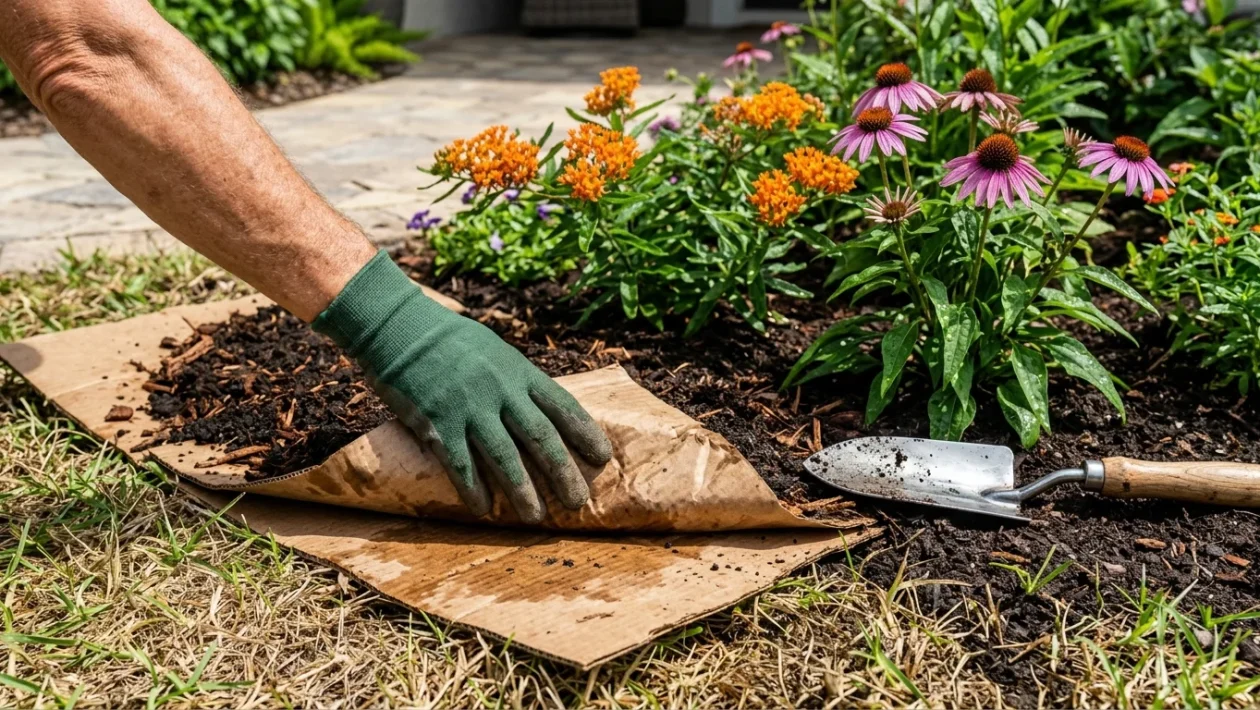
Relying on a technique known as sheet mulching—or lasagna gardening—the homeowner soaked sheets of cardboard and layered them directly over the existing grass.
They topped the cardboard with rich organic material and a thick layer of mulch.
To prevent heavy Florida rains from washing the organic debris into the street, they built a protective border around the yard’s perimeter.
Edible Plants and Wildlife Habitats
With the soil smothered and prepped, the homeowner shaped the space using curving stone walkways and distinct edging.
The yard was then filled with a mix of native and naturalized plants specifically chosen to attract local birds and pollinators.
The redesign also incorporated agriculture, with the creator noting the garden supplies “food not just for the animals, but for us, too.”
The True Cost of Traditional Lawns
Maintaining a manicured grass lawn in a sandy, dry climate requires heavy watering, which drives up utility bills while offering zero support to local wildlife.
Native-plant lawns eliminate the need for constant irrigation and chemical fertilizers, saving homeowners significant time and money.
Transitioning away from a monoculture lawn does not require clearing the entire lot at once.
Depending on the region, experts recommend starting small by replacing a curb strip, a corner bed, or the soil directly under large trees with native plants, clover, or buffalo grass.
Viewers online quickly praised the Florida yard transition.
“Have a love/hate relationship with grass,” one commenter wrote. “It makes a great compost ingredient when I cut it but I have killed most of it over the past 5 years, replacing bit by bit with new beds, plants and flowers!”
“I wish more people would be brave enough to remove the monoculture and bring in so much more beauty!” another added.