Lingering smells from trash cans, damp carpets, and stale food can quickly ruin the comfort of your home. To fight back, most people reach for two classic pantry staples: baking soda and white vinegar.
Both ingredients are household cleaning powerhouses, but they tackle odors in entirely different ways. While one absorbs the stench, the other actively neutralizes the compounds causing it.
How Baking Soda Traps Smells
Baking soda, formally known as sodium bicarbonate, acts like an odor sponge. Instead of simply masking bad smells with artificial fragrances, it physically absorbs and neutralizes acidic odor molecules.
Experts recommend keeping an open container of baking soda in enclosed areas prone to staleness. Refrigerators, closets, and bathrooms are prime locations for this passive odor control.
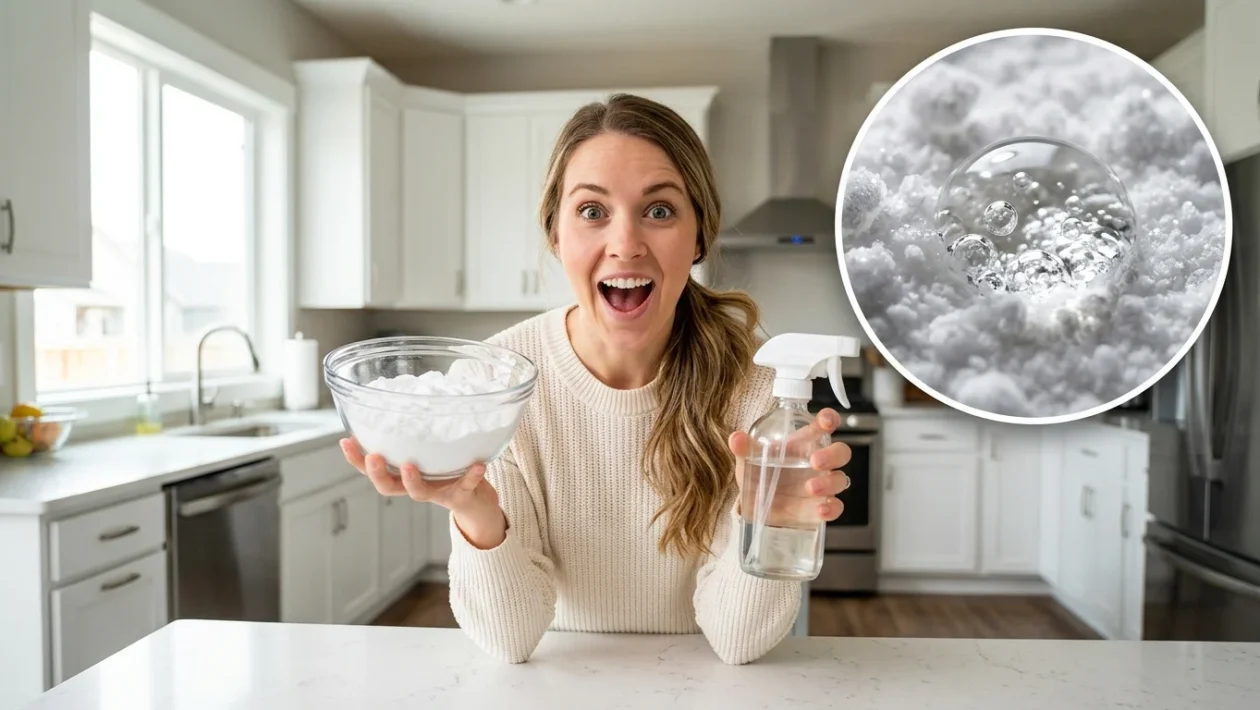
It also works wonders on soft surfaces. You can sprinkle baking soda directly over carpets, mattresses, and upholstery, letting it sit before vacuuming to pull out deeply trapped scents.
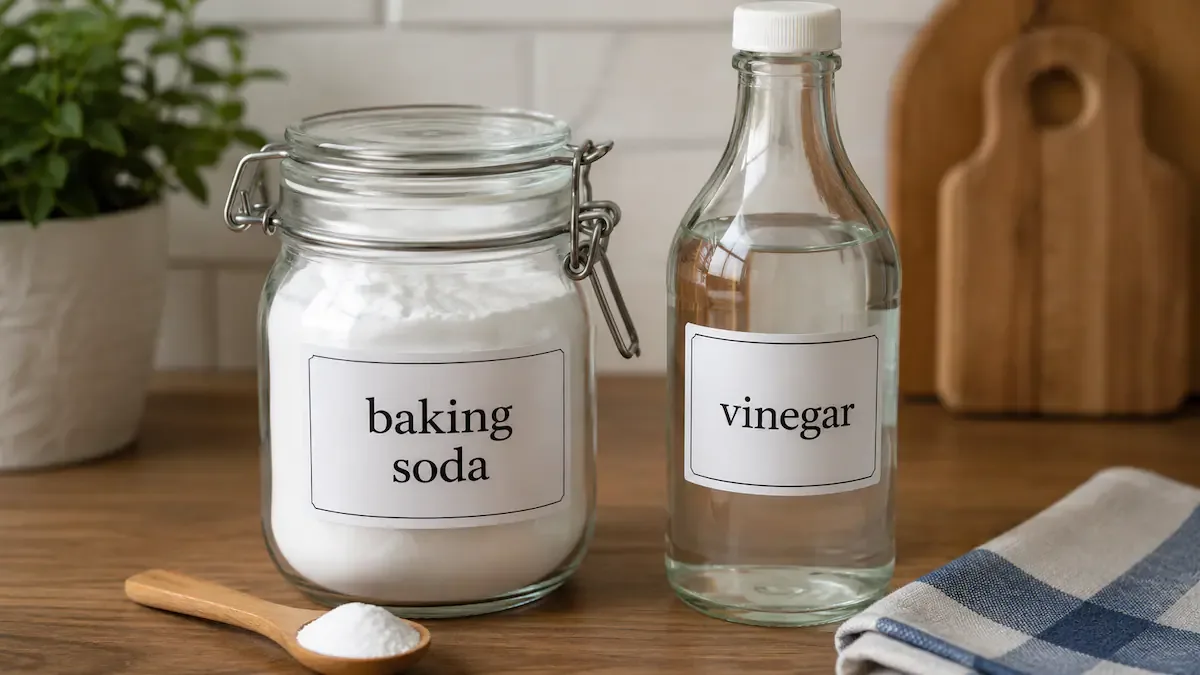
Baking soda and vinegar should not be mixed in the expectation of creating a stronger cleaner.
Why Vinegar Neutralizes Grime
White vinegar operates on a completely different chemical level. Its high acidity allows it to actively break down the substances and bacteria producing the unpleasant smells.
While vinegar has a notoriously sharp scent straight out of the bottle, that odor dissipates completely once the liquid dries.
This makes it the perfect solution for wiping down hard surfaces in kitchens, bathrooms, and laundry rooms. It easily cuts through the grease, food residue, and humidity that cause persistent funk.
However, experts note vinegar is rarely the right choice for pulling smells out of porous fabrics or carpets.
Which Pantry Staple Wins?
Choosing the right product depends entirely on the source of the stench.
Baking soda dominates when you need to absorb lingering odors in tight spaces or soft, porous materials. Vinegar is the superior choice when a hard surface requires actual cleaning to remove odor-causing bacteria or buildup.
If you face a major mess, you can use both—just never at the exact same time.
Mixing baking soda and vinegar does not create a super-cleaner. The chemical reaction simply produces carbon dioxide gas, completely neutralizing the unique cleaning properties of both ingredients.
For the best results, use diluted vinegar to scrub away the source of the smell on hard surfaces, and rely on dry baking soda to absorb ambient odors in the air and fabrics.